

A hospital marketing director called us two years into a patient testimonial series, panicked because someone had spotted an EHR screen glowing in the background of a shot that had already gone live on YouTube. Nobody on set had noticed it during the shoot. Nobody caught it in the edit. It sat there for four months before a compliance officer flagged it during a routine review. That’s the reality of hipaa compliant healthcare video production: the risk isn’t usually the big obvious thing, it’s the whiteboard nobody thought to turn around or the appointment card left on a counter in frame.
Healthcare organizations keep commissioning video because it works — patient testimonials convert, physician profiles build trust, staff recruitment reels fill open positions faster than a job listing ever will. But the production process for a hospital, clinic, or medical device brand looks nothing like a standard corporate shoot, and treating it like one is how PHI ends up in a public video.
Why HIPAA Compliant Healthcare Video Production Isn’t Optional
PHI — protected health information — isn’t limited to a patient’s name on a chart. It’s a face, a room number visible on a door, a diagnosis mentioned in an off-camera conversation the boom mic happened to catch, a birthdate scrawled on a whiteboard behind your interview subject. Any of those, captured on camera and distributed, counts as a disclosure under HIPAA’s Privacy Rule, and disclosures without proper authorization carry real penalties — anywhere from a few hundred dollars per incident up into seven figures annually depending on the scale and negligence involved.
Compliance is a pre-production problem, not a post-production fix. Blurring a face or a screen in the edit bay after the fact doesn’t retroactively make the footage compliant — the exposure happened the moment the camera rolled and that data left a secured environment. The organizations that get this right build HIPAA awareness into the script, the location scout, and the call sheet before a single frame is captured. That’s exactly the workflow we run for hospital systems and medical device clients through our medical video production team — compliance gets mapped out in the same planning meeting where we’re picking b-roll shots, not bolted on afterward.
Where PHI Actually Sneaks Into a Shoot
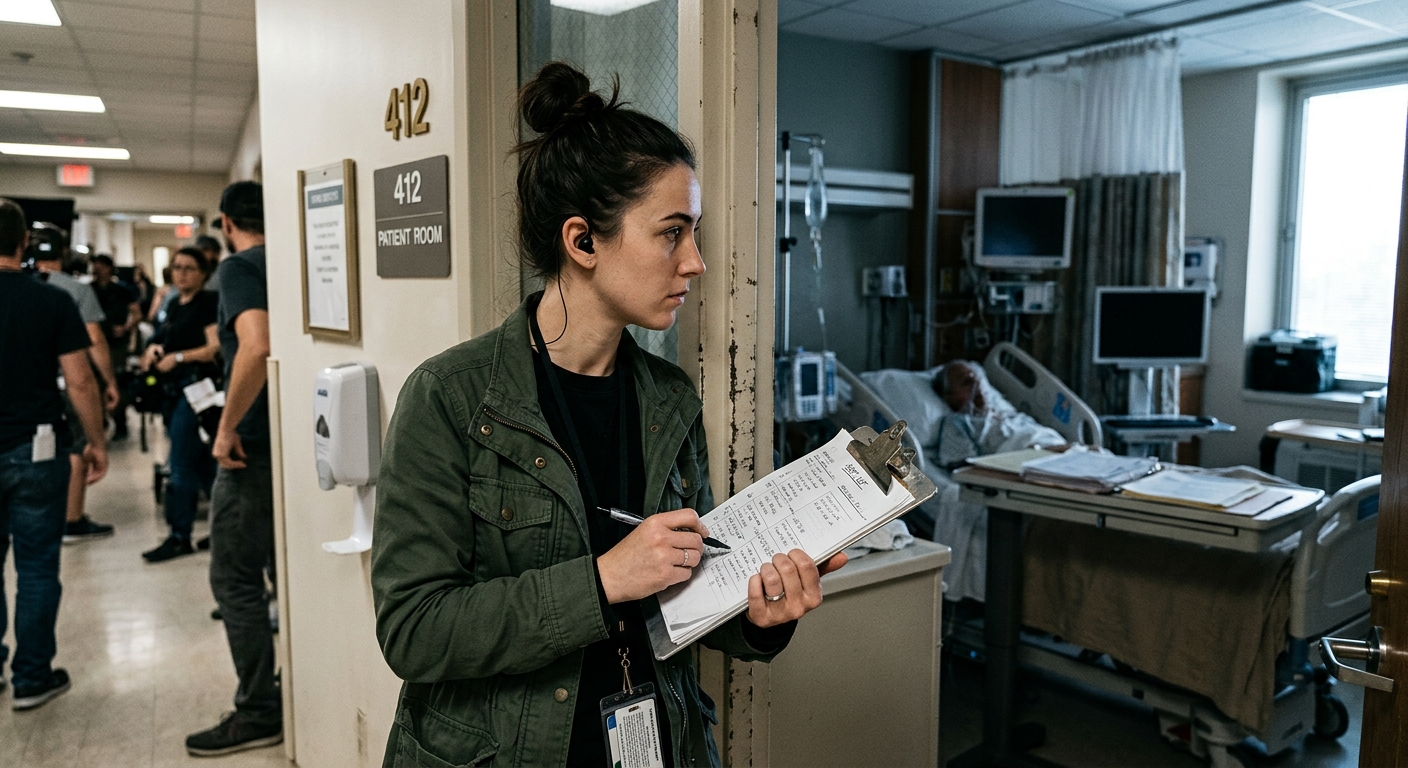
Most compliance failures aren’t dramatic. They’re incidental. A monitor in the background still logged into a patient’s chart. A sign-in sheet at a front desk with real names on it, visible for two seconds in a wide shot. A staff member’s conversation about a specific patient, picked up by a lav mic thirty feet away because nobody thought to check audio radius.
Controlled filming zones solve most of this before it becomes a problem — you pre-walk every location, identify what needs to be covered, removed, or avoided entirely, and build that into your shot list rather than discovering it on shoot day. This is the same discipline we bring to condition-specific series like our diabesity video solutions series, where patients, clinicians, and real treatment environments all appear on camera and there’s zero margin for an incidental PHI capture making it into a final cut.
The Consent Paperwork Nobody Warns You About
Here’s what surprises first-time healthcare clients most: a standard media release is not a HIPAA authorization, and you need both. A media release covers likeness and usage rights. A HIPAA authorization is a separate, specific document stating exactly what health information will be shared, where it will be distributed, and for how long — and it has to be signed before filming starts, not after. If a patient tells their story about a diagnosis on camera, that diagnosis is PHI the moment it’s recorded, and your standard talent release doesn’t touch it.
Multi-channel distribution complicates this further. Authorization for a video running on your website doesn’t automatically cover the same video running as a paid social ad six months later — each distribution channel can require its own line item in the consent form, spelled out in plain language the patient actually understands before they sign anything.
Actors vs. Real Patients: When Dramatization Makes Sense
A lot of healthcare brands sidestep live-patient risk entirely by using actor-portrayal talent for scenarios that don’t require an actual patient — a dramatized ER intake, a medication reminder, a general wellness scenario. Clearly labeled dramatizations carry none of the authorization complexity a real patient story does, because there’s no PHI involved in the first place. We run casting for exactly this kind of scenario work through casting for corporate video projects, and it’s often the faster, cheaper, lower-risk path when the story doesn’t need to be a specific person’s real medical history.
Real patient testimonials still have their place — nothing built by an actor replicates the credibility of an actual patient describing their own outcome. That’s why our testimonial video approach for healthcare clients front-loads consent and authorization work well before the camera shows up, so the patient knows precisely what they’re agreeing to and the production team isn’t improvising release paperwork on set.
Storage, Access, and the Chain of Custody After Wrap
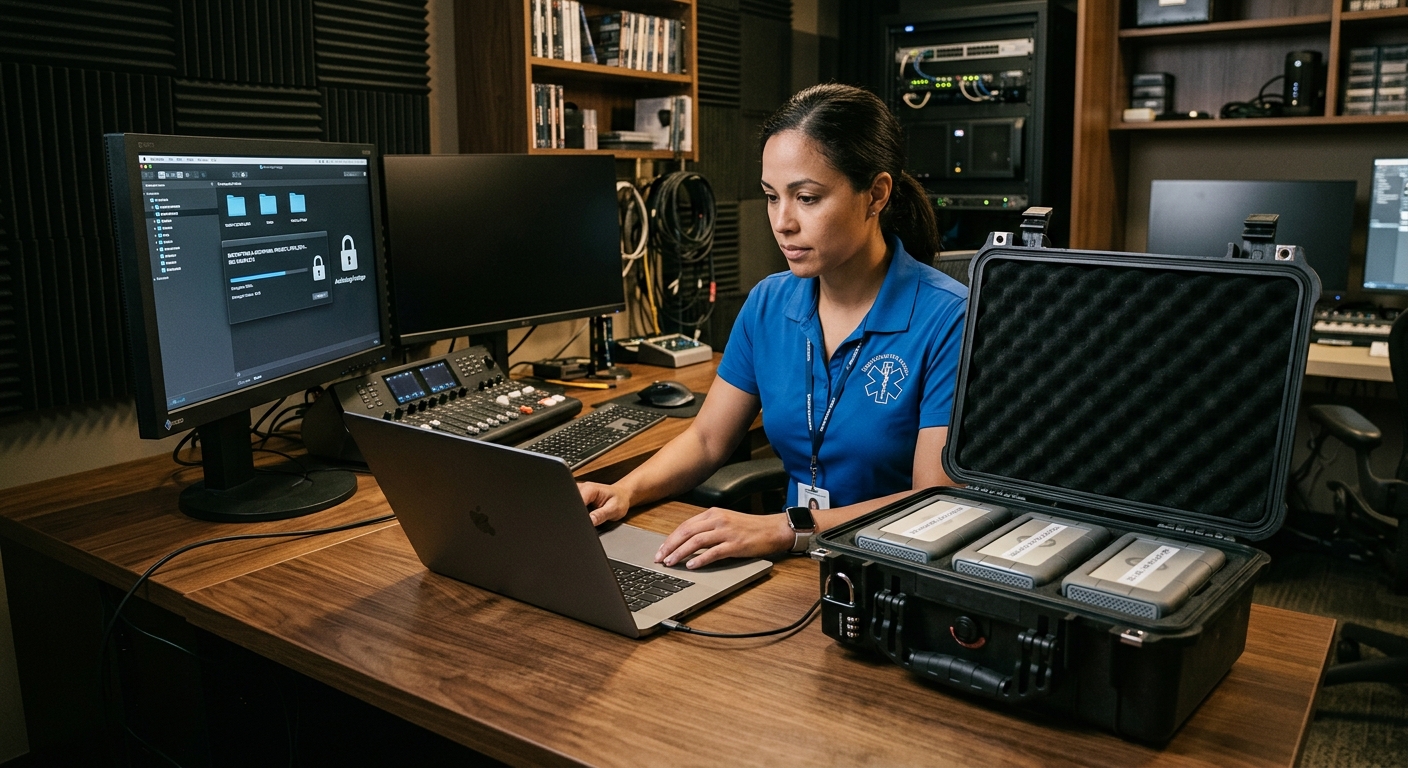
Compliance doesn’t end when you call cut. Raw footage, audio, and project files containing PHI need encryption both in transit and at rest, role-based access controls limiting who can open or export the material, and an audit trail showing who touched what and when. If regulated products — drugs, biologics, medical devices — are involved, you’re also routing scripts and final cuts through an MLR review process, and depending on the claims being made, you may need fair balance language and ISI (important safety information) built into the piece itself.
A Business Associate Agreement between your production company and your healthcare organization isn’t optional paperwork — it’s the document that makes the vendor relationship itself HIPAA-compliant. If a production partner doesn’t bring one up unprompted, that’s a signal they haven’t done this kind of work before. Once a project wraps, we handle delivery and archival through secure video hosting with access limited to approved stakeholders, rather than dropping raw cuts into a shared drive anyone on the marketing team can open.
What This Costs and How Long It Takes
Budget and timeline both run higher than a comparable non-healthcare shoot, mostly because of the extra planning cycles. A single patient testimonial or staff recruitment piece typically runs in the $5,000–$20,000 range depending on locations and post-production complexity, with four to six weeks from kickoff to delivery once you account for legal review of consent language, IRB coordination if the organization requires it, and scheduling around clinical operations that can’t pause for a film crew. A full patient education series with multiple conditions, physicians, and distribution formats climbs well past that. The reshoot risk is the real cost driver — catching a compliance issue after the edit is locked means re-booking talent, re-securing the location, and missing whatever launch date the marketing calendar was built around. It’s cheaper by a wide margin to spend an extra planning session upfront than to reshoot.
Working With a Crew Who’s Done This Before
Healthcare compliance isn’t something a crew picks up by reading the HIPAA Privacy Rule the morning of the shoot. It shows up in small habits — someone automatically checking whiteboards before rolling, someone confirming which authorization form covers which channel before the interview starts, someone who knows to ask an IRB coordinator a question before it becomes a legal problem. Our team runs healthcare and medical shoots across our San Diego video production home base and beyond, and every one of them starts with the same compliance walkthrough before we ever pick up a camera.
If you’re planning a patient education series, a physician recruitment campaign, or a device demo that needs FDA-aware claims language, get the compliance conversation started before the script is finalized. It’s the one part of the process that’s genuinely cheaper to do right the first time.
Frequently Asked Questions
Does blurring a patient’s face in editing satisfy HIPAA requirements?
No. HIPAA authorization has to be obtained before filming, not fixed in post. Blurring can reduce risk for footage you didn’t get consent for, but it doesn’t retroactively make an unauthorized disclosure compliant, and the raw unblurred footage itself is still PHI that needs to be secured and eventually destroyed per your retention policy.
Is a standard talent release enough to use a patient’s story on camera?
No. A media release covers likeness and usage rights; a HIPAA authorization is a separate document that specifically states what health information is being shared and where it will be distributed. You need both, and the HIPAA authorization has to be signed before the shoot, with distribution channels spelled out.
Can we use actors instead of real patients to avoid HIPAA issues entirely?
Yes, and many healthcare brands do this deliberately. Clearly labeled actor-portrayal dramatizations don’t involve real PHI, so the authorization and consent burden disappears. It’s a common choice for general scenarios that don’t require a specific patient’s actual medical history.
Who needs to sign a Business Associate Agreement for a healthcare video shoot?
Any production company handling PHI on behalf of a covered entity — a hospital, clinic, or medical practice — needs a signed BAA with that organization before the project starts. It’s a legal requirement, not a nice-to-have, and a production partner who doesn’t raise it themselves likely hasn’t handled healthcare work before.
How much extra does HIPAA compliance add to a healthcare video budget?
It’s less about a line-item cost increase and more about planning time — extra pre-production sessions for location scouting, consent language review, and coordination with compliance or legal teams. The bigger financial risk is skipping that planning and having to reshoot after a compliance issue surfaces in post-production.
