
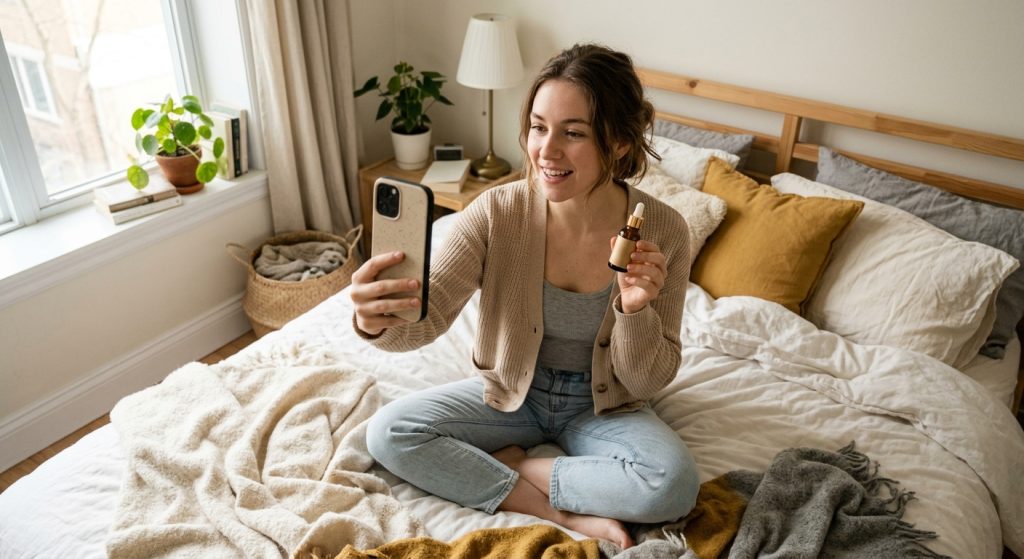
A client called us last spring and asked if we could make her new product video look worse. Not lower quality — cheaper-looking. Handheld. A little shaky. Shot like her customer’s teenage daughter grabbed a phone in the bathroom and just started talking. That request would have sounded insane five years ago. Now it’s most of our brief sheet. UGC video ads — user-generated-content-style videos that mimic the look of an organic creator post rather than a studio commercial — have become the highest-performing ad format on TikTok, Instagram Reels, and YouTube Shorts, and brands that ignore the format are paying more per click for worse results.
This isn’t a fad we’re chasing because it’s cheap to produce. It’s a format we shoot deliberately, with lighting and sound design a viewer never notices, because noticing it would ruin the illusion. Here’s what actually goes into a UGC ad that converts, what it costs, and where brands get it wrong.
What Makes UGC Video Ads Different From a Traditional Commercial
A UGC video ad is built to look like something a real customer filmed and posted, not something a brand produced — vertical framing, natural light, a handheld or tripod-on-a-desk camera angle, and a script that sounds like a person talking, not a voiceover reading copy. The goal is to interrupt the scroll without triggering the “this is an ad” instinct that makes people swipe past.
The difference isn’t just aesthetic. According to a 2025 Emplifi report on branded UGC, social posts featuring user-generated content drove 10.38x higher conversion rates than non-UGC posts. That’s not a rounding error — it’s the difference between a campaign that pays for itself and one that gets pulled after two weeks. On TikTok, creator-style short-form content typically pulls click-through rates in the 1.8-2.4% range, compared with 0.6-0.9% for brand-produced spots running the same offer. The platform rewards content that looks native to it.
None of that means production quality doesn’t matter. It means the craft moves somewhere else — into the writing, the pacing, and the sound. We still light these shoots. We still record clean audio on a lav mic hidden under a shirt. We just make every technical decision serve the illusion that no decisions were made at all.
How Much Do UGC Video Ads Cost
A single UGC-style video ad typically runs $150-500 when you hire a freelance creator directly, or $1,500-4,000 for a small batch produced by a video team that handles casting, scripting, lighting, and editing in-house. Add 20-50% if you need usage rights to run the content as a paid ad rather than just an organic post, since whitelisting and ad-usage licenses are billed separately from the base creator fee.
The cost swings on a few factors that catch first-time buyers off guard. Rush turnaround adds 25-50%. A “Spark Ads” or whitelisting arrangement, where you run ads directly through the creator’s own account for extra authenticity signal, can add another 30% per month on top. And if you’re producing a batch — say, five variations testing different hooks against the same offer — a production company will usually beat piecing together five separate freelance creators, both on price and on consistency of your brand’s actual claims. If your team already has a strategy built around social media marketing as a channel, UGC-style ads are usually the highest-leverage line item to fund first, because the format is cheap to test and expensive to ignore.
The Anatomy of a UGC Ad That Actually Converts
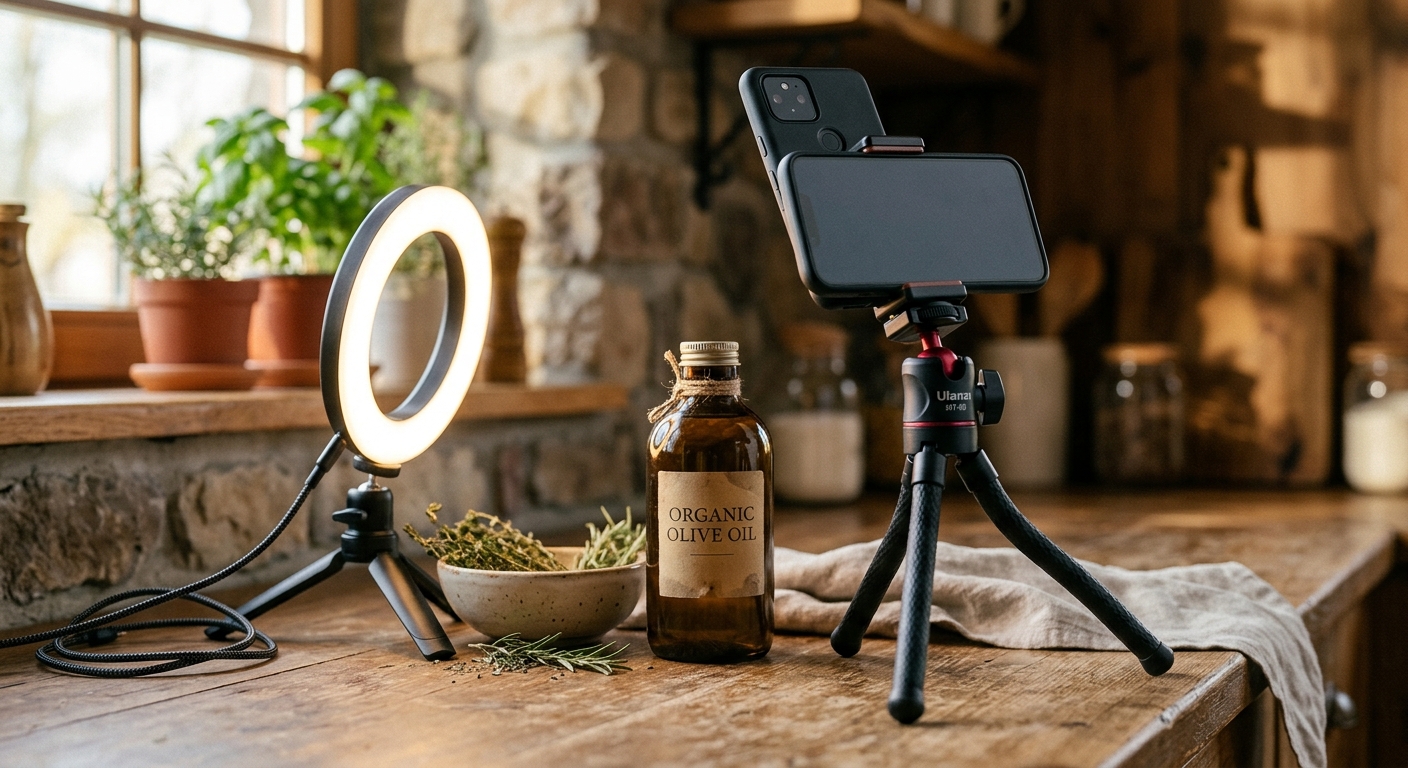
A UGC ad that converts opens with a hook in the first three seconds that names the viewer’s problem before it names your product, then proves the solution works through demonstration rather than claims. The structure that wins most often is: hook, problem, product-as-solution, proof, and a plain-spoken call to action — in that order, with no wasted setup.
Marketers refer to that opening window as the hook rate, meaning the percentage of viewers who watch past the first three seconds instead of scrolling. A weak hook tanks everything downstream no matter how good the rest of the video is. “I didn’t think a $40 serum could do this, but look” beats “Hi everyone, today I want to talk about skincare” every time, because the first line assumes disbelief and answers it immediately.
After the hook, hold rate matters more than most brands realize — that’s the percentage still watching at the midpoint. Videos that lose viewers there usually have a slow, brand-voice middle section where a real customer would just show you the thing. Cut the throat-clearing. If you’re building out a broader plan for this kind of short-form content, our post on creating engaging social media video content walks through pacing and structure in more depth, and it pairs well with a script built around a single, specific customer complaint rather than a general product pitch.
Sound, Captions, and the Muted-Scroll Problem
Roughly 85% of UGC-style video is watched with the sound off during the initial scroll on platforms like Meta, so captions aren’t optional polish — they’re the primary way most viewers receive your message before they decide to tap for audio. Burn in captions, keep them punchy, and make sure the visual alone tells the story even if nobody ever unmutes.
Should You Hire Creators or Shoot UGC In-House
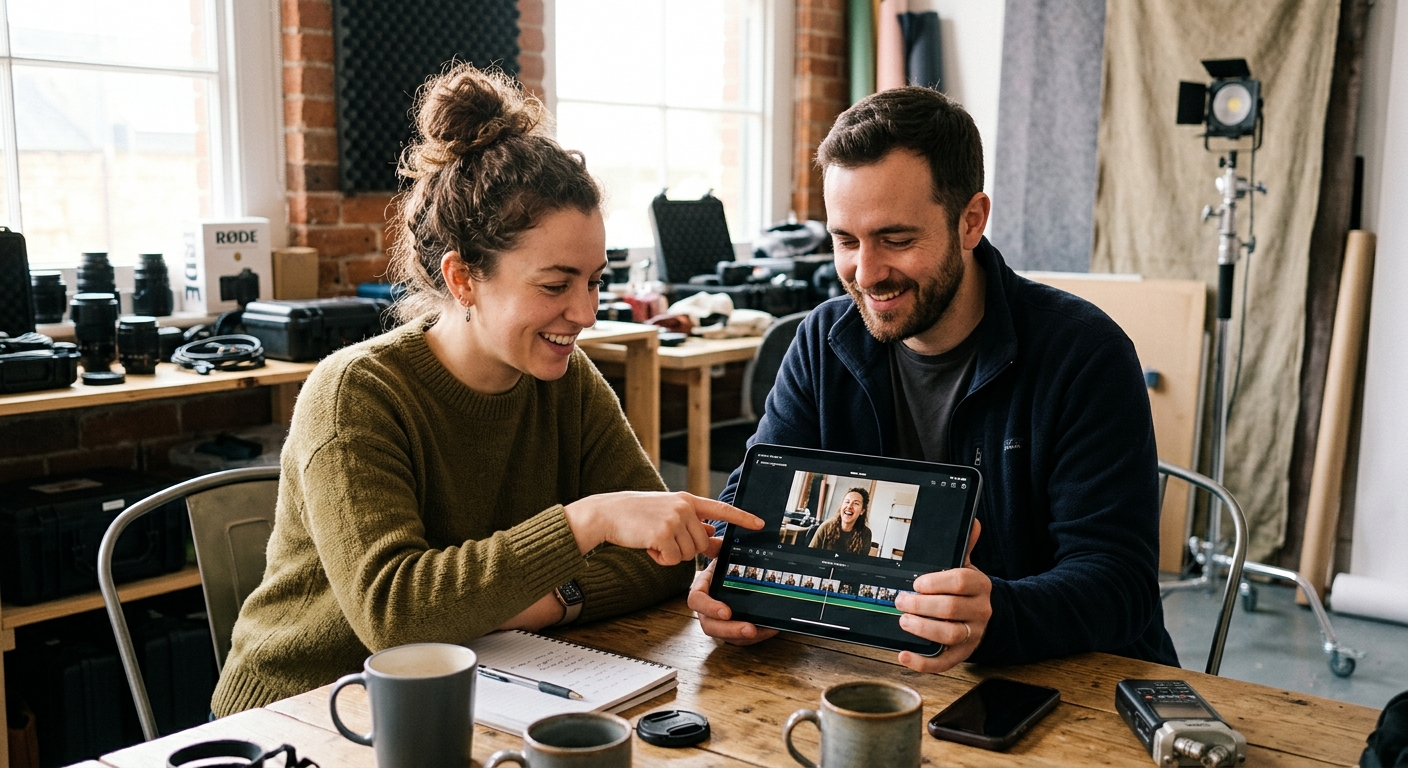
Hire outside creators when you need genuine variety in faces, voices, and settings for A/B testing at scale; shoot in-house when your product benefits from a specific expert voice, a founder’s credibility, or a real customer testimonial that can’t be replicated by a paid actor. Most brands end up doing both, on a rotation.
Freelance creators, sourced through marketplaces or an agency’s casting network, are efficient for volume — you can commission ten variations of the same hook for less than one studio day. But there’s a ceiling on authenticity when the “customer” in the video has never actually used the product. That’s where real testimonials earn their keep. We’ve found that footage from actual buyers, shot the same UGC way but built around a true story, converts differently than a scripted creator read — our guide on how to take testimonial videos that don’t feel staged covers how to get someone comfortable enough on camera that it still looks unscripted, even when it’s tightly directed behind the scenes.
Platform-by-Platform: What Actually Works
TikTok rewards the roughest, most native-feeling UGC and punishes anything that reads as a commercial; Instagram Reels sits a notch more polished and tolerates a light brand touch; YouTube Shorts audiences respond best to demonstration and comparison formats. Treat each platform as a different edit, not one video reformatted three ways.
On TikTok specifically, a typical polished beauty ad lands 1.2-1.8% CTR on cold audiences, while a comparable UGC-style version in the same category hits 2.4-3.6%. That gap holds across most verticals we’ve shot for — fitness, food, home goods, local services. It’s smaller on Instagram, where audiences are a little more forgiving of a recognizably branded look, but it never disappears entirely. If a client’s budget only covers one native edit, we build it for TikTok first and adapt the pacing down for the other two, rather than the reverse.
Common Mistakes That Make UGC Ads Look Fake
The single most common mistake is over-scripting the read — a creator reciting brand copy word-for-word instantly signals “ad” to a viewer’s brain, even if the lighting and framing are perfect. Give creators a bullet-point outline of what to hit, not a script to memorize, and let them use their own words.
The second mistake is polishing the edit too hard. A color grade, a music sting on every beat, a smooth zoom transition — any one of these can be the tell that breaks the illusion. We keep our edits close to raw: a jump cut here, a slightly awkward pause there, because that’s what real footage looks like. Our roundup on what actually makes video content spread on social platforms gets into why imperfection reads as trust, and our piece on writing calls to action that don’t sound like ads is worth reading before you finalize any script, since a hard-sell CTA at the end is the fastest way to undo three good minutes of authenticity.
The third mistake, and the one that gets brands in legal trouble, is skipping disclosure. If a creator is paid or given free product in exchange for the video, the FTC requires a clear disclosure like “#ad” or “paid partnership” in the post, regardless of how organic the video looks. Build that into your creator contracts up front so it doesn’t get forgotten in the rush to launch.
Working With a San Diego Team on UGC Campaigns
A local production team gives you two things a remote freelancer marketplace can’t: same-day access to real customers and creators for authentic testimonial-style shoots, and a crew that already understands how San Diego’s tourism, biotech, and hospitality-heavy market talks to itself. That local fluency shows up in small details — slang, pacing, even which neighborhoods read as aspirational versus everyday.
We run UGC campaigns for San Diego clients out of the same studio and crew network that handles their bigger commercial work, detailed on our San Diego video production page, so a brand can move between a polished brand film and a batch of ten scrappy UGC variations without re-explaining their product to a new team every time. That continuity is where the real savings show up — not in any single video’s price tag, but in how fast a good hook gets identified and reused across the next round of testing.
Frequently Asked Questions
What is a UGC video ad?
A UGC video ad is a paid advertisement styled to look like organic user-generated content — vertical, handheld or casually framed, shot with natural light and conversational language — rather than a polished studio commercial. It can be made by an actual customer, a hired creator, or an in-house team, as long as it mimics the native look of a real social post.
How much does a UGC video ad cost?
Freelance creators typically charge $150-500 per video, while a small produced batch from a video team, including casting, scripting, and editing, runs $1,500-4,000. Add 20-50% for ad-usage rights if you plan to run the content as a paid ad rather than an organic post.
How long should a UGC video ad be?
Most effective UGC ads run 15-45 seconds, with the strongest hook landing in the first three seconds and the call to action in the final five. Longer testimonial-style UGC can run up to 90 seconds if the story genuinely earns the extra time.
Do UGC ads need FTC disclosure?
Yes — if a creator receives payment or free product in exchange for the video, the FTC requires a clear disclosure such as “#ad” or “paid partnership” regardless of how organic the content looks. This applies whether the video runs as a paid ad or an organic post.
Should I hire creators or shoot UGC in-house?
Hire outside creators when you need volume and variety for A/B testing multiple hooks quickly; shoot in-house when a founder’s credibility or a genuine customer testimonial would be lost by handing the story to a paid actor. Most brands running ongoing campaigns use a mix of both.
