
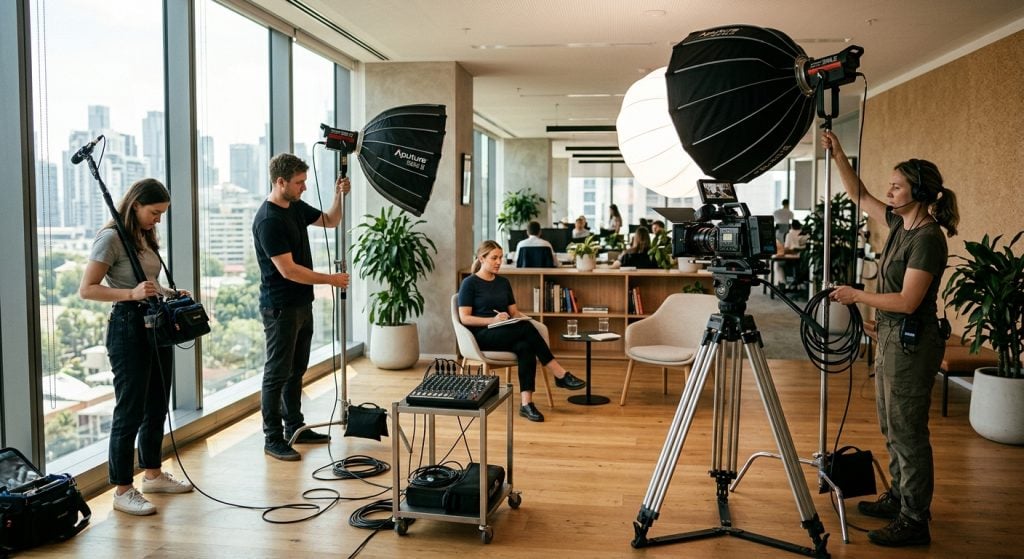
Most businesses that tell me their video “didn’t work” made one video and asked it to do three jobs. A single two-minute brand film can’t introduce a stranger to your company, convince a skeptical buyer, and close the deal. A video marketing funnel fixes that by giving each stage of the buying decision its own video, with its own length, tone, and call to action.
If you shoot in the Sacramento region, this is the same planning conversation we have with clients on Sacramento video production projects: before we talk cameras, we talk about who is watching and what they need to hear next.
What Is a Video Marketing Funnel?
A video marketing funnel is a set of videos sequenced to move a viewer from first awareness of your brand, through evaluation, to a purchase decision, and often on to retention. Most funnels use three stages (awareness, consideration, decision) and many add a fourth for customers after the sale.
The marketing shorthand is TOFU, MOFU, and BOFU: top, middle, and bottom of the funnel. Each stage matches a different audience temperature. Top-of-funnel viewers are cold and have never heard of you. Middle-of-funnel viewers are warm and comparing options. Bottom-of-funnel viewers are hot and need one last reason to pick you. The funnel is really the customer journey turned into a shot list.
Why Build a Video Marketing Funnel Instead of One Hero Video?
Because the person who needs a 25-second hook is not the person who needs a 4-minute product walkthrough, and one video can only serve one of them well. Video is no longer optional either: a 2026 Wyzowl survey found that 91% of businesses use video as a marketing tool, so your competitors are already in the feed. The edge now comes from sequencing, not from simply having video.
A funnel also stops the most common budget leak: spending $10,000 on a polished brand film, then sending cold traffic straight to it. Cold viewers drop off, you conclude video is overrated, and the problem was placement. If you are still shaping the bigger plan, our guide to video marketing strategy covers goals and channels before you get to individual videos.
What Videos Belong at the Top of the Funnel?

Top-of-funnel videos are short, hook-first pieces that introduce a problem or your brand to people who don’t know you yet, typically 15 to 45 seconds for social and up to 90 seconds for a brand story. The goal is attention, not a sale.
Good formats here include social ads, a brand or founder story, quick how-to tips, a sizzle reel, and thought-leadership clips cut from a longer interview. Keep the information light. Open with the problem your buyer already feels in the first three seconds, because viewers decide almost instantly whether to keep watching. Optimize titles and descriptions for video SEO so the piece can also be found by search, not only pushed through ads.
Do not ask for a purchase here. A “book a consult” button on a video someone met ten seconds ago reads as pushy. A softer ask works: watch the next video, follow the page, download the checklist. We go deeper on this stage in how to use video for brand awareness.
What Belongs in the Middle of the Funnel?
Middle-of-funnel videos explain how you work and why you are different, usually 60 to 120 seconds for explainers and demos, and 20 to 45 minutes for webinars. Viewers here already know the problem and are comparing you to two or three alternatives.
The strongest mid-funnel formats are product or service demos, explainer videos, behind-the-scenes process videos, case study overviews, and on-demand webinars. A three-camera interview with your lead engineer or owner often beats a scripted explainer because it shows expertise without selling. Gate the longer pieces, such as a recorded webinar, behind an email form. That is how a video becomes a lead rather than a view, and it gives you an audience to retarget with the bottom-funnel videos.
Consistency matters more than flash. If the middle video looks like a different company made it, trust drops. Same color palette, same on-screen graphics, same voice.
What Closes the Sale at the Bottom of the Funnel?
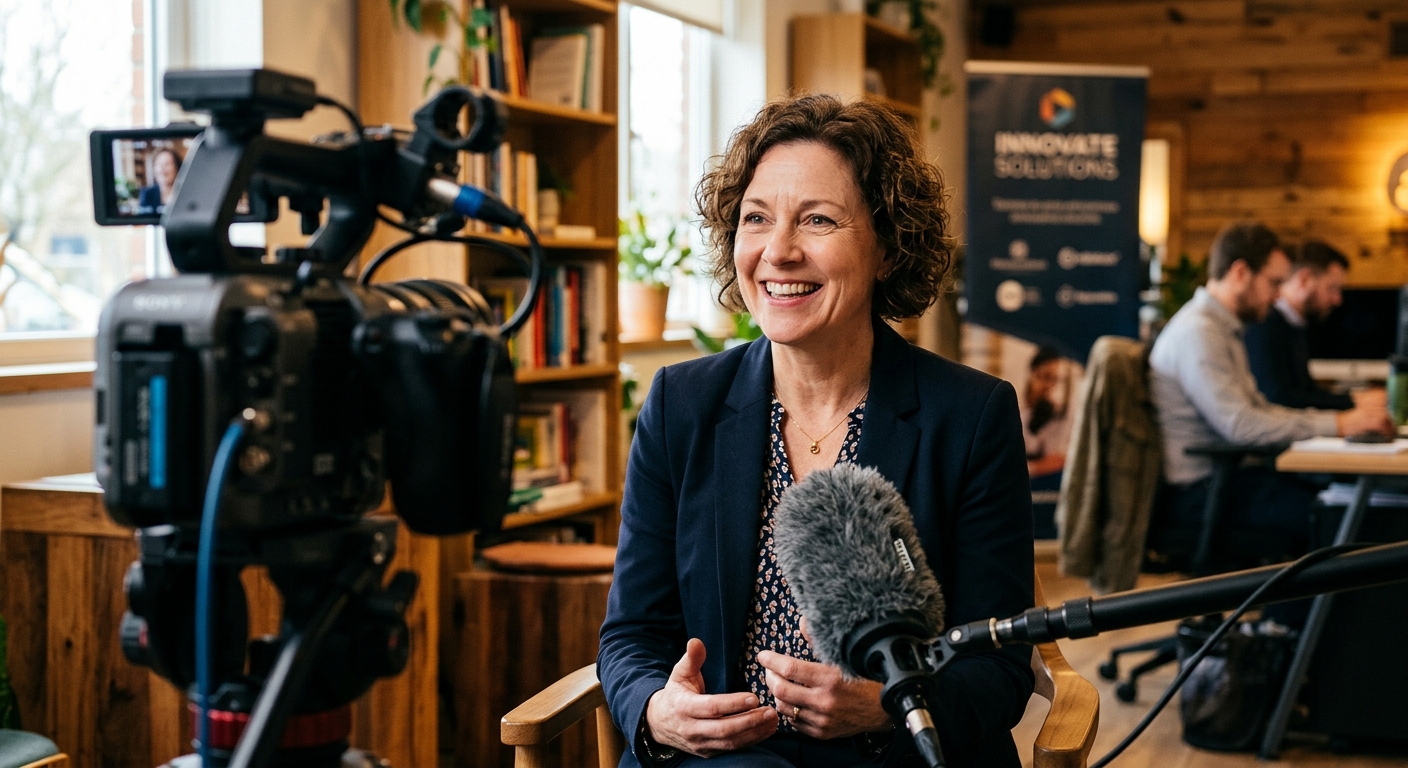
Bottom-of-funnel videos provide proof and a clear next step: customer testimonials, detailed case studies, and personalized sales videos, usually 45 to 90 seconds. These viewers are ready, and what they want is evidence that someone like them got the result you promise.
A well-shot testimonial is the workhorse of this stage. We typically price a single-subject testimonial shoot and edit in the $2,500 to $6,000 range, depending on location, lighting, and how many people we interview. Ask about numbers and specifics, not praise. “We cut onboarding from three weeks to six days” persuades; “they were great to work with” does not. Our post on how to take testimonial videos walks through the questions that pull those answers out.
End every bottom-funnel video with one specific action: book a call, request a quote, start a trial. See our list of video call-to-action ideas for wording that gets clicks without sounding desperate. For high-value B2B deals, a 30-second personalized video from the salesperson, recorded on a phone, often gets more replies than another email.
Don’t forget the fourth stage
Retention videos keep customers once they buy: onboarding walkthroughs, how-to tutorials, feature updates, and thank-you messages. They cost less than acquisition videos and turn buyers into repeat customers and referrals, so I treat them as part of the funnel, not an afterthought.
How Do You Measure a Video Marketing Funnel?
You measure each stage against its own goal, because a view count that is great at the top of the funnel is meaningless at the bottom. Use reach and view rate for awareness, average watch time and click-through for consideration, and conversions (booked calls, demo requests, purchases) for decision.
The signal worth watching most is watch-through rate, the percentage of viewers who finish a video. Someone who watches 90% of a case study is a better lead than someone who clicked a banner. If your video platform connects to your CRM, you can flag those viewers as video-qualified leads and have sales call them first. Retention stages track repeat purchases and churn.
Set one goal per video before you shoot it. If you cannot state the goal in one sentence, the script isn’t ready.
How Do You Build a Video Marketing Funnel on a Budget?
Start with the stage where you are leaking the most buyers, not the top, and shoot several videos in one production day. Most businesses are better served by three well-aimed videos than by one expensive film.
A practical order for a small team:
1. Audit what you have. Old testimonials, webinar recordings, and event footage often cover a stage already.
2. Fill the gap closest to revenue. If leads arrive but don’t close, make a testimonial and a case study first.
3. Shoot once, cut many. One half-day interview shoot can produce a 60-second explainer, three 20-second social cuts, and a testimonial. This is the single biggest cost saver in video.
4. Distribute deliberately. Top-funnel on social and YouTube, middle on your site and email, bottom on landing pages and in sales emails.
If you want a producer to map this for your business, our video production services team plans the full set of videos before the first shoot day, so every dollar of production has a place in the funnel.
Frequently Asked Questions
What is a video marketing funnel?
A video marketing funnel is a sequence of videos matched to each stage of the buying journey: awareness, consideration, decision, and often retention. Each video has its own length, tone, and call to action, so cold, warm, and ready-to-buy viewers each see what they need next.
How many videos do I need for a video marketing funnel?
A functional funnel needs at least three videos, one per stage: a short awareness video, a mid-length explainer or demo, and a testimonial or case study. Many businesses start with three and add retention videos and shorter social cuts as results come in.
How long should videos be at each funnel stage?
Awareness videos run roughly 15 to 45 seconds, consideration videos 60 to 120 seconds, and decision videos 45 to 90 seconds. Webinars and long interviews can run 20 to 45 minutes, but they sit in the middle and are usually gated behind an email form.
How much does it cost to produce a video marketing funnel?
A starter funnel of three to five videos shot in one or two production days typically costs $6,000 to $20,000 with a professional crew, depending on locations, talent, and editing scope. Shooting several videos in one day is the main way to lower the per-video cost.
What metrics show a video marketing funnel is working?
Track reach and view rate for awareness videos, average watch time and click-through for consideration videos, and booked calls, demo requests, or sales for decision videos. Watch-through rate, the share of viewers who finish a video, is the best early indicator of buying intent.
