
Most business owners hire a video crew once every year or two. They walk into the relationship not knowing who does what, how many rounds of revisions are normal, or why the quote from one company is triple another’s. That gap in expectations is where projects go sideways — not because anyone is incompetent, but because nobody explained the process up front.
I’ve produced corporate videos, commercials, and brand campaigns for over a decade, and the projects that go smoothly almost always share one trait: the client understood what working with a video production team actually looks like before the cameras rolled. This isn’t a sales pitch. It’s the version of this conversation I’d have with a friend who just signed a contract and wants to know what happens next.
The First Meeting Tells You Everything
A good discovery call isn’t a formality — it’s where a competent team figures out whether they can actually solve your problem. If a company skips straight to pricing without asking who your audience is, what you’ve tried before, or where the video will actually run, that’s worth noticing. The best producers ask more questions than they answer in that first hour.
This is also the moment to test communication style, because you’re about to spend weeks or months working closely with these people. Do they explain jargon without being asked? Do they push back on ideas that won’t work, or just nod along to keep the sale? A team that respects your budget enough to tell you “you don’t need drone footage for this” earlier will save you money down the line, not cost you a sale.
If you’re a business owner in the Sacramento area comparing options, it’s worth spending real time on this step before signing anything — our Sacramento video production team walks every new client through exactly this kind of conversation before a single shot is planned.
Who’s Actually On Your Video Production Team
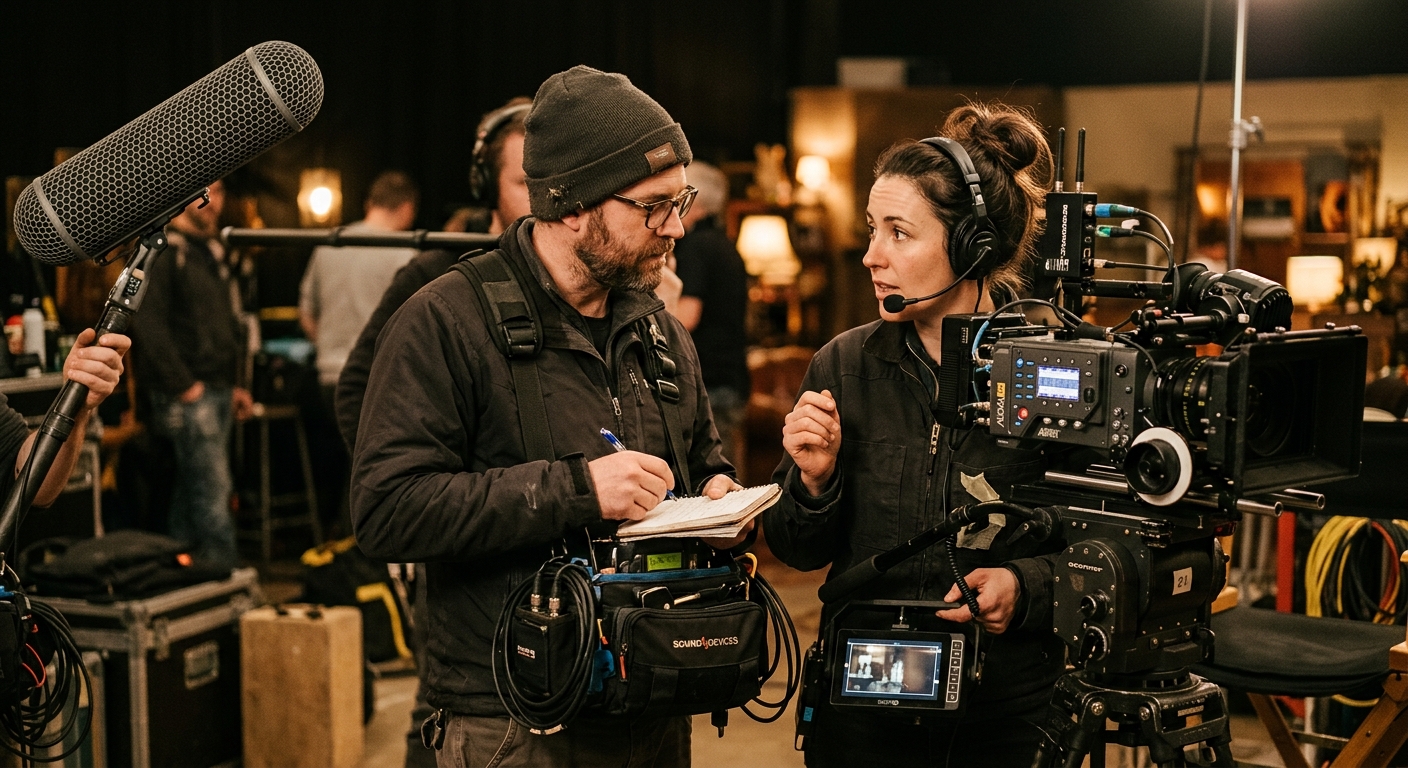
Clients are often surprised by how many people touch a single video, even a short one. On a modest corporate shoot you might work with a producer (your main point of contact), a director, a director of photography, a sound recordist, maybe a gaffer for lighting, and an editor who never sets foot on set. Bigger commercial jobs add a production assistant, a hair and makeup artist, and sometimes a casting coordinator if you need talent instead of employees on camera.
You don’t need to memorize the org chart. What matters is knowing who to call when. Your producer should be the only person you’re chasing for status updates — if you find yourself emailing five different crew members to get one answer, that’s a structure problem, not a you problem. Ask upfront who owns the timeline and who owns the creative decisions, because those are sometimes different people.
It also helps to understand what each role costs, since day rates vary wildly by market and specialty. Reviewing a company’s production services page before your call gives you a baseline for what’s included in a quote versus what gets billed as an add-on — things like location scouting, music licensing, or extra revision rounds.
Working With a Video Production Team: The Weekly Rhythm
Once a project is greenlit, working with a video production team settles into a rhythm, and knowing that rhythm removes most of the anxiety. Pre-production is the slow-feeling phase — scripting, scheduling, location confirmation, casting if needed — and it’s the phase clients most often try to rush. Don’t. A rushed pre-production is the single biggest predictor of an expensive reshoot.
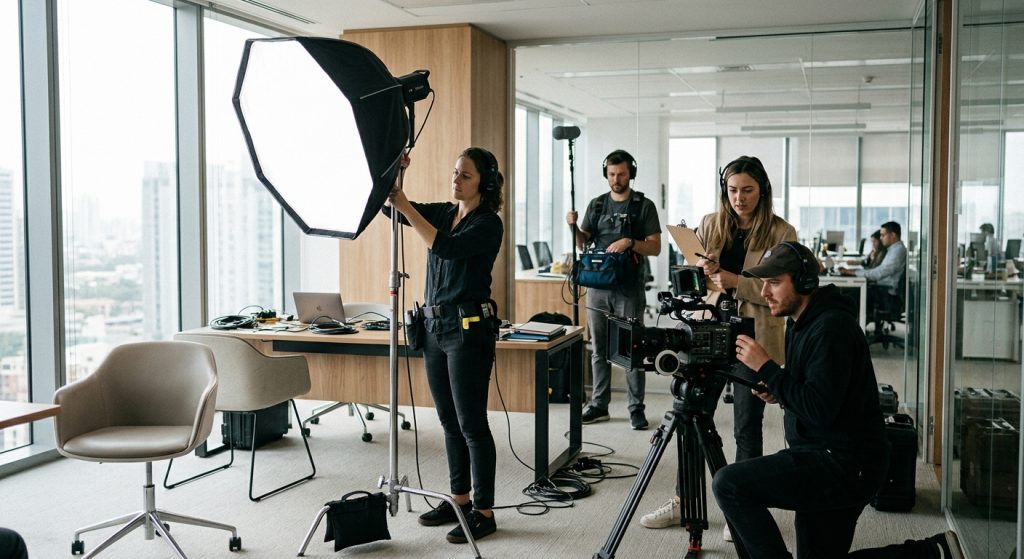
Production day itself moves fast and looks chaotic to someone who’s never been on set. That’s normal. A ten-person crew setting up lights, running cable, and blocking a scene looks like disorder but is usually a well-rehearsed sequence. Your job on set is mostly to be available for questions, approve last-minute changes, and stay out of the sightlines.
Post-production is where the project actually gets built, and it’s the longest phase by far — often two to four weeks for a polished corporate piece. This is where a clear brief pays off. Teams that spend real time upfront creating an effective video brief spend far less time in revision limbo, because the editor isn’t guessing at tone, pacing, or audience.
Feedback That Helps vs. Feedback That Stalls the Project

Revision rounds are where a lot of good projects lose momentum, and it’s almost never because the editor did bad work. It’s because feedback arrives vague, contradictory, or from six people instead of one.
Specific feedback moves fast: “cut the pause at 0:14, the VO feels slow” gets acted on in minutes. Vague feedback stalls everything: “make it pop more” sends an editor guessing, and guesses cost billable hours. Before you send notes, consolidate them from everyone on your side into one document with timestamps. If your team is working with video editors for the first time, this single habit — one voice, one document, timestamped notes — will save more time than any other change you make to the process.
Also worth saying plainly: contracts typically include two or three rounds of revisions, not unlimited ones. That’s not a company being stingy — unlimited revisions on a fixed-price project is how good producers go out of business. Ask about the revision policy before you sign, not after round three.
Budget Conversations Nobody Wants to Have
Scope creep is the quiet killer of client-producer relationships. It usually starts small: “can we also get a 15-second cutdown for Instagram,” or “actually, can we add an interview with the CEO.” Reasonable requests, individually. Add up five of them and you’ve built a second project inside the first one, without anyone agreeing to pay for it.
The fix isn’t to say no to every new idea — some of those ideas are genuinely good and worth the extra cost. The fix is to ask “does this change the scope?” out loud, every time, and get a quick answer in writing before the crew acts on it. A production team that flags scope changes as they happen, instead of surprising you on the final invoice, is one you can trust with a bigger budget next time.
Red Flags to Watch For
A few patterns are worth paying attention to before you’re locked into a contract. Vague quotes that don’t itemize crew, equipment, and post-production hours make it hard to know what you’re actually paying for and even harder to negotiate. Reluctance to show a full reel, not just highlight clips, can mean inconsistent quality. And a team that won’t name a single point of contact for your project is telling you, indirectly, how communication is going to go for the next two months.
None of these are dealbreakers by themselves, but two or more together are worth a direct conversation before you sign.
Making the Relationship Work Long-Term
The businesses that get the most value out of video aren’t the ones that hire a crew once and disappear. They’re the ones that find a team, learn how that team works, and come back for the next project without re-explaining their brand from scratch. That second and third project is almost always smoother, faster, and cheaper per finished minute than the first, because the guesswork is gone on both sides.
If you’re early in that relationship right now, the best thing you can do is treat your producer like a partner instead of a vendor. Tell them the real budget, not a lowball number you’re testing them with. Tell them if the deadline is firm or flexible. Tell them what past videos didn’t work and why. A good team uses that information to protect you from repeating expensive mistakes — that’s most of what you’re actually paying for.
Frequently Asked Questions
How long does it take to produce a corporate video from start to finish?
Most corporate videos take three to six weeks total: one to two weeks of pre-production, one shoot day, and two to four weeks of editing and revisions. Larger commercial campaigns or projects needing casting can run longer.
How many people are typically on a video production crew?
It depends heavily on scope. A simple interview-style corporate video might run with a two- or three-person crew. A branded commercial can involve eight to twelve people on set, plus an editor and colorist who work after the shoot.
How many rounds of revisions should I expect?
Most contracts include two to three rounds of revisions in the base price. Additional rounds are usually billed hourly, so it pays to consolidate feedback from your whole team before sending notes.
What’s the difference between a producer and a director on my project?
The producer manages budget, schedule, and client communication — they’re your main point of contact. The director makes the creative and performance calls on set. On smaller projects, one person often does both.
What should I bring to the first meeting with a video production team?
Bring examples of videos you like (and dislike), a rough sense of budget, your timeline, and any brand guidelines. The more specific you are early, the fewer revision rounds you’ll need later.
