
# The Importance of Post Production Workflow: Why It Makes or Breaks Your Final Video
A brand shoots two days of footage. The crew nails the interviews, the b-roll is crisp, and the director is smiling on set. Three weeks later, the client gets a rough cut that looks disconnected, the audio levels are inconsistent, and the deadline for the product launch has already slipped past. The footage was fine. The workflow was not.
Understanding the importance of post production workflow is not just for editors — it is essential knowledge for any business owner commissioning video content. Production days get the glamour. Post production is where the story actually gets built, and without a defined system behind it, even the best raw footage can turn into an expensive problem.
Why the Importance of Post Production Workflow Goes Beyond Editing
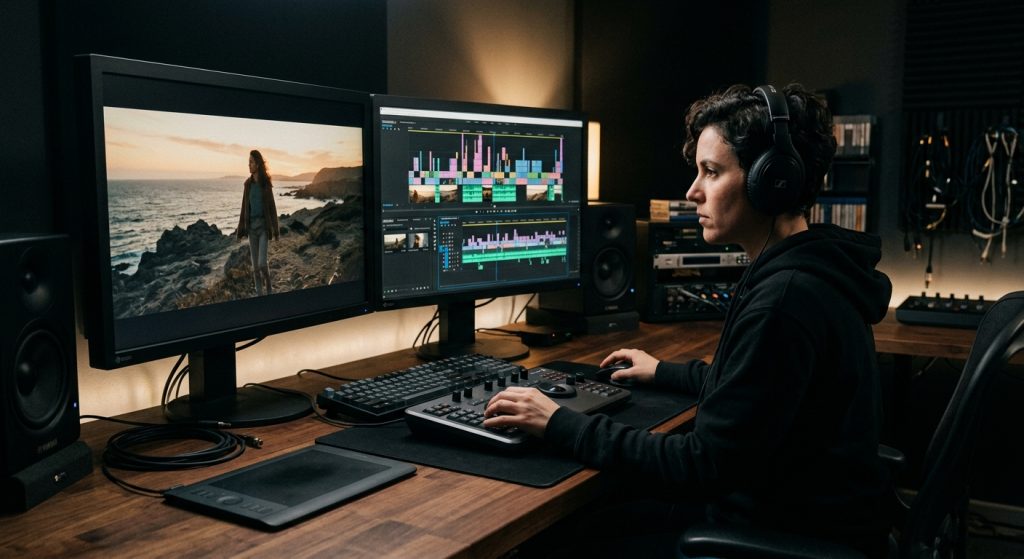
Think of post production workflow as the assembly line for your video. Raw footage, audio files, graphics assets, and music all arrive at the edit suite as separate pieces. A workflow is the documented system that tells everyone on the team exactly how those pieces get organized, reviewed, refined, and delivered.
When that system exists and everyone follows it, timelines hold. Revisions happen cleanly. Clients get what they asked for. When it does not — or when a production company is inventing the process as they go — you end up with version chaos, missed notes, mismatched color, and audio that sounds like it was recorded in three different rooms.
The video post production process involves more steps than most clients realize: file ingestion, organization, assembly cut, rough cut, picture lock, color grading, sound mix, graphics, export, and delivery. Each stage builds on the last. Skip the organization step and you pay for it during the color grade. Rush picture lock and you get revision requests on a supposedly locked timeline. Every shortcut compounds.
What a Solid Post Production Workflow Actually Looks Like
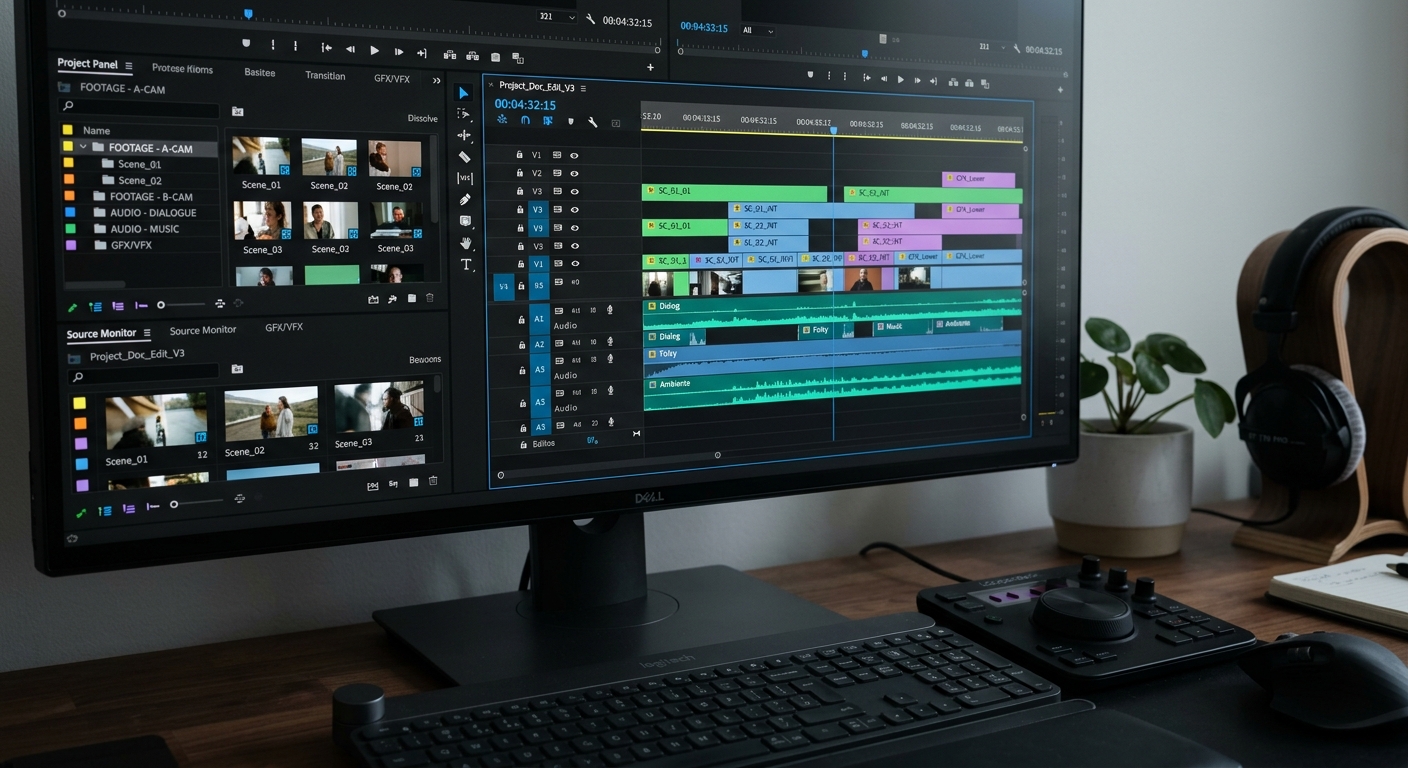
Good workflows are boring in the best way. They are checklists and naming conventions and folder structures that make it nearly impossible for files to get lost. Here is what to look for when evaluating a production partner.
File Ingestion and Organization
The moment cards come off camera, footage should be backed up in triplicate and organized into a clear folder structure — by scene, day, or camera, depending on the project. Proper labeling at this stage alone saves hours during the edit and prevents the single most common cause of missed deadlines: searching for a clip that was ingested under the wrong name six weeks ago.
The Assembly Cut
An editor lays every usable take down in sequence. It is rough. It is long. But it reveals the shape of the story before any real time gets invested in fine-tuning. This is the right moment to catch missing shots or structural problems — not during the final mix when changing anything means going backwards.
Structured Review Rounds
Structured review rounds — not open-ended email threads — keep revisions from multiplying. A professional team with well-managed video production services sets clear gates: round one for structural notes, round two for fine-tuning, final round for approval. Every note gets logged, tracked, and confirmed as resolved before moving forward.
Color and Audio by Specialists
Color grading in video production is not just about making footage look attractive. It is about consistency across scenes shot under different lighting conditions and making sure your brand’s visual identity carries through every frame. The audio mix carries equal weight — it is what separates footage that feels broadcast-ready from footage that feels like a recording someone made on a phone.
Defined Delivery Formats
A video produced to 4K broadcast spec is a completely different file from a LinkedIn cut compressed for mobile. Delivery specifications should be part of the workflow plan from the start, not a scramble on deadline day.
The Real Cost of a Broken Workflow

The financial impact of poor workflow is real, but it rarely shows up as a single line item. It accumulates as rush charges from editors working overtime to hit a deadline that slipped by two weeks. As duplicate revision rounds because feedback was not tracked. As a color grade that has to be completely redone because the editor was working off uncalibrated exports. These are not edge cases — they are predictable outcomes when workflow is treated as someone else’s problem.
For businesses in the Bay Area, where production budgets run high and launch windows are tight, this matters in a direct way. Companies working with a San Jose video production partner should expect clear milestones and structured delivery, not a black box where footage disappears and a video eventually reappears without explanation.
When Deadlines Get Missed
Missing a video deadline is not just inconvenient — it can unravel an entire marketing campaign. A product launch built around a video spot, a fundraising push tied to a testimonial piece, a conference keynote that needs a sizzle reel: when post production slips, everything downstream slips with it. A defined workflow is what keeps those dependencies intact.
When Communication Breaks Down
Most post production disasters are not technical failures. They are communication failures. The client said “make it feel warmer” and the editor interpreted that as color temperature. The account manager did not log the note. Now you are two rounds deep into a revision cycle arguing about something that could have been settled in ten minutes if there was a system for capturing and confirming feedback. A workflow does not just organize files — it organizes people.
How the Right Production Team Protects Your Investment
When you hire a video production company, you are not just buying camera days. You are buying the entire system that converts raw footage into something deployable. Editing techniques for corporate videos differ significantly from those used in commercial or narrative work, and a team experienced with business content understands those distinctions: pacing that holds attention in a thirty-second pre-roll, structure that works for a two-minute explainer, graphics that match brand standards without requiring three correction rounds.
Before signing, ask production companies these specific questions:
- What project management tool do you use to track revisions and client notes?
- How do you handle file backup and redundancy during post?
- What does your standard delivery package include, and in what formats?
- How many revision rounds are included in your contract?
- Who owns the edit project files after delivery?
These questions separate teams with real systems from teams who are strong on set but improvising everything afterward.
Building a Long-Term Relationship With Your Production Partner
The importance of post production workflow compounds as your content library grows. A company producing one video per year can tolerate some disorganization. A company running a quarterly content calendar, a sales enablement library, and multiple active campaign shoots cannot. Workflow consistency becomes a genuine competitive advantage — it is what lets new editors step into a project without rebuilding the organizational structure from scratch, and what makes it possible to repurpose existing assets efficiently instead of treating every deliverable as a brand-new project.
The best production partners build systems designed to scale with your output. They document their process, use shared project management platforms, hold structured review sessions, and deliver files in formats you can actually open five years from now. That kind of operational discipline does not happen by accident.
If you are evaluating video partners for ongoing work, the post production workflow conversation should happen before any cameras roll. How a team runs its post house tells you almost everything you need to know about how the rest of the engagement will go.
Frequently Asked Questions
What does a post production workflow include?
A post production workflow covers every step after the shoot: file ingestion, footage organization, assembly cut, rough cut, picture lock, color grading, audio mixing, graphics, and final delivery. Each stage has defined review and approval checkpoints.
How long does post production take for a corporate video?
Most corporate videos run two to four weeks in post, depending on length and complexity. A two-minute brand video with one revision round is typically two weeks. A multi-segment campaign with motion graphics and multiple deliverables can take four to six weeks.
Why does post production workflow matter for my business?
A defined workflow protects your budget and timeline. It prevents revision creep, ensures feedback is tracked and resolved, and delivers files in the formats you actually need. Without it, costs escalate and deadlines slip in ways that are hard to predict in advance.
What happens when a video production company skips a proper workflow?
Common outcomes include missed deadlines, untracked revisions, color inconsistency across scenes, audio issues caught too late to fix cleanly, and delivery formats that do not match platform requirements. These problems are almost always avoidable with a documented process.
How do I evaluate a production company’s post production process before hiring?
Ask what project management tool they use for revision tracking, how many review rounds are included in the contract, how they handle file backup during post, and what the standard delivery package includes. A team with a real system will answer these questions immediately.
