
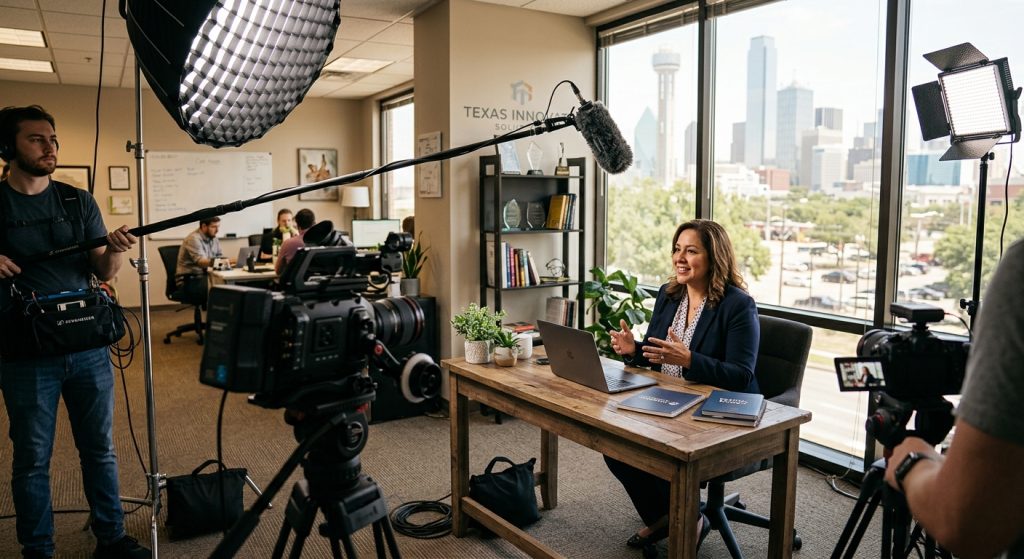
A sales rep at a Dallas software company told me once that their highest-converting page wasn’t the pricing page. It was a three-minute video of a customer explaining how the product let them cut a full week out of their onboarding process. No slide deck. No bullet points. Just a person on camera, talking through a real problem and what fixed it. That’s the entire case for a case study video, and most companies still don’t have one.
Written case studies get skimmed, if they get opened at all. A case study video gets watched — on a sales call, in a follow-up email, embedded on the page a prospect lands on right before they decide whether to book a call. It does the selling for you while you’re asleep.
What Makes a Case Study Video Different From a Testimonial
People use “testimonial” and “case study” interchangeably, and that’s part of why so many companies end up with the wrong thing. A testimonial is a compliment: “They were great to work with, I’d recommend them.” A case study video is a story with a beginning, middle, and end — the problem the client had, what they tried before you, what changed once they brought you in, and a number or outcome they can point to.
If you’ve read our piece on testimonial videos that convert, you already know the format works when it’s built around a specific, provable claim rather than a vague compliment. A case study video takes that same principle and stretches it into a narrative — it needs a bit more runway, a bit more structure, and usually a second voice (yours, or a narrator) to frame the stakes before the client starts talking.
The Anatomy of a Case Study Video That Actually Sells
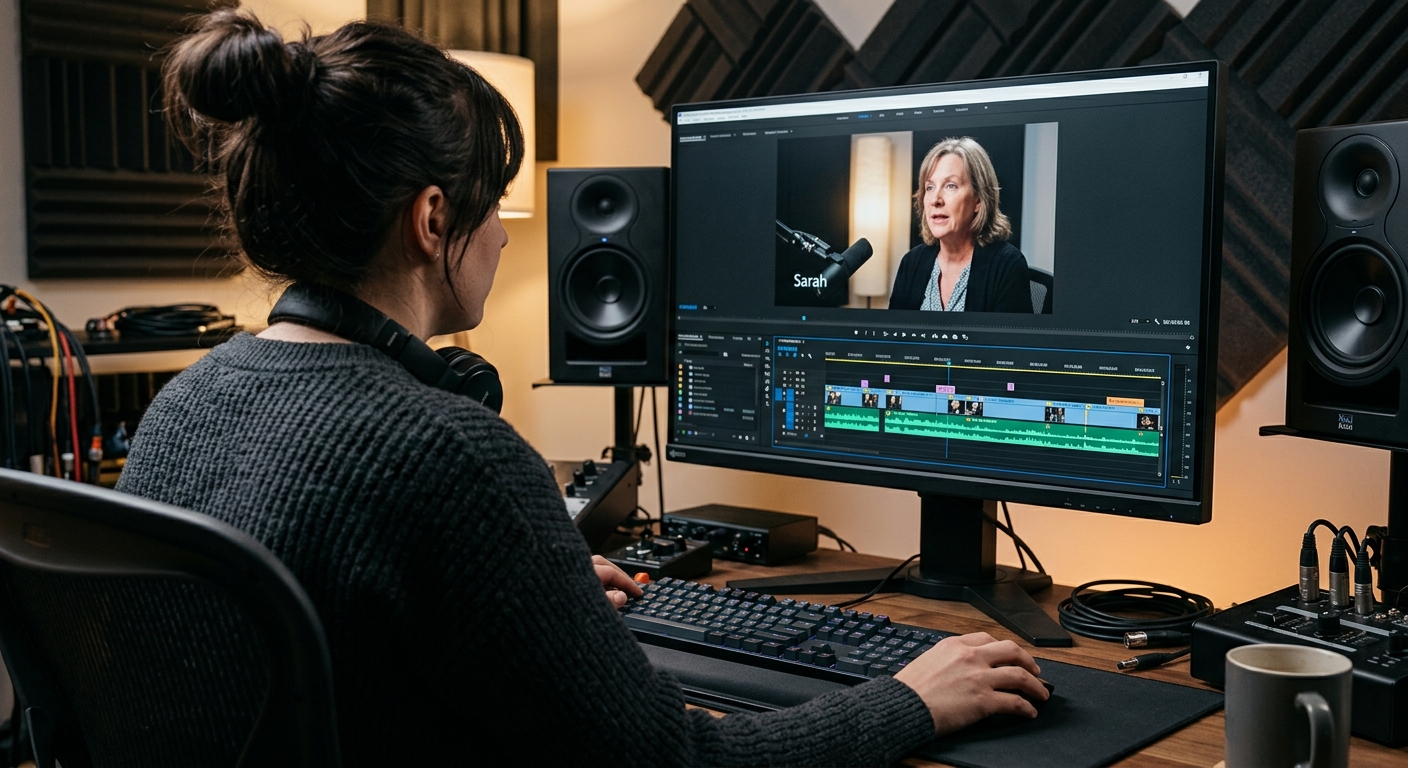
Every case study video we’ve shot that actually got used — not just uploaded and forgotten — follows roughly the same shape:
1. The setup. Ten to fifteen seconds establishing who the client is and what was at stake. Not their whole company history — just enough that a stranger understands the world they were operating in.
2. The problem. The client, in their own words, describing what wasn’t working. This is the part most companies rush past, and it’s the part that makes viewers lean in. If there’s no tension, there’s no story.
3. The decision. Why they picked you over the alternative — including the alternative of doing nothing. This is where objections get pre-answered before a prospect even raises them.
4. The result. Specific numbers where you can get them. “It saved us time” is forgettable. “It cut our support ticket volume by 40% in the first quarter” gets remembered and repeated internally by the person who watched it.
5. The close. A short, human sign-off — would they recommend you, would they work with you again. Skip the hard sell here; let the story carry it.
That structure is also why a case study video pairs so well with a proper corporate interview video setup rather than a rushed phone-camera conversation. You need enough coverage — a couple of angles, room tone, a b-roll pass of the client’s space or product in use — to actually cut a story together instead of stitching soundbites end to end.
Picking the Right Client (Most Companies Get This Wrong)
The client with the best logo isn’t always the client with the best story. We’ve had companies push us toward their biggest account, and the interview comes back flat — polished, cautious, nothing usable. Meanwhile the mid-sized client who genuinely struggled before working with them gives us twenty minutes of gold because they actually remember the pain.
Before you book anyone, ask three questions: Do they have a specific before-and-after they can describe without checking notes? Are they comfortable on camera, or at least willing to try? And do they actually like you — not just tolerate the relationship, but like it enough to talk about it with some energy. That third one matters more than people expect. Flat delivery kills an otherwise great story.
How We Shoot Case Study Videos in Dallas
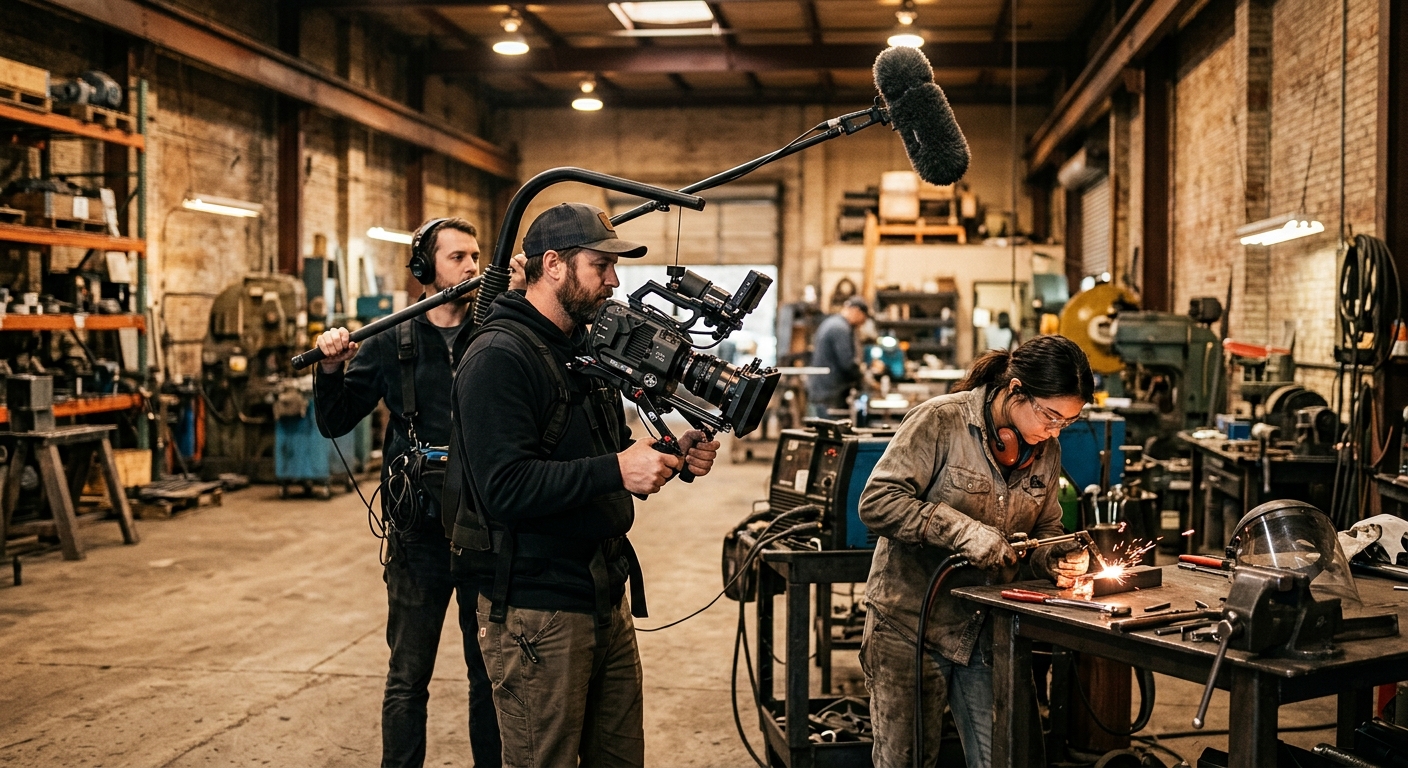
Most of our case study work happens on-site at the client’s business, not in a studio, because the location itself does a lot of storytelling for free — a warehouse floor, a clinic waiting room, a restaurant kitchen at 6 a.m. before the doors open. As a Dallas video production crew, we’re usually in and out of a shoot like this in half a day: an hour of setup, forty-five minutes to an hour of interview, and the rest spent gathering b-roll of the team and the space in action.
The interview itself gets shot with the same rigor as a testimonial video production session — two-camera coverage, a lav mic plus a boom for backup, and enough pre-interview conversation that the client isn’t answering cold when we start rolling. That off-camera warm-up is often the difference between a subject who sounds rehearsed and one who sounds like they’re actually telling you something.
What a Case Study Video Costs — and Why
This is usually the first question after “can you do this,” and the honest answer is that it depends on scope more than anything else. A single-location shoot with one interview subject and a half-day of b-roll runs differently than a case study that needs travel, multiple stakeholders, or drone footage of a facility. We break down the real cost drivers — crew size, shoot days, editing complexity — in our guide on what corporate video costs, and the same logic applies here almost line for line. What changes the price most isn’t the camera gear, it’s how many people need to be scheduled, interviewed, and released.
Budget-wise, most B2B companies get more mileage out of one strong case study video than five generic testimonial clips, because it can be cut into shorter pieces afterward — a 90-second version for the homepage, a 30-second cutdown for paid social, a handful of quote cards pulled straight from the transcript.
Where to Use the Finished Video
A case study video that only lives on a “customer stories” page nobody visits is a wasted shoot. The ones that earn their budget back get worked hard: dropped into sales decks, sent as a follow-up after a discovery call, run as a mid-funnel ad to people who’ve already visited your pricing page, and played on a loop at trade show booths where nobody’s going to stop and read a PDF anyway.
Sales teams especially underuse these. A rep who can send a two-minute video of a client in a nearly identical situation to the prospect they’re currently working — that’s a closing tool, not a marketing asset sitting in a folder. If your case study videos aren’t showing up in your CRM’s email templates, you’re leaving half the value on the table.
The companies that keep coming back for a second and third case study video aren’t doing it because they love being on camera. They’re doing it because the first one paid for itself in a deal or two, and they’d rather have five good stories in rotation than one written case study that hasn’t been updated since 2022.
Frequently Asked Questions
How long should a case study video be?
Two to four minutes for the full version is the sweet spot — long enough to tell a real story, short enough that a prospect actually finishes it. Plan to cut a 30-60 second version for ads and social from the same footage.
How much does a case study video cost?
Most single-location case study videos with one interview subject fall in a similar range to a standard corporate interview shoot, with cost driven mainly by crew size, shoot days, and how many locations or subjects are involved rather than the gear itself.
How do we convince a client to agree to be filmed?
Frame it as good for them too — a professional video they can use in their own marketing, plus a link back to their business. Most clients say yes once they understand it’s a two-way asset, not just free advertising for you.
Can you turn an existing written case study into a video?
Yes, and it’s usually a faster shoot because the story arc is already mapped out. We use the written version as an interview guide so the client’s on-camera answers track the same before-and-after structure.
Where should we actually use the finished case study video?
Beyond the website, the highest-value spots are sales follow-up emails, CRM templates reps can send directly to similar prospects, mid-funnel retargeting ads, and trade show booth loops.
