
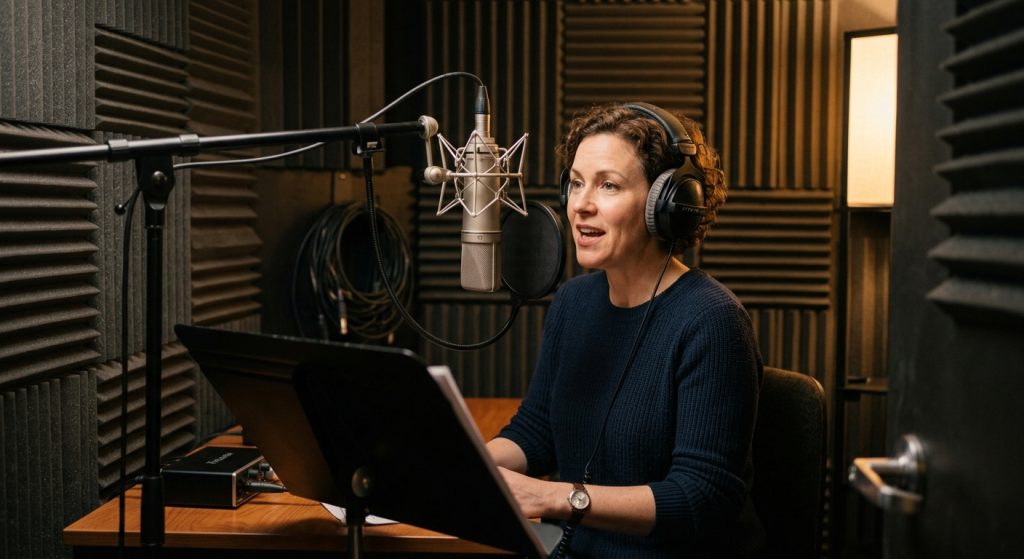
We once had a client walk into a session with a script timed for :30, a voice actor booked for a warm, conversational read, and zero idea that the read would come in eleven seconds long. That’s not a talent problem. That’s a prep problem, and it’s the single biggest reason clients think voiceover is unpredictable. It isn’t. Learning how to work with voiceover talent is mostly about what happens before anyone touches a microphone.
If you’ve only hired a voice actor once or twice, the process can feel opaque—agencies versus marketplaces, line reads, punch-and-roll, usage rights. None of it is complicated once you know the sequence. Here’s how we run it on shoots for clients across Los Angeles and beyond, and what tends to go sideways when a team skips a step.
Why the Voice Carries More of the Ad Than You’d Guess
Picture footage does a lot of work, but voice is what tells the viewer how to feel about it. A flat, over-enunciated read makes a warm brand feel corporate. A too-casual read undercuts a message that needed authority. We’ve swapped out a final cut’s entire emotional register just by changing the VO track, footage untouched. If you’re already working through how to write a compelling video script, treat the voice casting decision with the same weight—script and voice are one creative decision, not two separate line items.
How to Work With Voiceover Talent From Casting Through Delivery
The sequence that actually prevents wasted studio time looks like this: lock the script, write a one-paragraph voice brief, hold auditions against real script lines (not generic demo reels), book, direct the session live, and review against picture before you sign off. Skip the audition-against-real-lines step and you’ll pick a beautiful demo voice that doesn’t actually fit your copy’s rhythm.
Write the brief before you post the job. Describe the voice the way you’d describe a character: age range, energy, regional accent or none, and — this is the part people forget — who they’re talking to. “Confident, unhurried, talking to a small-business owner who’s skeptical of agencies” gets you better auditions than “professional male voice, 30s.”
Agencies vs. Marketplaces
Talent agencies get you vetted, broadcast-tested actors, usually at a premium and with more scheduling lead time. Online marketplaces like Voice123 or Voices.com let you post a casting spec, collect dozens of auditions within a day, and cast on price and fit rather than reputation alone. For a national commercial with union considerations, go agency. For an explainer video, an internal training piece, or most of the corporate work we produce out of our Los Angeles video production studio, a well-run marketplace casting call gets you excellent results for a fraction of the cost and turnaround time. Either way, run it like a real casting process — our guide to running a casting call applies just as well to voice as it does to on-camera talent.
Writing a Script That’s Actually Voice-Friendly
Voice actors read what’s on the page, not what you meant. Cut adjective stacks, break long sentences at natural breath points, and phonetically spell out anything unusual — brand names, technical terms, acronyms you want spoken as words rather than letters. Time your script at roughly 150 words per minute for a conversational read; a :30 spot wants close to 75 words, a :60 wants around 150. Send the actor picture reference or a rough cut alongside the script whenever you can. A voice actor who can see the b-roll they’re narrating over reads completely differently than one working blind from a page of text.
Directing the Session: Giving Notes That Work
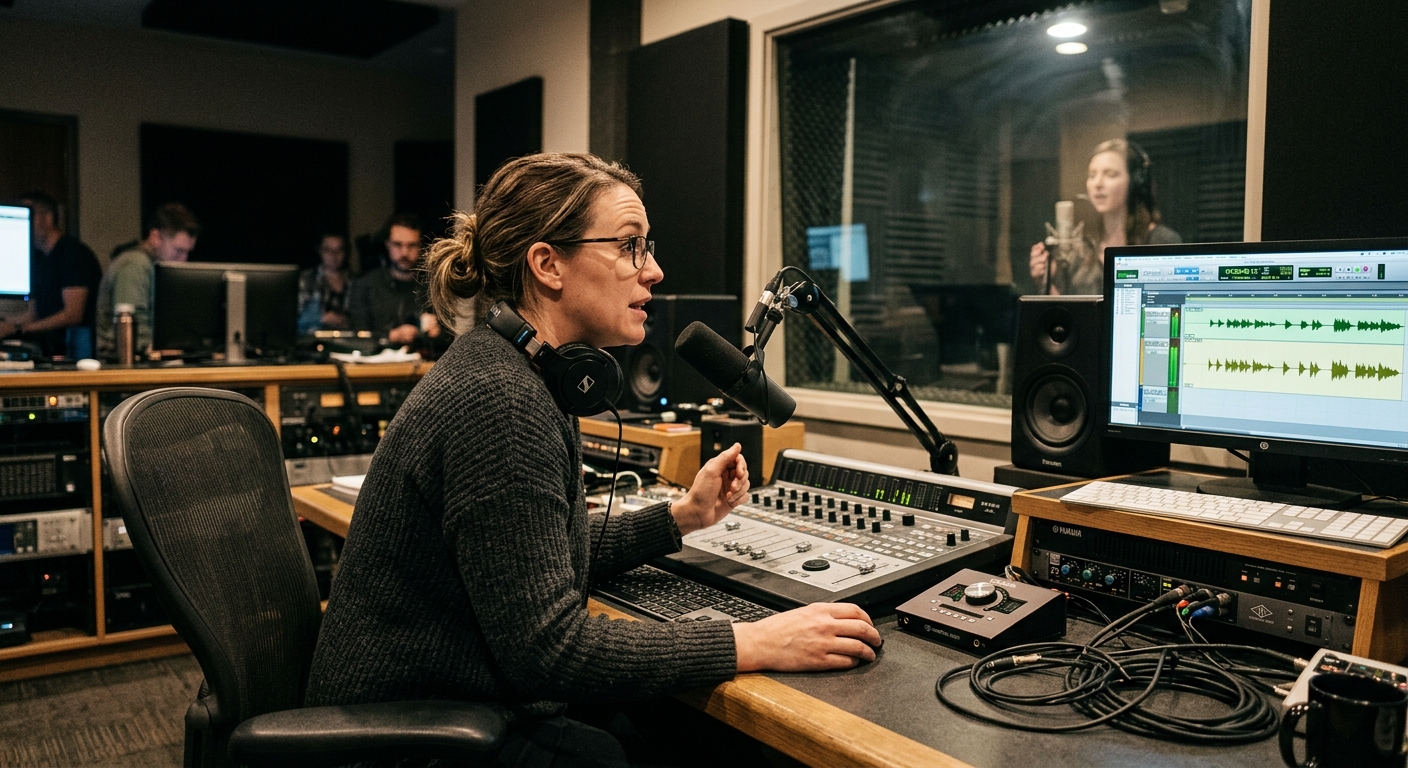
This is where most first-time clients go quiet and let the engineer run the show, and it’s a mistake. Direct the read the way you’d direct an on-camera performer. Give the actor a role, not just a tone: “you’re the trusted expert walking a nervous client through a decision,” not “sound friendlier.” If a read isn’t landing, give a line read yourself rather than describing what’s wrong in the abstract — actors adjust faster from hearing the cadence you want than from notes like “more energy.” Record a scratch pass first if the timing is tight; it tells you in thirty seconds whether the script needs a trim before you burn takes chasing a pace that was never going to fit.
Stay warm and specific between takes. Voice actors are performing without a scene partner, without blocking, without anything to react to except your voice in their headphones — enthusiasm and clear direction from you does more to lift a read than almost any note about tone.
Technical Specs: What to Ask For Before You Book

Ask for raw, uncompressed WAV files at 48kHz, not an MP3 bounce — you want your editor working with a clean source, not something already compressed once. If the actor is remote, confirm they’re recording through a proper interface and treated room, not a laptop mic in a bedroom; you can hear the difference immediately, and reshoot-by-re-record is expensive. For remote sessions, ask whether they can connect via Source Connect or a comparable low-latency platform so you can direct in real time instead of reviewing files after the fact — it’s a different, better process than sending notes over email between takes. Once the audio’s delivered, treat it the same as any other production asset: our notes on capturing clean audio on set apply to mixing a VO track against music and sound design just as much as they do to dialogue recorded on location.
Rates, Rights, and Re-Records
Voice-over rates scale with usage, not just runtime. A voice used only on your website costs less than the same read licensed for paid broadcast or national digital advertising — usage rights are a real line item, so ask up front what the quote covers and for how long. Build in two rounds of pickups or re-records at no extra cost; almost every union and non-union talent agreement includes this as standard, but confirm it before you book so nobody’s surprised by a change-order invoice after the client asks for one word re-read. If you expect to use this voice again — for a campaign, a recurring explainer series, a phone system — negotiate an option or a retainer now. Re-casting six months later because your original talent went exclusive with a competitor is a bad way to learn this lesson.
Once the VO is locked, it moves into the same pipeline as every other audio and picture element. If you’re coordinating that final mix with an outside editor, the same collaboration habits apply as working with a video editor generally — clear notes, one round of consolidated feedback, and a locked reference track before final export.
When to Just Let a Production Company Handle It
If this is your first time casting voice talent, or you don’t have the bandwidth to run auditions and direct a live session, it’s usually cheaper to fold voiceover into your production budget rather than manage it solo. A full-service crew already has vetted talent relationships, engineers who know how to direct a session, and a post workflow that treats VO as part of the mix from day one instead of a bolt-on. That’s part of what’s included across our video production services — casting, direction, and delivery handled as one line item instead of three separate vendors you have to coordinate yourself.
Good voiceover doesn’t announce itself. Nobody finishes watching a great corporate video and says “that narration was well-cast.” They just believe what the video told them. That’s the whole job — get the brief right, direct with specifics, and get the technical handoff clean, and the voice disappears into the story the way it’s supposed to.
Frequently Asked Questions
How much does it cost to hire voiceover talent for a corporate video?
Rates vary widely by usage, not just runtime — expect roughly $150-$400 for a simple internal or web-only video with a non-union voice, and significantly more for broadcast or national digital campaigns where usage rights extend the license. Always confirm what’s included: raw files, re-records, and usage term.
Should I hire a voiceover artist through an agency or an online marketplace?
Agencies are worth it for national commercials or union productions where vetted, broadcast-tested talent matters most. For explainers, internal training, and most corporate work, a marketplace like Voice123 or Voices.com gets you strong auditions fast at a much lower cost.
How do I direct a voiceover session if I’ve never done it before?
Give the actor a role and an audience, not just a tone word like ‘friendlier.’ If a read isn’t landing, give a line read so they hear the cadence you want. Record a scratch pass early to catch timing problems before you burn takes.
What audio format should I ask a voiceover artist to deliver?
Ask for raw, uncompressed WAV files at 48kHz rather than an MP3 bounce. That gives your editor a clean source to mix against music and sound design, instead of audio that’s already been compressed once.
How long should a voiceover script be for a 30-second video?
Plan for roughly 150 words per minute of conversational read, which works out to around 75 words for a :30 spot and about 150 words for a :60. Time a scratch read against your rough cut before locking the script.
