
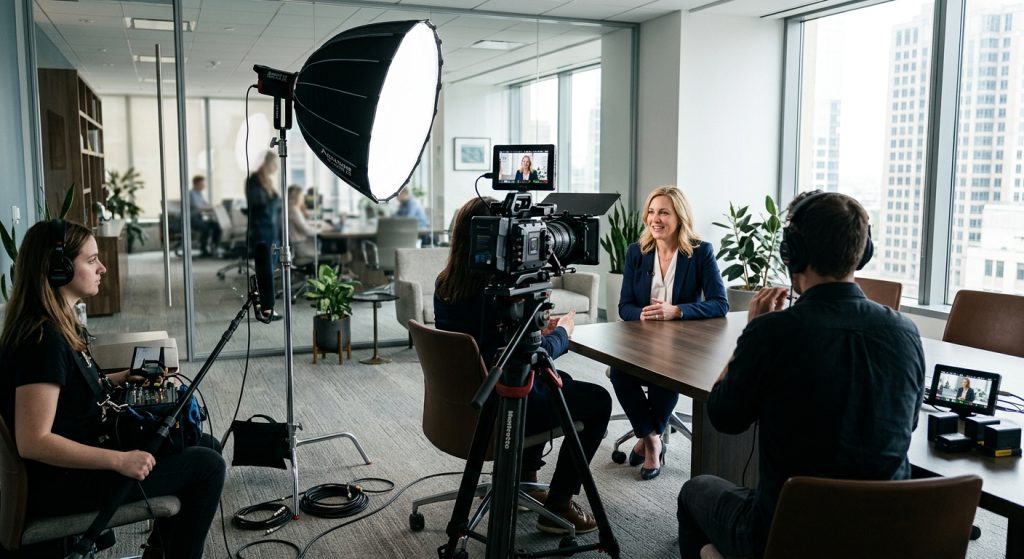
Every marketing director hits the same wall eventually: the budget’s approved, the crew’s booked, and someone in the room asks “okay, so what are we actually shooting?” That’s the moment I’ve watched more projects stall than any other. Everyone wants more video. Almost nobody walks in with a real list of ideas for corporate video content that fits their actual sales cycle, their actual sales team, and their actual audience. They pull a generic “top 10 corporate video ideas” article, pick three that sound impressive in a meeting, and end up with footage nobody watches past the eight-second mark.
I’ve produced video for manufacturers, ag-tech companies, hospital systems, and regional banks across the Central Valley, and the pattern is always the same. The companies that get real mileage out of video treat it like a content system, not a one-off event. The ones that don’t tend to shoot a single glossy “about us” piece, post it once, and quietly stop making video for two years. This piece is about the middle ground: specific formats that actually earn a rewatch, plus how to figure out which ones make sense for where your company is right now.
Why Most Corporate Video Libraries Sit Unwatched
Walk through a typical company’s YouTube channel and you’ll find the same graveyard: one polished brand anthem from 2019, a CEO welcome message nobody asked for, and maybe a product demo that’s aged badly because the UI changed three redesigns ago. None of that is bad video. It’s just built for a single moment instead of an ongoing need.
The fix isn’t more polish. It’s a wider net of formats, matched to where a prospect actually is in the buying process — awareness, evaluation, or “I already bought this and need to know how to use it.” A single anthem film can’t do all three jobs. Six shorter, cheaper pieces usually beat one expensive one.
Ideas for Corporate Video Content That Earn Their Budget
Here’s what’s actually worked for our clients, organized by what they’re trying to accomplish rather than by production complexity.
Customer testimonial interviews
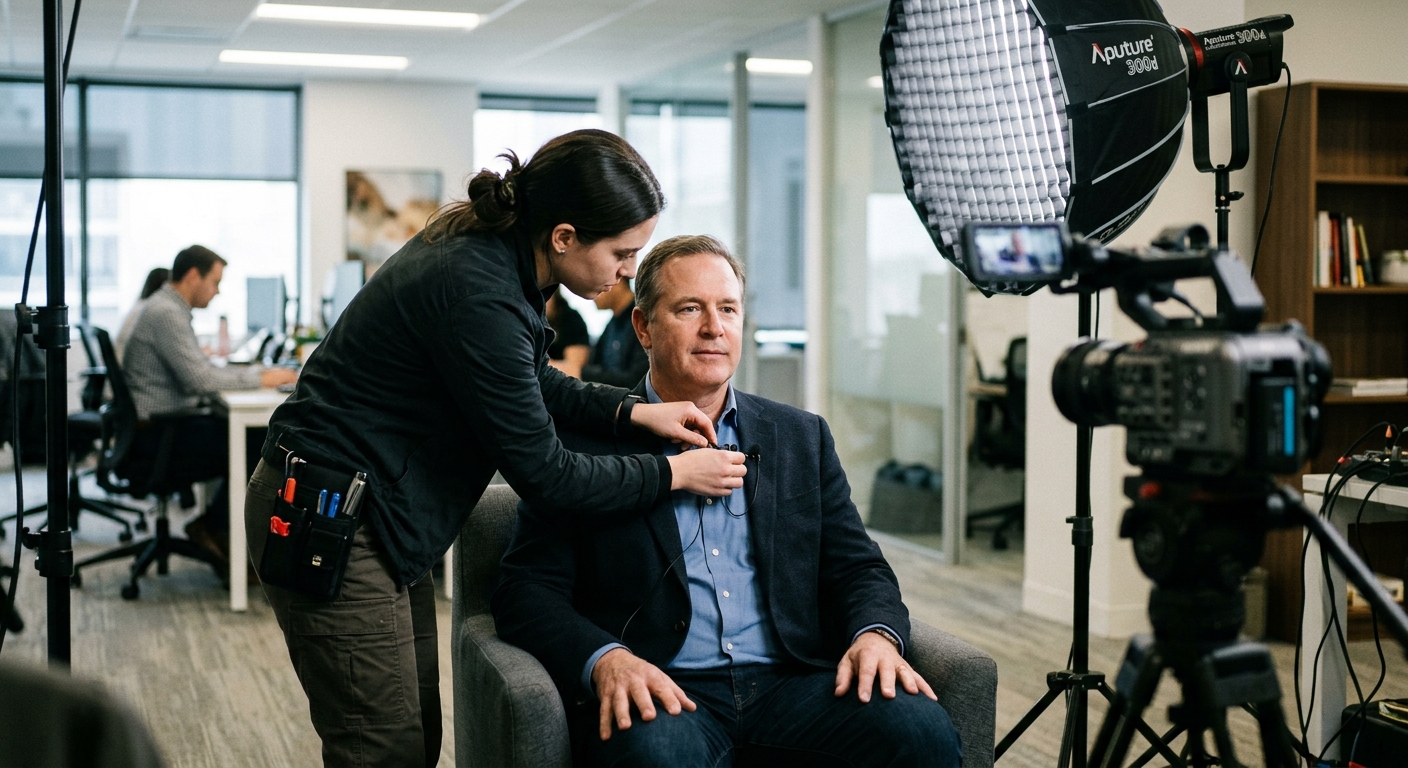
Not the stiff, scripted kind where a client reads three bullet points off a card. The good ones feel like a conversation — a plant manager explaining, in his own words, why he switched vendors after fifteen years with the old one. We wrote up how we approach testimonial shoots after realizing most companies get worse results from testimonials than from cold case studies, purely because the interview technique is wrong. The camera setup matters less than the questions you ask off-script.
Founder or executive Q&A series
A recurring, low-production series where a founder answers questions their sales team hears every week works better for trust-building than a single polished brand film. Shoot four or five in one afternoon, release one a month. It’s cheap per-episode and it compounds — prospects binge the back catalog when they’re deep in evaluation mode.
Product or process explainer videos
If your product has a learning curve, a 90-second explainer cuts support tickets and shortens sales calls. The trick is scripting it from the customer’s confusion, not your feature list. What question do people actually ask on the first demo call? Start there.
Recruiting and culture videos
Tight labor markets make this one underrated. A two-minute video of your actual team, on your actual floor, talking about why they stayed, does more for recruiting than another job posting. We’ve shot these for warehouse operations, hospitals, and tech teams — the format barely changes, the specifics do.
Event recap and highlight reels
Trade show booth, company anniversary, groundbreaking ceremony — anything with a live crowd is worth capturing, even briefly. A 60-second recap posted the same week gets shared internally and externally in a way that a formal case study never will.
Behind-the-scenes manufacturing or process footage
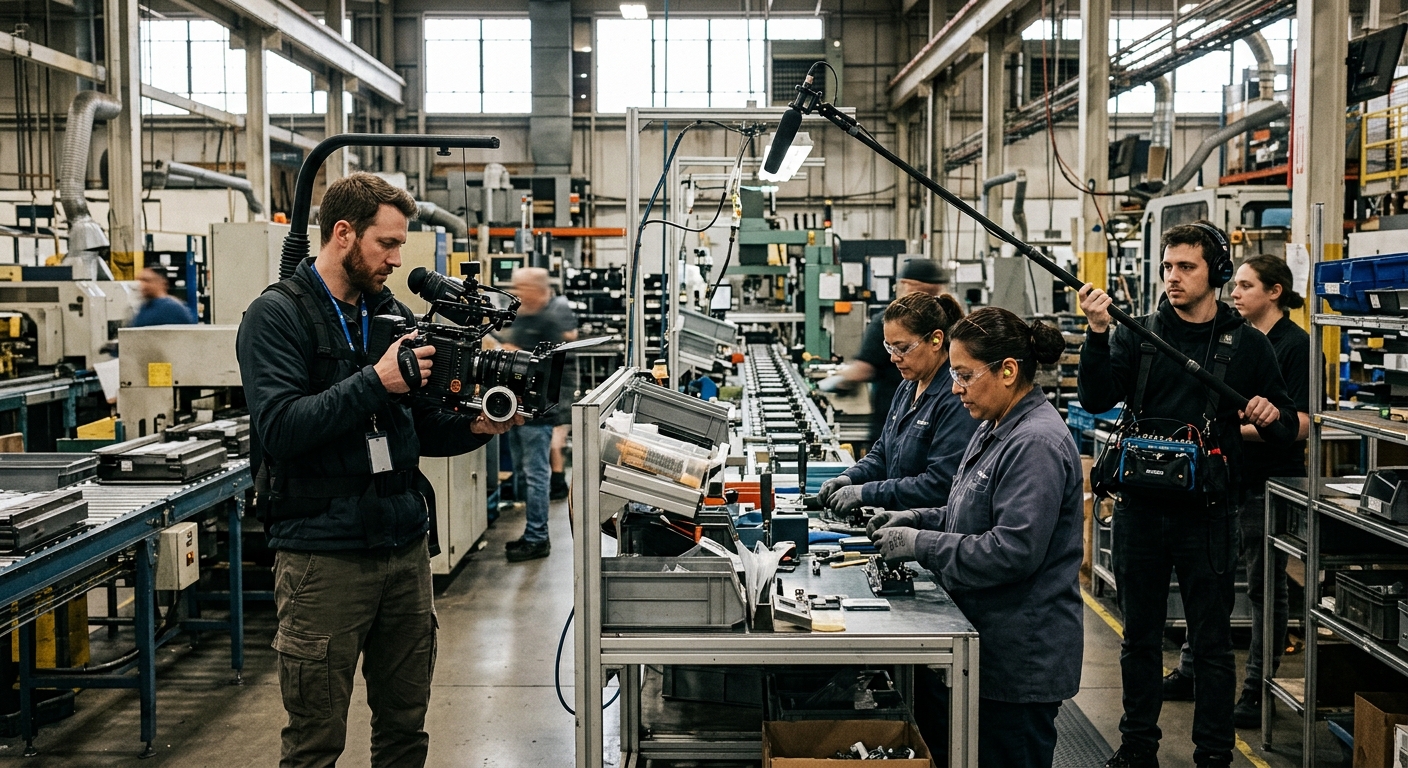
If you make something physical, showing how it’s made is one of the most underused ideas for corporate video content in B2B. People trust what they can see being built. A five-minute “how it’s made” piece, cut down into three 15-second clips for social, gives you a full quarter of content from one shoot day.
Training and onboarding modules
Not glamorous, but genuinely useful, and it frees up your ops team from repeating the same walkthrough to every new hire. These don’t need a big crew — a clean audio track and a steady shot usually beat over-produced training video that nobody wants to sit through twice.
Different formats for different funnel stages
This is where a lot of teams miss the bigger point: a single “corporate video” isn’t a strategy, it’s one asset. We broke down the different styles of corporate video that actually map to funnel stages — awareness pieces, consideration content, decision-stage proof — because matching format to intent is what separates a video library that converts from one that just exists.
How to Choose the Right Format for Your Budget
Every one of these ideas has a different price tag, and the honest answer is that most companies should start with two or three formats, not all eight. A testimonial series and a recurring executive Q&A can be shot efficiently in the same day if you plan it right, which keeps crew costs down without sacrificing variety. If budget is the real constraint, it helps to understand what corporate video actually costs before you scope a plan — pricing swings enormously based on crew size, shoot days, and how much you’re asking post-production to fix versus getting right on set.
A Fresno-based ag distributor we worked with started with exactly this approach: one day of interviews, one day on the production floor, cut into a testimonial, a recruiting piece, and four social clips. That’s the kind of return you get when the format list matches the shoot day instead of chasing a single hero video.
Building a Content Calendar, Not Just a Video
The companies that keep making progress treat video like editorial content — a calendar, a cadence, a plan for where each piece lives after it’s shot. That’s a different conversation than “we need a video,” and it’s usually the difference between a library that grows and one that stalls after the first project. If you’re in the Central Valley, our team handles this from concept through delivery as part of our Fresno video production work, and you can see the full range of what we offer on our video production services page.
Start smaller than you think you need to. Two formats, shot well, released consistently, will outperform one ambitious project that takes six months to greenlight and never gets a sequel.
FAQ
How many corporate videos should a company produce per year?
There’s no fixed number, but companies that see real results usually release something monthly, even if it’s a short clip rather than a full production. Consistency beats scale.
What’s the cheapest type of corporate video to start with?
Customer testimonials and executive Q&A series are usually the most cost-effective, since they need minimal set design and can be batched in a single shoot day.
Do we need a script for every video?
No. Interview-based formats work better with a question list than a rigid script — it keeps the answers sounding like a real person instead of a read-through.
How long should a corporate video be?
It depends on the platform and purpose. A LinkedIn or website explainer usually works best under two minutes; a full case study can run three to five minutes if the story earns it.
Can one shoot day produce more than one video?
Yes, and it should. A single well-planned shoot day with a testimonial interview and some B-roll can usually be cut into a main video plus three or four shorter social clips.
Frequently Asked Questions
How many corporate videos should a company produce per year?
There’s no fixed number, but companies that see real results usually release something monthly, even if it’s a short clip rather than a full production. Consistency beats scale.
What’s the cheapest type of corporate video to start with?
Customer testimonials and executive Q&A series are usually the most cost-effective, since they need minimal set design and can be batched in a single shoot day.
Do we need a script for every video?
No. Interview-based formats work better with a question list than a rigid script — it keeps the answers sounding like a real person instead of a read-through.
How long should a corporate video be?
It depends on the platform and purpose. A LinkedIn or website explainer usually works best under two minutes; a full case study can run three to five minutes if the story earns it.
Can one shoot day produce more than one video?
Yes, and it should. A single well-planned shoot day with a testimonial interview and some B-roll can usually be cut into a main video plus three or four shorter social clips.
