

The $22,000 Question Nobody Runs the Numbers On
A marketing director I worked with last year got a quote for a single brand video: $22,000. Her first reaction was the one almost everyone has — for that price, I should just hire someone. Six months, one salary, one equipment order, and a stack of software licenses later, she called us back. The math on paper and the math in real life almost never match, and that gap is exactly where the in-house vs agency video production decision actually lives. Not in some abstract debate about creative control or “authenticity.” In a spreadsheet most companies never build honestly.
This isn’t a “which one wins” article, because neither one wins across the board. It depends on how much video you actually need, how often you need it, and what kind of video it is. Here’s how to run the numbers yourself.
What In-House Production Actually Costs You
The sticker price of going in-house looks deceptively simple: hire a videographer, buy a camera, done. In practice, a single hire capable of shooting and editing runs $60K–$90K a year in most US markets, and that’s before benefits, which typically add another 25–30% on top of base salary. Add a producer or a motion designer once your needs get more ambitious, and you’re closer to $180K–$300K a year for a lean three-person team.
Then there’s the part nobody puts in the initial pitch deck: a real camera and lens kit, lighting, audio gear, and a proper edit bay with storage can run $40,000 or more upfront, plus ongoing software licenses, insurance, and maintenance. Employee turnover adds another hit — replacing one production hire typically costs $15,000 or more once you count the recruiting time and the ramp-up period, and a new hire usually needs six to nine months before they’re operating at full speed. None of this shows up in the “in-house is cheaper” argument until you’re twelve months in and building your first real production budget.
The upside is real, though: an in-house team gives you same-day turnarounds, deep familiarity with your brand voice, and the ability to reshoot something on a Tuesday afternoon without renegotiating a contract. If your content needs are constant — think weekly social clips, internal town halls, product FAQs, or training material — that speed and familiarity can outweigh the fixed overhead.
What You’re Actually Paying For With an Agency
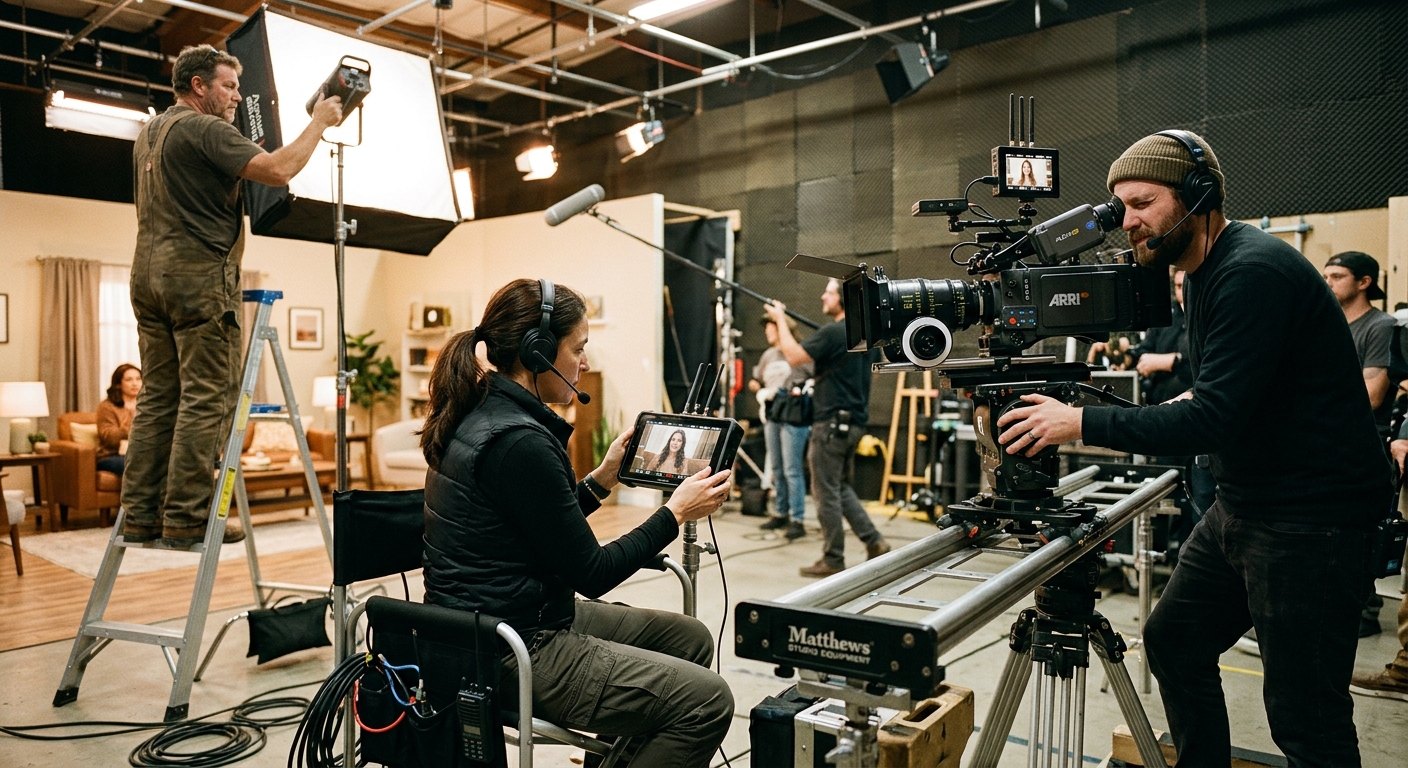
Agency pricing looks scarier on a line-by-line basis — a single commercial-grade video typically runs $5,000 to $30,000, and larger campaigns with multiple deliverables can climb past $100,000. But that number buys you a full crew for the length of the project only: a director, a director of photography, a sound mixer, an editor, a colorist, and often a motion designer, none of whom you’re paying when the camera isn’t rolling. That’s the core trade: in-house cost is fixed whether you shoot five videos a month or zero; agency cost is variable, which matters enormously if your video needs are seasonal or campaign-driven rather than constant.
There’s also a skills argument that’s easy to underestimate. Most in-house hires are generalists by necessity — one person shooting, editing, and managing the client relationship. An agency brings specialists who do nothing but lighting, or nothing but color, or nothing but motion graphics, all day, every project. Reviewing our own services list is a decent gut-check here: if half of what you’re picturing (aerial drone work, animation, multi-camera live events, studio lighting setups) would require you to hire out anyway, you’re already halfway to the agency decision without realizing it. It’s also worth reading through what a video production company actually does day to day before you assume you could replicate it with one generalist hire.
In-House vs Agency Video Production: Where the Break-Even Line Actually Falls
Here’s the part that actually settles the argument: volume. A company producing 12 videos a year with an in-house team is often paying $20,000–$25,000 per video once salaries, gear, and overhead are amortized — worse than just hiring an agency at $5,000–$8,000 a video for the same output. In-house production tends to only become the cheaper option once you’re consistently producing 30–40+ videos a year, which for most companies means somewhere around 8–12 videos a month. Below that line, you’re carrying a full-time production team to make content a fraction of their capacity actually uses.
That threshold is worth calculating honestly before you post a job listing. Take your realistic monthly output, multiply it against agency per-video pricing, and compare that total to a fully loaded in-house salary plus gear and software. Most companies are surprised by which side wins.
Where Each Model Wins by Video Type
Volume isn’t the only variable — format matters just as much. In-house teams are genuinely well-suited to culture and social content, product FAQs, internal communications, recurring training material, and lower-stakes customer testimonials where a slightly rougher, more authentic feel actually helps rather than hurts. Speed and access beat polish for this kind of content.
Agencies earn their fee on the harder stuff: brand films, ad campaigns, product launches, anything requiring animation or motion graphics, multi-location shoots, and video built for paid media where every second is doing conversion work. If you’ve ever tried to shoot a polished corporate interview video or a genuinely cinematic commercial with a two-person internal team stretched across five other jobs, you already know where that gap shows up — usually in the color, the sound design, or a shot list that had to get cut because there wasn’t a second camera operator.
The Hybrid Model Most Companies Land On
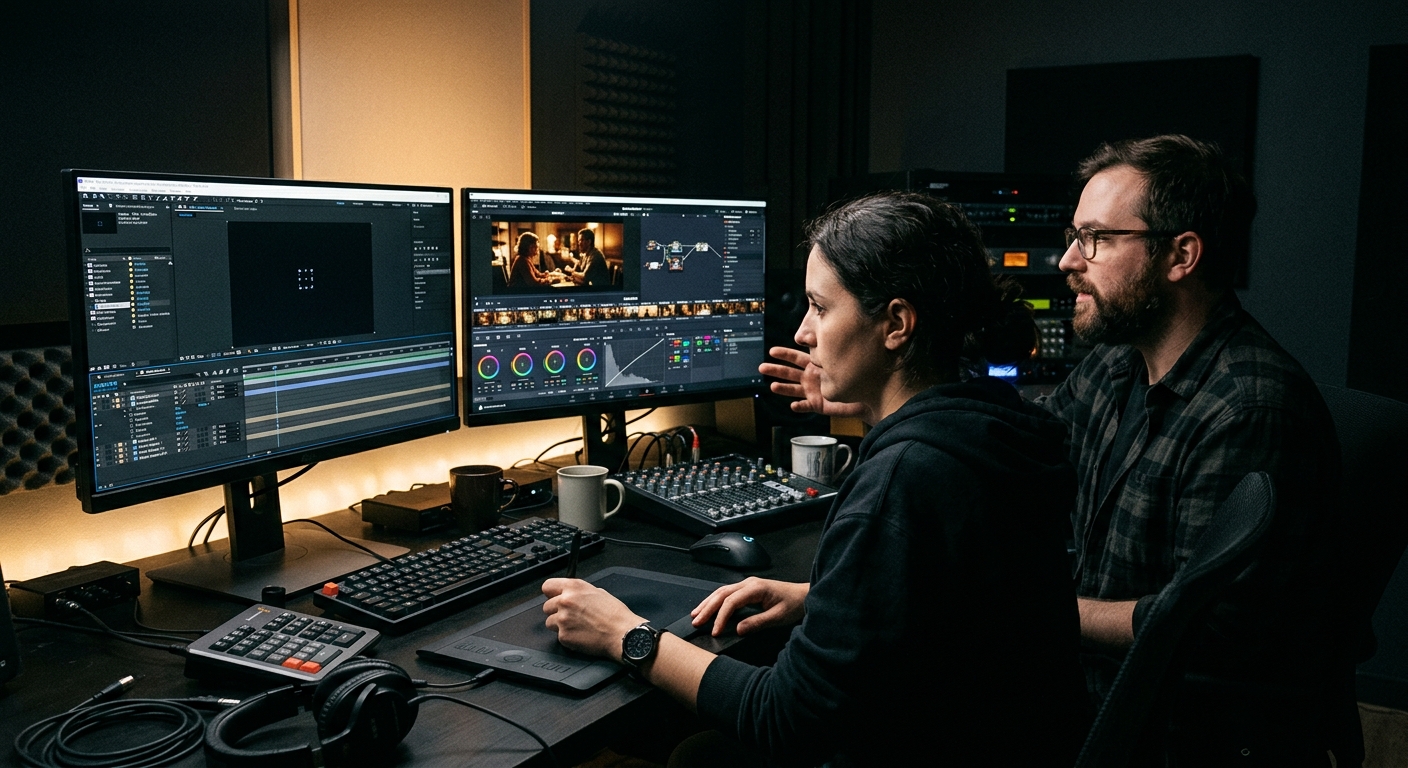
Very few companies that scale their video output stay purely one or the other. The most common setup we see: a single internal producer or editor handles the always-on content — social clips, quick turnarounds, internal updates — while an outside team handles anything strategically important enough to need a full crew. It’s not a compromise so much as it’s matching each type of work to the model built for it. The internal hire keeps brand knowledge in the building and handles the volume; the outside partner brings specialized talent to bear on the handful of projects each year where quality has to be undeniable, like a complete brand video production push tied to a launch or a rebrand.
How to Decide, If You’re Based in LA
If you’re weighing this for a business based here, the calculation has a local wrinkle: Los Angeles has more freelance and agency production talent per square mile than almost anywhere in the country, which makes the agency side of the equation unusually strong on both price and quality. A company offering Los Angeles video production services locally can typically staff a full crew — camera, sound, lighting, edit — for less than what it costs to keep even a lean team on payroll here, simply because the talent pool is deep enough to keep project-based pricing competitive.
Before you commit to either path, it’s worth reading through our tips for hiring a reliable video production company and our breakdown on how to choose a video production company in LA — both will save you from the two most common mistakes companies make in this decision: hiring in-house before volume justifies it, or hiring an agency without vetting whether they can actually deliver on a tight deadline.
Run your own numbers before you decide anything. Pull your realistic monthly video count, price it both ways, and be honest about what a generalist hire can and can’t do compared to a specialist crew. The right answer isn’t a philosophy. It’s arithmetic.
Frequently Asked Questions
Is it cheaper to hire an in-house videographer or work with an agency?
It depends entirely on volume. Below roughly 30-40 videos a year, an agency is almost always cheaper per video once you account for a fully loaded in-house salary, gear, software, and downtime. In-house only becomes cost-competitive once you’re consistently producing 8-12+ videos a month.
What hidden costs come with building an in-house video team?
Beyond salary, expect benefits (roughly 25-30% on top of base pay), $40,000+ in camera, lighting, and audio gear, ongoing software licenses, insurance, and turnover costs of $15,000 or more every time you replace a hire. Most companies also underestimate the six-to-nine-month ramp-up before a new hire is running at full speed.
What types of video are better suited to an in-house team?
Recurring, lower-stakes content: social clips, internal communications, training videos, product FAQs, and informal customer testimonials. These benefit from speed and brand familiarity more than polish.
When does it make sense to hire a video production agency instead?
For anything strategically important or technically demanding — brand films, ad campaigns, product launches, animation, multi-camera events, or paid media content where conversion quality matters. Agencies bring specialized crew (DP, colorist, motion designer, sound mixer) you’d otherwise have to hire out anyway.
Can a company use both an in-house team and an agency?
Yes, and it’s the most common setup among companies scaling their video output. A single internal producer or editor handles always-on content while an outside team is brought in for the handful of higher-stakes projects each year that need a full specialized crew.
