
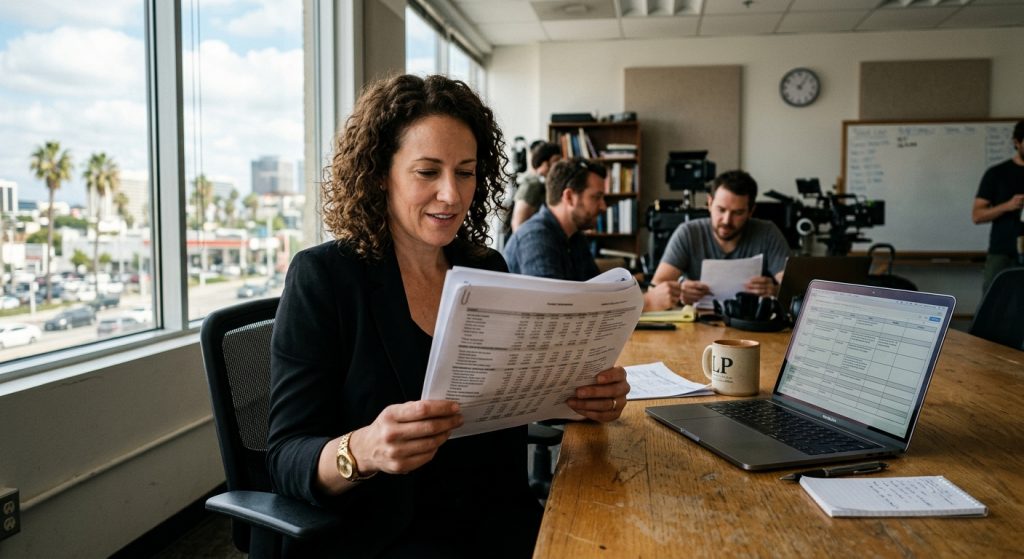
A client called me last spring holding two quotes for the same 90-second brand video: $8,000 and $34,000. Same scope on paper — same script, same shoot day, same deliverable list. He wanted to know which company was lying to him. Neither was. They were just running different video production pricing models, and nobody had bothered to explain the difference before he asked for bids.
That’s the real problem with video pricing. It’s not that production companies are cagey about numbers, though some are. It’s that “video production” isn’t one service with one rate card — it’s four or five different pricing structures wearing the same label, and a quote only makes sense once you know which structure you’re looking at. Understanding video production pricing models before you request bids is the single best way to stop comparing apples to oranges and start comparing actual value.
Why “How Much Does This Cost?” Gets You a Useless Answer
Ask ten production companies what a video costs and you’ll get ten different numbers, because you’re really asking them to translate an unknown scope into a dollar figure using their own internal logic. One shop is quoting you a day rate for a two-person crew. Another is quoting a flat project fee that bakes in unlimited revisions. A third is quoting cost-plus, where you’ll see the actual line items and pay a markup on top. All three numbers are “correct” for that company’s model, and none of them are directly comparable until you strip out the pricing structure and look at what’s actually being delivered.
We put together a companion piece that walks through real dollar ranges by video type — you can see it in our breakdown of corporate video costs — but ranges only help once you understand the mechanism generating them. That’s what this article is actually about.
The Four Video Production Pricing Models You’ll Actually Encounter
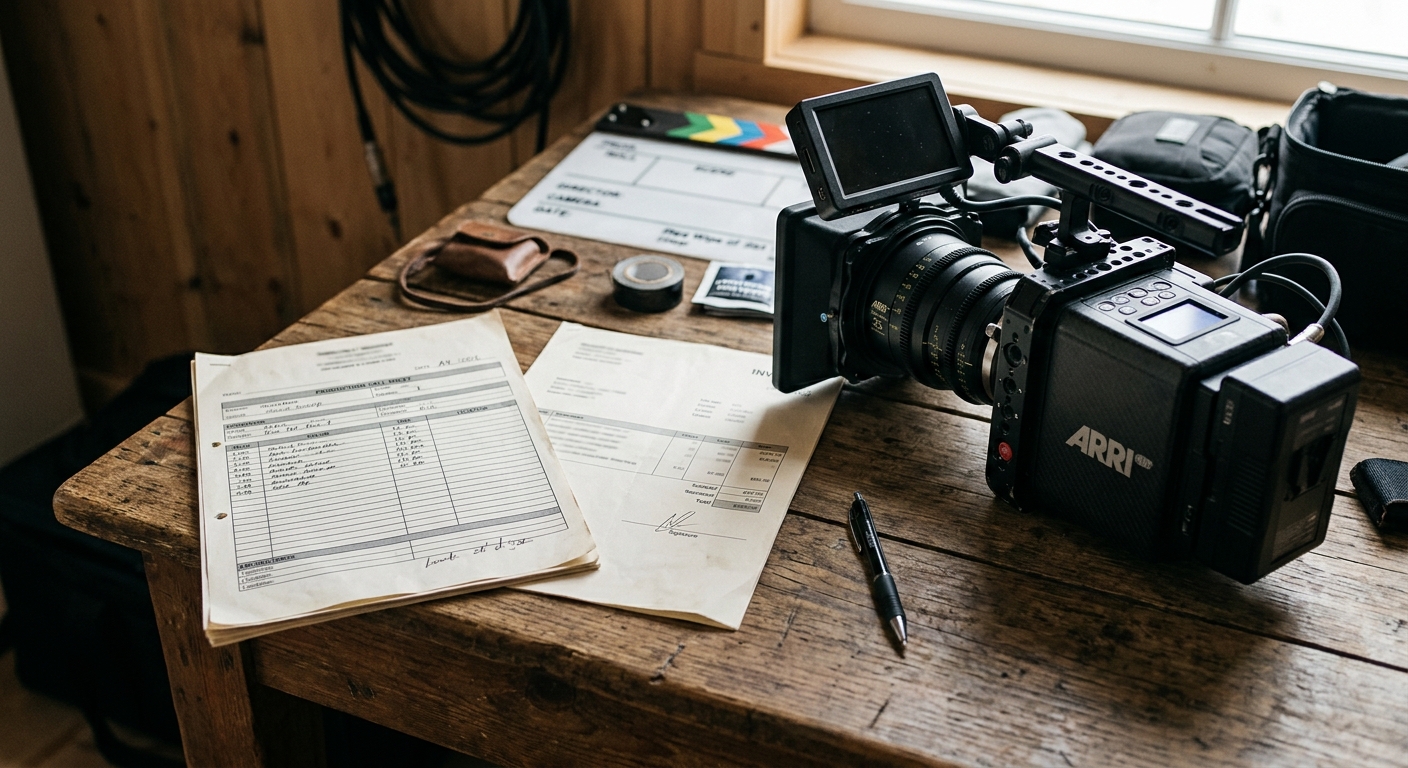
Almost every quote you receive, no matter how it’s dressed up, boils down to one of four structures.
Flat-Bid (Project) Pricing
This is the model most agencies and mid-size production companies default to, and it’s what most clients expect. You get one number for the entire project — pre-production, shoot day, post, a defined number of revision rounds, final delivery. It’s predictable, it’s easy to put in front of a finance department, and it protects you from scope creep on the vendor’s end, since they’ve absorbed that risk into the price.
The catch: flat bids only work when the scope is genuinely defined. If you can’t tell your production partner exactly what you need — how many locations, how many talent, how long the final cut runs, how many versions you need cut down for social — the bid they give you is really a guess with a confident-looking number attached. Padding is common here, and it’s rational padding, not dishonest padding. A producer who’s been burned by scope creep will quote higher to cover themselves.
Day Rate Pricing
Day rate pricing charges for crew, gear, and time in daily increments — a DP might run $800-$1,500 a day, a full crew package (camera, sound, lighting, gaffer) can run $3,000-$8,000 a day depending on market and crew size. This is the model you’ll see most often for commercial and broadcast-adjacent work, and it’s the one you’ll hit constantly if you’re producing in a union-heavy market.
Day rates are transparent, which is their main advantage. You know exactly what you’re paying for each body and each piece of gear. The downside is that day rates don’t include editing, motion graphics, color, or sound mix — those get quoted separately, and clients who don’t know to ask get a shoot-day number that looks great until the post-production invoice arrives.
Retainer Pricing
If you need video content on an ongoing basis — monthly social cutdowns, quarterly product launches, recurring event coverage — a retainer locks in a set number of production days or deliverables per month for a fixed monthly fee, usually at a discount versus booking each project individually. Retainers work well for companies that have figured out video is a channel, not a one-off campaign, and want production capacity on standby instead of re-negotiating scope every time.
The risk with retainers runs both directions. Clients sometimes overpay for capacity they don’t use; production companies sometimes get squeezed when “a couple of quick cuts” quietly turns into a full shoot. A good retainer agreement defines what counts as in-scope work explicitly, with a clear rate for anything beyond it.
Cost-Plus / Time-and-Materials
Less common with agencies, more common with independent producers and smaller shops, cost-plus pricing shows you the actual costs — crew, gear rental, location fees, talent — plus a fixed markup, often 15-25%, for the producer’s overhead and margin. It’s the most transparent model on paper, but it requires trust, because you’re relying on the producer’s honesty about what things actually cost rather than negotiating a single number up front.
What Actually Drives the Number, Regardless of Model
Whichever structure a company quotes under, the same handful of variables move the price: crew size, number of shoot days, talent (union versus non-union, celebrity versus unknown), locations and permits, equipment tier (a Sony FX6 package prices very differently than a RED Komodo cinema package with anamorphic glass), and post-production complexity — a straight edit with color correction costs a fraction of a spot with heavy VFX, motion graphics, and a custom sound design pass.
If you want to get a real number before you’re deep into vendor conversations, working through how to build a production budget yourself first will make every quote you receive easier to evaluate, because you’ll already know which line items are driving cost in your specific project.
How to Match a Pricing Model to Your Project
A one-off brand video with a defined script and a single shoot day almost always favors flat-bid pricing — you want certainty, and the scope is stable enough that a producer can price it accurately. A multi-day commercial shoot with union talent and heavy equipment needs favors day rate pricing, because you want line-item visibility into where the money’s going. Ongoing content needs — the kind that come up if you’re a brand posting weekly and need social-friendly video production without renegotiating every month — favor a retainer. And anything with genuinely unpredictable scope, like a documentary-style project where you don’t know how many shoot days you’ll need until you’re in it, is honestly best handled cost-plus, because forcing a flat number onto an undefined scope just produces a bad guess in both directions.
As an Los Angeles video production crew, we quote all four models depending on the project, and we’ll tell you upfront which one fits what you’re describing — that’s a conversation worth having before you request formal bids, not after. If you’re comparing vendors specifically in this market, our guide on choosing a video production company in LA covers questions to ask beyond just price.
Red Flags in a Pricing Proposal

A few patterns are worth watching for regardless of which model a vendor uses. A quote with no revision terms — nothing stating how many rounds of feedback are included — is a quote that will balloon the moment you ask for a third round of notes. A day rate that doesn’t specify whether post-production is included is a quote missing half its real cost. A retainer with vague deliverable definitions (“up to 4 videos a month”) without a shared understanding of what counts as a “video” — a 15-second cutdown versus a 3-minute narrative piece are not the same unit of work — is a fight waiting to happen in month two.
Before you sign anything, it’s worth running the vendor through a basic vetting process. We laid out the specific questions in our guide to hiring a reliable production company, and most of them come down to one thing: does this company explain its pricing model clearly, or does it just hand you a number and expect you to trust it?
The Bottom Line on Pricing Models
None of the four models is inherently better than the others — they’re tools for different situations, and a producer who only offers one is either inexperienced or steering you toward whatever’s easiest for their own cash flow. The client with the two quotes I mentioned at the start ended up going with the $8,000 flat bid, and it was the right call — his scope was genuinely simple, and the $34,000 quote turned out to include a day rate crew, a five-day retainer buffer, and a cost-plus markup on gear he didn’t need. Same label, completely different math. Once you can read a quote for its pricing model instead of just its final number, you stop getting surprised by invoices and start negotiating from an actual position of knowledge.
Frequently Asked Questions
What’s the difference between a day rate and a flat bid?
A day rate charges per crew day and usually excludes post-production, so you pay separately for editing, color, and sound. A flat bid is one number covering the entire project — shoot and post — with a defined scope and revision count built in.
Why do two production companies quote wildly different prices for the same video?
Usually because they’re using different pricing models, not because one is overcharging. A day-rate quote, a flat-bid quote, and a cost-plus quote for the same project can land far apart even when the underlying work is identical — ask each vendor what’s included before comparing numbers.
Is a retainer worth it for ongoing video needs?
If you need video monthly or quarterly, yes — retainers typically discount against one-off project rates and keep a crew on standby instead of making you re-negotiate scope every time. Make sure the agreement defines exactly what counts as in-scope work.
What’s a realistic budget range for a corporate video in Los Angeles?
Most straightforward corporate videos with a single shoot day and a small crew land somewhere between $5,000 and $20,000 in the LA market, with cost rising fast once you add multiple locations, union talent, or heavy post work. See our full cost breakdown for specifics by video type.
Should I ever pay for video production by the hour?
Rarely, and mostly for very small tasks like a quick edit revision or a single interview setup. Hourly billing makes budgeting unpredictable for anything with real production complexity, so most professional shops price by day, project, or retainer instead.
