

I’ve sat across the table from a dozen founders holding a hard drive with a $15,000 explainer video on it and forty total views to show for it. That’s the failure pattern nobody warns you about when you start making explainer videos for startups: the video looks fine, the animation is smooth, the voiceover is warm and confident — and it converts nobody, because it explains the product instead of the problem.
That distinction is the whole game. Founders write scripts about what their software does. Buyers only care about what changes for them. Once you flip that order, everything else — length, style, budget — falls into place a lot faster.
Why Founders Get Explainer Videos Wrong
The instinct is to open with the company name and a tagline, then walk through features in the order the product roadmap was built. That’s an engineering mental model, not a viewer one. Someone lands on your homepage or a landing page from a paid ad with about eight seconds of patience before they bounce. If your video spends the first fifteen seconds on a logo animation and a mission statement, you’ve already lost the people you paid to reach.
We’ve watched this play out with early-stage clients, including a handful of Sacramento startups we’ve worked with through our Sacramento video production team — the ones who came to us with a script built around “who we are” instead of “what breaks for you right now” always tested worse in front of real users, no exceptions. The fix isn’t more polish. It’s a different opening line.
Making Explainer Videos for Startups That Actually Convert
A script that works follows a boring, reliable shape: name the problem in a way the viewer recognizes immediately, show the moment it gets worse, introduce your product as the thing that interrupts that pattern, then get out. No feature tour. No “and so much more.” One clear next step at the end — start a trial, book a call, whatever your actual funnel needs.
If you’ve never written to that structure before, it’s worth reading through how to write a compelling video script before you touch a storyboard, because the script is where 80% of an explainer video’s performance gets decided, long before anyone picks up a camera or opens After Effects. Directors and editors can save a mediocre shoot. They can’t save a script that’s explaining the wrong thing to the wrong person.
Pacing matters more than most founders expect too. Startup explainer videos live or die on their first ten seconds — that’s the window before a viewer’s thumb moves to skip or scroll. Open on the problem, not the product, and you buy yourself the rest of the runtime to actually make your case.
Animation vs. Live Action: Picking the Right Style
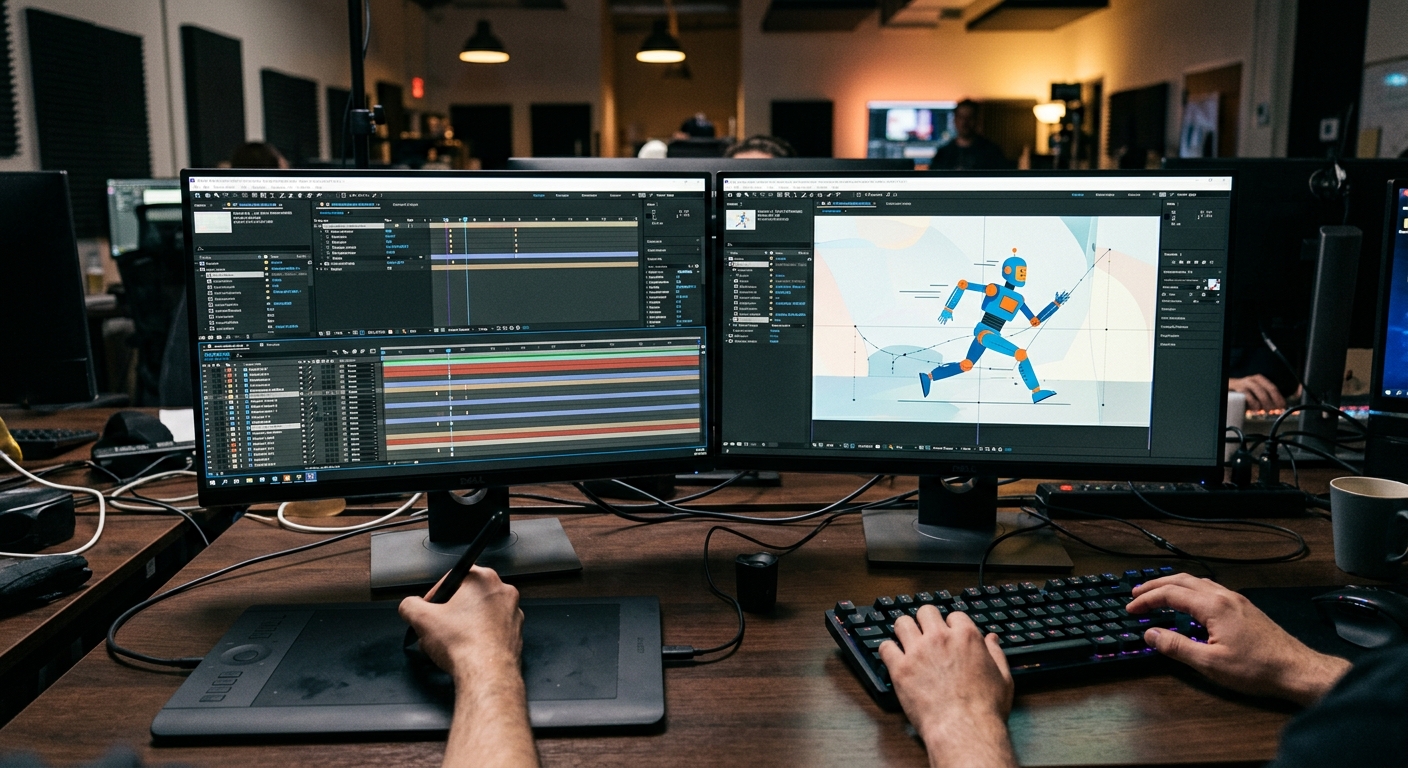
This is the decision founders agonize over and it’s usually simpler than it feels. Animation is the right call when your product is abstract — software, a workflow, a financial process, anything that doesn’t have a physical form you can point a camera at. It’s also cheaper to revise: if your product changes (and at a startup, it will), updating a script and a few scenes in an animated video is a lot less painful than reshooting actors and locations.
Live action earns its cost when trust is the thing you’re selling. If your product touches people’s homes, health, money in a tangible way, or if your founder or customers are genuinely compelling on camera, real faces build credibility that animation can’t fake. A lot of startups end up blending both — live-action interviews with real customers cut against animated sequences that show the product mechanics. We break down the tradeoffs in more depth in animation styles in video production, including which styles read as “credible SaaS company” versus “we spent our whole seed round on this video,” which is a line you do not want to cross by accident.
Whatever you pick, match it to how your buyer actually makes decisions. A dev tool sold to engineers can get away with a drier, more technical animated style. A consumer app selling an emotional outcome needs warmth — real people, real reactions, less diagram.
What a Startup Explainer Video Should Cost
Founders ask this before anything else, and the honest answer is a range, because the range is real: a solid 60-to-90-second explainer runs anywhere from $4,000 for a lean animated piece with stock-adjacent visuals up to $25,000+ for a fully custom animated or live-action production with original illustration, professional voice talent, and a few rounds of revision built in. Anything quoted well under $4,000 is usually template animation with your logo swapped in, and it looks like it.
The number that actually matters isn’t the sticker price, it’s cost per qualified lead once the video is live on your homepage or running as an ad. A $12,000 video that doubles your landing page conversion rate pays for itself in a way a $2,000 video that nobody finishes watching never will. If you want the full breakdown of where that money goes — scripting, storyboard, voiceover, animation hours, revisions — how much does corporate video cost walks through it line by line, and most of that math applies directly to explainer work.
Our production services team builds a scope around your actual budget rather than a fixed package, because a Series A company with a brand video already in hand needs a different quote than a two-person team that needs a script written from a blank page.
How Long Should It Be
Sixty to ninety seconds is the sweet spot for a homepage explainer, and I’d rather you land at fifty-five seconds that hold attention than ninety that lose half your viewers by the midpoint. If you’re building something for a paid social ad instead of a landing page, cut that in half — fifteen to thirty seconds, because the platform is fighting you for attention the entire time. Sales enablement videos, the kind an AE sends mid-deal, can run longer, up to two or three minutes, because the viewer already has a reason to watch.
Resist the urge to cram in every feature because “investors will see this too.” Investors and customers need different videos. Trying to serve both audiences in one script is how you end up with a video that’s technically accurate and persuasively useless to everyone.
Getting the Brief Right Before You Hire Anyone

Most of the expensive mistakes happen before a single frame gets shot, in the brief itself. Vague direction like “make it feel premium” or “something like Apple’s videos” gives your production partner nothing to design against. A tight brief spells out the one action you want a viewer to take, the single biggest objection standing in the way of that action, and the three things your video is explicitly not trying to do. That last part is the one founders skip, and it’s the one that keeps a script from turning into a feature list.
The Bottom Line
Making explainer videos for startups isn’t about production value — it’s about ruthless editing of what you say and how fast you say it. Get the problem statement right, keep it under ninety seconds, match the style to how your buyer actually trusts things, and budget for the script as much as the animation. Everything after that is execution, and execution is the part a good production partner should be handling anyway.
Frequently Asked Questions
How much does a startup explainer video cost?
Most solid 60-90 second explainer videos run between $4,000 and $25,000, depending on whether it’s animated or live action, how much original illustration or footage is involved, and how many revision rounds you need. Anything under $4,000 is usually a template with your logo dropped in.
How long should a startup explainer video be?
60 to 90 seconds for a homepage or landing page video. Cut to 15-30 seconds for paid social ads, since you’re fighting for attention in a scrolling feed. Sales enablement videos sent mid-deal can run 2-3 minutes because the viewer already wants to watch.
Should our explainer video be animated or live action?
Animation works best for abstract products like software or workflows, and it’s cheaper to update as your product changes. Live action earns its cost when trust and real human credibility matter more than mechanics, like consumer, health, or finance products.
What should we include in the video brief before hiring a production company?
Spell out the single action you want viewers to take, the biggest objection standing between them and that action, and what the video is explicitly not trying to cover. Vague direction like ‘make it feel premium’ gives a production team nothing concrete to build against.
Do investors and customers need different explainer videos?
Yes. Trying to serve both audiences in one script usually produces a video that’s technically accurate but persuasively weak for everyone. Build your homepage explainer for customers and a separate, more detailed piece for investor conversations.
