
A client called me last spring holding two quotes for what she described as “basically the same video”: $1,400 from a freelancer on Upwork and $22,000 from a boutique production company. She wanted to know which one was the scam. Neither was. They were pricing two completely different productions that happened to share the words “product video” in the proposal title, and both were legitimate answers to the same vague question about product video cost.
That’s the trap with searching for a single number. Product video cost isn’t one figure — it can swing by a factor of a hundred depending on what the person quoting it actually means by “product video.” After years of writing these bids ourselves at Blare Media, here’s what actually moves the price, what you should expect to pay for each format, and where the hidden charges show up after you’ve already signed.
What Does Product Video Cost in 2026?
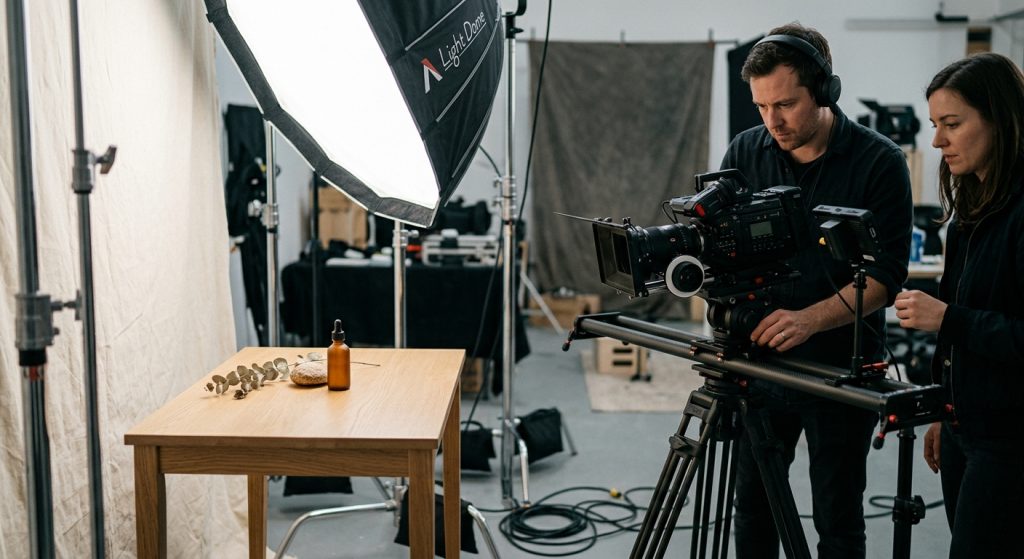
Most small-to-midsize businesses land somewhere between $2,500 and $10,000 for a single, professionally shot product video — a studio or on-location shoot, a day of filming, and a week or two of editing. Below that floor you’re usually looking at UGC-style reviews or a freelancer working solo ($500–$2,000). Above $15,000, you’re paying for a full crew, custom motion graphics, multiple locations, or paid talent on set.
Per-finished-minute pricing, the metric most agencies quote, typically runs $1,000 to $10,000. A straightforward studio product shot sits near the bottom of that range; a fully animated 3D product visualization with custom rigging sits at the top. If a quote comes in outside $500–$50,000 for a single deliverable, ask what’s driving the number before you sign anything — it’s either missing scope or padded with line items you don’t need.
The Real Cost Drivers Behind Every Quote
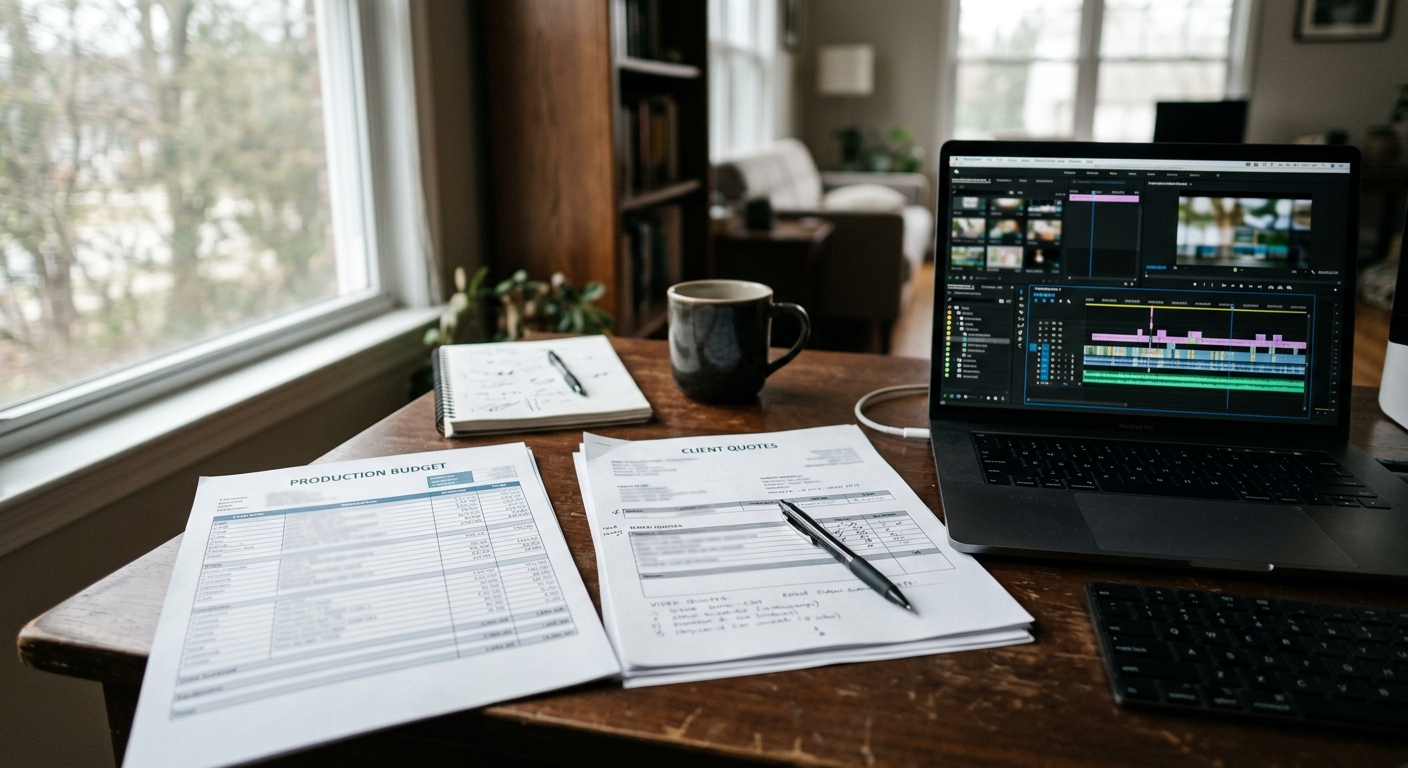
Five things move a product video budget more than anything else: what the product actually is, how it’s shot, how many deliverables you need, who’s on camera, and how many rounds of revisions are baked into the contract. Everything else is a rounding error compared to these.
A physical product — a skincare bottle, a piece of hardware, a food item — needs studio time, lighting rigs, and often a stylist to make it look right under a macro lens. A software product needs none of that, but it needs a clean screen capture, UI animation, and usually a voiceover artist, which shifts the cost into post-production instead of the shoot day. Neither is cheaper across the board; they’re just expensive in different places. If you’re building a budget for the first time, our guide to building a production budget walks through how to allocate across pre-production, shoot day, and edit before you ever call a vendor.
Deliverable count is the sneaky one. A single 30-second hero cut is one price. That same shoot re-cut into a vertical Reel, a square Instagram post, a 6-second bumper ad, and a silent autoplay version for your homepage can add 20–40% to the invoice — not because the shoot got harder, but because each aspect ratio and length needs its own edit pass.
Cost by Video Type: What You’re Actually Buying
Different product video formats carry genuinely different price tags because they require different crews, tools, and turnaround times — matching the format to your actual goal is the fastest way to avoid overpaying. Here’s roughly what each looks like on a real invoice:
- UGC-style reviews and testimonials: $200–$2,000. Often just a creator, a phone, and a script outline.
- Ecommerce/catalogue showcases (the kind that sits on a product page): $1,000–$7,000, and drops per-unit when you shoot several SKUs in one session.
- SaaS or software demo/walkthrough: $2,500–$15,000, driven mostly by UI polish and voiceover quality rather than crew size.
- 3D animation or product visualization: $5,000–$50,000+, priced by model complexity and render time, not shoot days.
- Amazon or marketplace listing video: $500–$7,000, constrained by strict format and length rules the platform enforces.
- Launch films with narrative and talent: $10,000–$200,000+, the tier where casting, locations, and story production stack up fast.
If your goal is a single video that covers the essentials — clear shots of the product, a benefit-driven voiceover, a call to action — the essential elements of a promotional video matter more to conversion than which tier you buy into. A $3,000 video with the right structure will outperform a $15,000 video that buries the offer.
Why Cost-Per-Finished-Minute Is a Misleading Metric
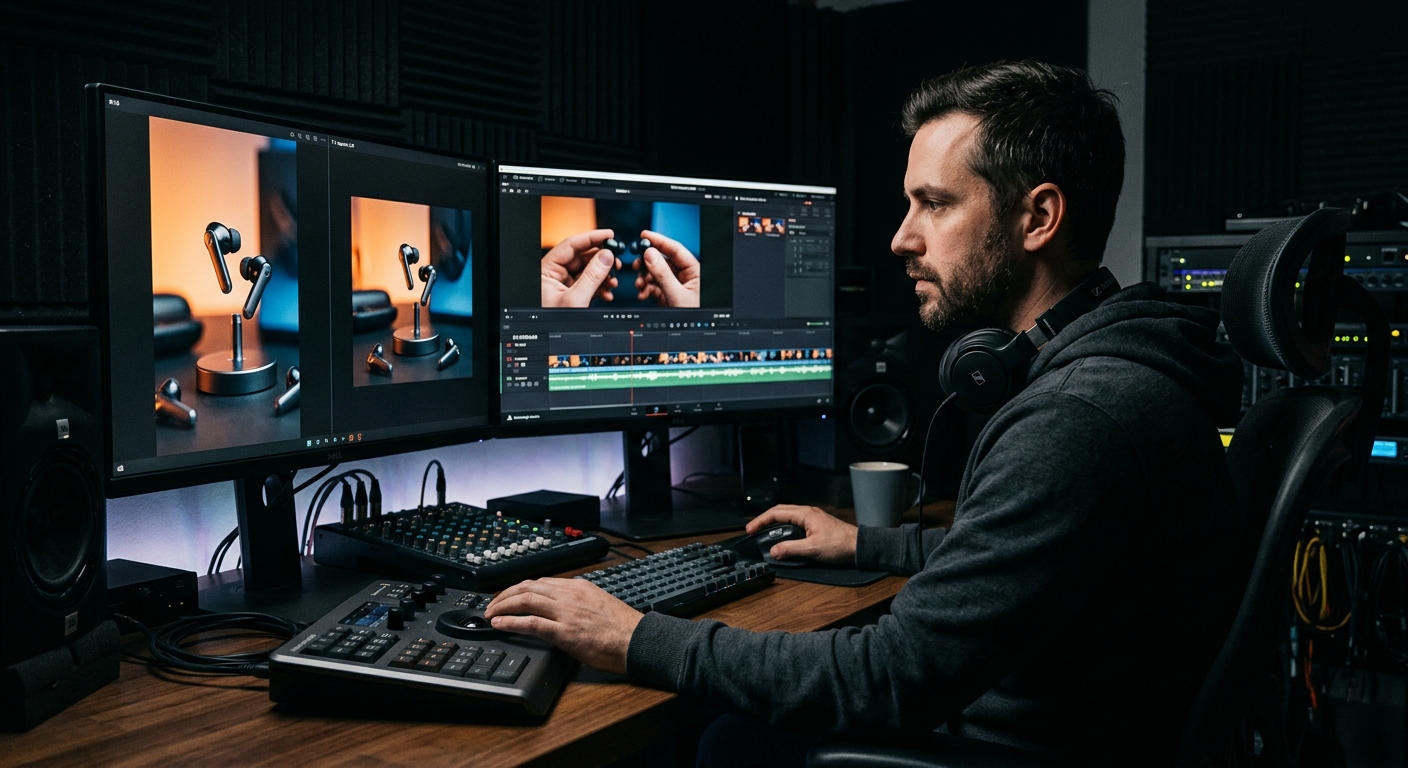
Cost per finished minute drops as the video gets longer, which is the opposite of what most buyers assume. A 15-second video and a 90-second video from the same shoot day cost roughly the same to produce, because the expensive part — location, lighting, crew, camera setup — is a fixed cost that gets spread across however much usable footage comes out of it. Once the crew is on site and the lights are up, an extra thirty seconds of footage costs almost nothing to capture.
That’s why agencies quoting a flat “per minute” rate on a 15-second social cut are usually padding the number, and why a bundled package — one shoot day producing a hero video plus four social cuts — almost always beats buying each length separately. When you’re scoping a shoot with a vendor, ask what’s covered under product video production as a single session versus what gets billed as a separate deliverable; that line item alone can be the difference between a $4,000 quote and an $11,000 one for the same footage.
The Hidden Costs Nobody Puts in the Initial Quote
Expect the final invoice to run 15–30% above the original quote once revisions, licensing, and reformatting are factored in — this is normal, not a sign you picked the wrong vendor, as long as it’s disclosed upfront. The line items that show up late are predictable: extra revision rounds beyond what’s contracted ($300–$1,500 each), a reshoot when the product itself changes before launch ($1,500–$5,000), music or stock licensing ($50 to several thousand for a broadcast license), and reformatting the final cut for a platform nobody mentioned in the original brief ($150–$500 per format).
Ask for a revision cap and a written list of included deliverables before you sign. It’s the single question that prevents the most billing disputes we see.
What AI Tools Actually Change About the Math
AI production tools lower the floor for simple product videos but don’t touch the ceiling for anything that needs real craft — expect them to replace $500–$2,000 DIY-tier work, not $10,000+ agency productions. A text-to-video tool can turn a product photo and a script into a passable 15-second social clip for a few dollars in credits, which is genuinely useful for testing ad variations before committing real budget to one concept.
Where it falls apart is anything requiring the product to look and feel exactly right — accurate materials, correct proportions, believable hands-on interaction, brand-consistent color. We cover where the line actually sits, and where a hybrid AI-plus-live-action workflow beats either extreme, in our breakdown of AI product video production. The short version: use AI to storyboard and test cheaply, then shoot the version that’s actually going in your ad budget.
Getting the Most From a Product Video Budget in San Jose
Local production usually beats remote or overseas vendors on total cost once you count travel, reshoots, and revision turnaround time — a crew that can be back on set the same week a product changes is worth more than a lower day rate three time zones away. Bay Area studio and equipment rental costs run higher than the national average, but they’re offset by not paying to fly a crew in, house them, and absorb the delay when a reshoot is needed.
If you’re comparing bids for San Jose video production, ask each vendor for their day rate separately from their edit rate — bundled numbers make it hard to tell where you’re actually spending money. And if budget is the binding constraint rather than scope, our guide to affordable video production in San Jose covers how to scope a smaller shoot without cutting the parts that actually drive sales. A 2026 industry survey found that 85% of people say they’ve been convinced to buy a product or service after watching a video, according to Wyzowl’s State of Video Marketing report — which is exactly why it’s worth spending the money on the parts of the video that carry that persuasion, and cutting the parts that don’t.
Frequently Asked Questions
How much does a basic product video cost?
A basic product video — a single studio shoot with simple lighting, one product, and a short edit — typically costs $1,000 to $3,000. Freelancer-only or UGC-style versions can run as low as $500, while adding a second location or talent pushes it toward $5,000.
What’s a reasonable cost per finished minute for a product video?
A reasonable cost per finished minute runs $1,000 to $5,000 for live-action product videos and $5,000 to $10,000+ for animated or 3D work. Per-minute cost drops as the video gets longer, since setup costs are fixed regardless of runtime.
Why do product video quotes vary so much between vendors?
Quotes vary because “product video” covers wildly different scopes — a $500 UGC clip and a $50,000 launch film both fit the term. The real variables are crew size, whether it’s live-action or animated, how many deliverables are included, and how many revision rounds are built into the price.
Are there hidden costs in product video production I should ask about upfront?
Yes — expect 15–30% above the initial quote from extra revision rounds, music or stock licensing, reformatting for additional platforms, and reshoots if the product changes before launch. Ask for a revision cap and a written deliverables list before signing.
Is it cheaper to use AI tools instead of hiring a video production company?
AI tools are cheaper for simple, low-stakes videos — a few dollars in credits versus $500-$2,000 for a comparable DIY shoot — but they can’t yet match a professional crew on accurate product detail, lighting, or brand consistency for anything going into a paid ad budget. Most businesses get the best value using AI to test concepts cheaply, then shooting the winning concept live-action.
