

A SaaS founder called us last spring with a $40,000 explainer video his board loved and a trial-to-paid rate that hadn’t moved a point in six months. The video was gorgeous — 3D isometric product mockups, a licensed voice actor, a score that swelled at the CTA. Nobody who mattered ever finished watching it.
That’s the trap most saas video marketing conversations fall into. Teams optimize for the video looking impressive in a board deck instead of doing the one job it has: getting a skeptical buyer to understand what the product does and why it matters to them, fast. Get that job right and video becomes the cheapest salesperson on the team. Get it wrong and you’ve bought expensive wallpaper.
Why SaaS Buyers Watch Before They Ever Talk to Sales
SaaS buyers now do most of their evaluation without a human in the loop, and video is how they self-serve that research. In Wyzowl’s 2026 video marketing report, 96% of B2B buyers say they prefer video for learning about a product or service over reading a spec sheet or sitting through a scheduled call.
That preference shows up earlier in the funnel than most SaaS marketing teams plan for. A prospect finds your category on YouTube or LinkedIn before they know your brand name, watches a 90-second demo before requesting a trial, and forwards a feature walkthrough to a colleague before either of them talks to your AE. If there’s no video at that stage, or the only video is a glossy brand film that never shows the actual product, you lose the evaluation before your sales team even knows it started.
The Five SaaS Video Formats Worth Your Budget
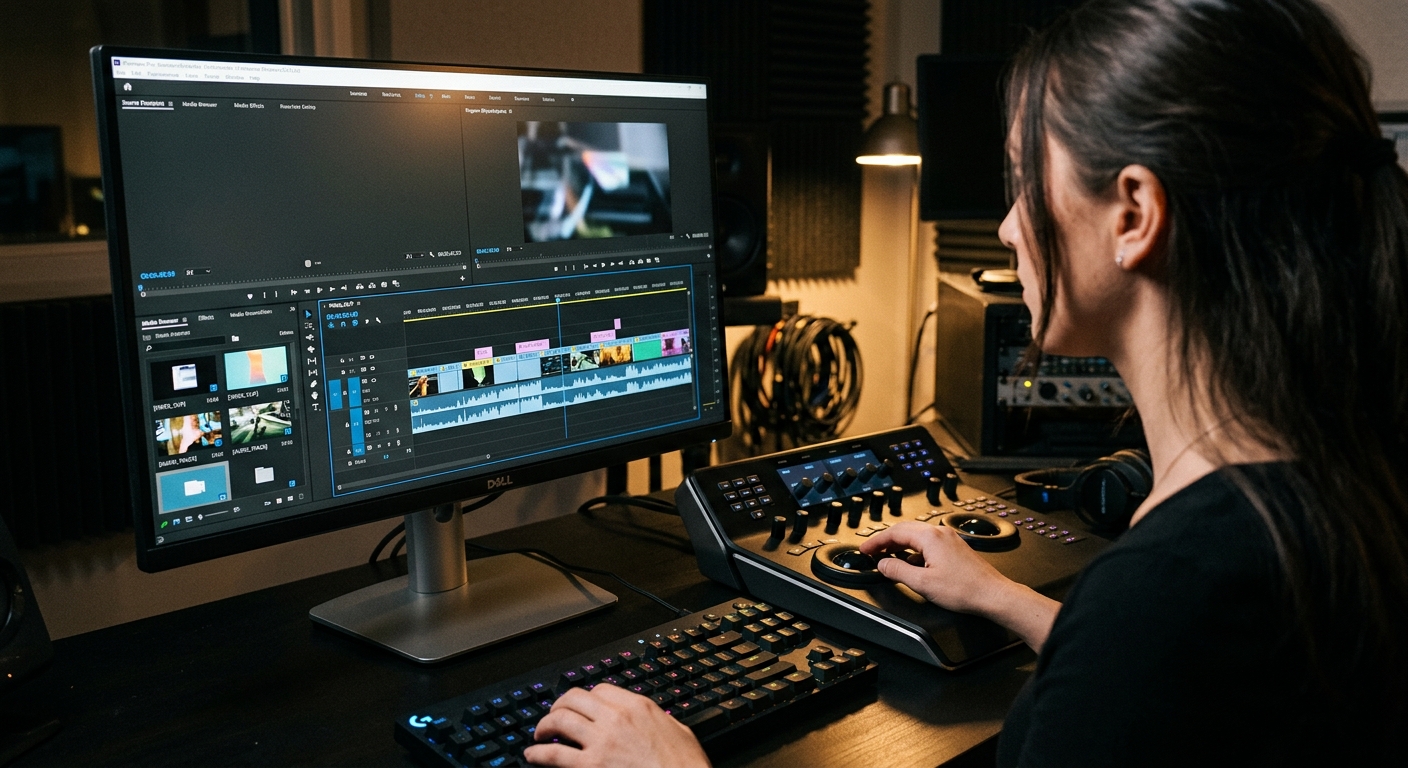
Five formats do almost all the useful work in SaaS video marketing: the explainer, the product demo, the onboarding walkthrough, the customer testimonial, and the founder-led or subject-matter-expert clip. Everything else — hype reels, generic brand anthems — is optional at best.
The shift worth noting for 2026: polished, agency-shine explainers no longer win on their own. Buyers who’ve been burned by overpromising SaaS marketing scroll past anything that reads as corporate theater, and they respond better to a founder or product lead talking straight to camera about a real problem. That doesn’t mean production value stops mattering — audio quality and clean visuals still build trust — it means the writing and the person on screen carry more weight than the animation budget. If you’re building the earlier-funnel piece of this mix, the fundamentals in what makes a promotional video work still apply: a clear hook, one message, a specific audience, and a call to action that isn’t vague.
Testimonials and case-study videos deserve more budget than most SaaS teams give them. A 90-second customer story with real numbers — “we cut onboarding time from three weeks to four days” — does more to close a hesitant buyer at the bottom of the funnel than another feature-tour explainer ever will.
What Your Demo Video Needs to Nail in the First 30 Seconds
A demo video has to show the buyer their own problem within the first 10 seconds and the product solving it within 30, or it loses them. Viewers decide whether to keep watching almost immediately, and a demo that opens with your logo and a mission statement has already burned the window that matters.
Structure it as one complete workflow, not a feature tour. Pick the single task your best customers do most often — publishing a report, closing a ticket, syncing a dataset — and walk through it start to finish with realistic data, not “Acme Corp” placeholder text. B2B teams running video-led campaigns see roughly 40% higher conversion than static-content campaigns, and 88% of B2B buyers say they won’t seriously engage with a sales team before watching a demo first. Keep the homepage cut under 90 seconds; a longer 2-3 minute version belongs on the feature or pricing page where the visitor is already further along. And when the product itself involves AI-assisted workflows or automation that’s hard to describe in a static screenshot, that’s exactly the case where a dedicated AI product video approach — showing the automation actually running against real inputs — earns its cost back fastest.
Where SaaS Video Marketing Actually Moves the Needle
SaaS video marketing works differently at each funnel stage, and using the same video everywhere is the single most common budget mistake. Awareness-stage video needs to hook fast and teach a category, not sell a product. Consideration-stage video needs to answer “does this solve my specific problem.” Decision-stage video needs proof — testimonials, security/compliance walkthroughs, ROI numbers. Retention-stage video, the one most teams skip entirely, needs to reduce support tickets through onboarding and feature-adoption clips.
Mapping video spend to CAC and LTV instead of production polish changes the ROI conversation with a CFO. A $2,500 onboarding video that lowers churn in month two pays for itself faster than a $15,000 brand film that never touches a paying account. If you haven’t mapped your funnel this way yet, it’s worth pairing this against a broader video marketing strategy that assigns a specific format and goal to each stage rather than treating “we should make more video” as a strategy on its own.
There’s a newer wrinkle worth planning for too: AI answer engines like ChatGPT, Perplexity, and Google’s AI Overviews now surface product comparisons and buying advice directly, often citing pages that pair clear written explanations with supporting video. Structuring your video landing pages with direct, front-loaded answers to the questions buyers actually type — not just embedding a player and hoping — is becoming as important as the video itself for getting found in that research phase.
What SaaS Video Production Actually Costs in 2026
A single 60-90 second SaaS explainer or demo video runs $800-$3,000 from a freelancer or small studio, $3,000-$15,000 from an established production company, and can climb past $20,000 for heavy custom animation or a multi-location shoot. US-based SaaS companies spend an average of roughly $6,300 for a 60-second piece, according to industry pricing surveys — European teams average closer to $4,100, and pure-animation studios in Asia often come in under $2,000, though quality and revision support vary widely at that end.
Budget by what the video has to accomplish, not its runtime. A homepage demo that a prospect watches once needs less investment than an onboarding series a customer references for months, or a sales-enablement clip your AEs send fifty times a week. For a technology company deciding between a generalist freelancer and a specialist, a team that works specifically in technology and SaaS video production will usually get to an accurate script and shot list faster, because they’ve already solved the “how do we film software” problem before.
Measuring What Matters: Completion Rate, Drop-Off, and Demo-to-Paid Conversion

The metrics that actually tell you whether a SaaS video is working are completion rate, the timestamp where viewers drop off, and how many demo viewers convert to paid. Play count tells you almost nothing on its own.
A 10-20% demo-to-paid conversion rate is a reasonable benchmark for an early-stage SaaS product; below that, the problem is usually the video’s opening or the offer behind it, not the traffic. Watch your drop-off curve closely — a cliff at the 15-second mark almost always means the hook is weak, while a slow bleed through the middle usually means the video is showing features instead of outcomes. Pair that with landing-page conversion rate and time-to-first-value for trial users, since a video can generate views without ever moving the metric you actually care about. We cover the tracking setup for all of this in more detail in how to measure video marketing success, including which analytics events are worth wiring up before you ever hit publish.
Building a Realistic SaaS Video Roadmap
Start with one video — the homepage demo — get it converting, then expand into the funnel stages you’re missing. Trying to produce explainer, demo, onboarding, and testimonial content simultaneously on a first pass usually means all four come out mediocre and none of them ship on time.
A workable sequence: homepage demo first, since it touches every visitor. Then a testimonial or case-study video once you have two or three customers willing to talk in specifics. Then onboarding content once churn data shows where new users stall. Thought-leadership and founder clips can run in parallel the whole time, since they’re cheap to produce and compound on social and LinkedIn regardless of funnel stage. If you’re a Bay Area SaaS company weighing whether to shoot in-house or bring in a crew, our San Jose video production team works with software companies across the valley on exactly this kind of staged rollout, usually starting with the demo and building out from there as the data tells you what’s next.
Frequently Asked Questions
How much does a SaaS explainer or demo video cost?
A 60-90 second SaaS explainer or demo video typically runs $800-$3,000 from a freelancer or small studio, $3,000-$15,000 from an established production company, and can exceed $20,000 for heavy custom animation or multi-location shoots. US-based SaaS companies average around $6,300 for a 60-second video.
How long should a SaaS product demo video be?
A homepage demo video should stay under 90 seconds, since viewers decide whether to keep watching within the first 10-15 seconds. A more detailed walkthrough on a feature or pricing page can run 2-3 minutes because that visitor is already further along in evaluating the product.
What’s a good demo-to-paid conversion rate for SaaS video?
A 10-20% demo-to-paid conversion rate is a reasonable benchmark for an early-stage SaaS product. If conversion falls below that range, the issue is usually a weak opening hook or an unclear offer rather than a traffic or targeting problem.
What video formats matter most for SaaS marketing?
Five formats do most of the work: the product demo, the explainer, the onboarding walkthrough, the customer testimonial, and a founder or subject-matter-expert clip. Testimonials with specific, real numbers typically convert hesitant bottom-of-funnel buyers better than another polished feature tour.
Should SaaS companies use animated explainers or live-action demos?
Most SaaS products are best shown as a live screen-recorded demo of the real interface, since buyers want to see the actual product working, not an abstraction of it. Animation still earns its place for explaining a concept that has no visual form, like a backend process or an API integration, where a screen recording alone can’t show what’s happening.
