

A managing partner at a personal injury firm in Sherman Oaks called us last spring, annoyed. He’d paid a college kid $800 to shoot a “law firm intro video,” posted it to a YouTube channel with maybe forty subscribers, and six months later he couldn’t name one client who’d mentioned it. His conclusion: video marketing for law firms is a scam production companies sell to firms that don’t know better. It isn’t — but the way most firms approach it gets close.
We’ve shot video for enough attorneys around Los Angeles — immigration, family law, personal injury, employment defense — to see the pattern. It’s rarely the camera or the lighting. It’s that the firm treats “a video” as a single checkbox instead of a system, skips the compliance step that keeps the State Bar off their back, and picks the wrong first video to make.
Why Most Law Firm Videos Don’t Convert
Here’s the uncomfortable part: a polished video that nobody was looking for does nothing. A rougher video that answers the exact question a prospective client typed into Google at 11pm — “do I have a case if the other driver had no insurance” — will outperform it every time. Educational, answer-first content beats brand-building content for law firms, full stop, because legal clients are searching in a moment of genuine anxiety, not browsing.
The other failure mode is distribution. Firms shoot one video, drop it on a homepage nobody visits organically, and call it done. Video needs a home on the specific practice area pages prospects actually land on, a presence on YouTube (still the second-largest search engine most firms ignore), and a repurposing plan — because one half-day shoot should produce more than a single three-minute clip.
The Five Videos Every Law Firm Actually Needs
Skip the “About Our Firm” cinematic opener as video number one. It’s not wrong, it’s just not first. In order of what actually moves a prospective client toward calling:
Educational answer clips (30–90 seconds). Direct, bottom-line-up-front answers to the questions your intake team hears every week. “What does a wrongful termination settlement actually pay out in California?” Answer it in the first eight seconds, then explain. This is also the format that gets pulled into AI search summaries and featured snippets now, which matters more for lead flow than it did two years ago.
Process explainers (2–4 minutes). What happens after someone signs with your firm, week by week. Anxiety is the biggest drop-off point in legal intake, and a clear roadmap video closes more of that gap than another testimonial ever will.
Attorney and staff introductions (60–90 seconds). Not a highlight reel — a real, unscripted few minutes of the attorney talking the way they’d talk in a consultation. Clients hire people, not logos, and this is the video most firms skip because someone on the team feels awkward on camera.
Client testimonials and case story videos. These remain the highest-converting format we shoot for professional services clients across every industry, legal included — see our breakdown of what makes testimonial videos that convert rather than sit unwatched. For law firms specifically, a testimonial only works if it’s paired with a proper release and doesn’t imply a guaranteed outcome.
Deep-dive content (8–20 minutes). Webinars, seminar recordings, or long-form Q&A sessions that establish real authority in a practice area. These rarely go viral. They convert extremely well with the small number of prospects who watch fifteen minutes of an attorney explaining probate law before they’ve even called.
Video Marketing for Law Firms: Compliance Isn’t Optional

This is the section most production companies leave out, and it’s the one that actually protects the firm. Nearly every state bar has rules governing attorney advertising, and video marketing for law firms falls squarely under them. A few things we build into every legal shoot:
Get written, signed consent from any client appearing on camera before you shoot a single frame — not after, when they’re already standing in front of a light kit and feel pressured to agree. Include the disclaimer your bar requires on results-oriented content; “prior results do not guarantee a similar outcome” is standard language in most jurisdictions, and leaving it off a testimonial or case-result video is the single most common compliance miss we see. If your state requires ad review or filing before publication, build that timeline into your production schedule — it’s a terrible surprise to discover it after the video is already live and generating calls you now can’t answer.
None of this is a reason to avoid video. It’s a reason to work with someone who’s produced legal content before and knows the release paperwork isn’t optional paperwork.
Where to Publish and How Search Has Changed
Pages with video on them are dramatically more likely to earn a first-page ranking than pages without — that’s been true for a while, but what’s changed is how AI-driven search results pull from that content. Full transcripts, VideoObject and FAQ schema, and an answer-first script structure aren’t nice-to-haves anymore; they’re what determines whether your explainer clip gets surfaced when someone asks an AI assistant a legal question instead of typing it into a search bar.
Anchor your best videos on the specific pages people land on for that topic, not just the homepage. Practice area pages, your professional services video production offerings if you’re the production side of this, and individual attorney bio pages all deserve their own embedded video rather than one generic firm reel spread thin across the site. For firms building this out for the first time, our video marketing strategy guide walks through sequencing this without burning your whole year-one budget on a single shoot day.
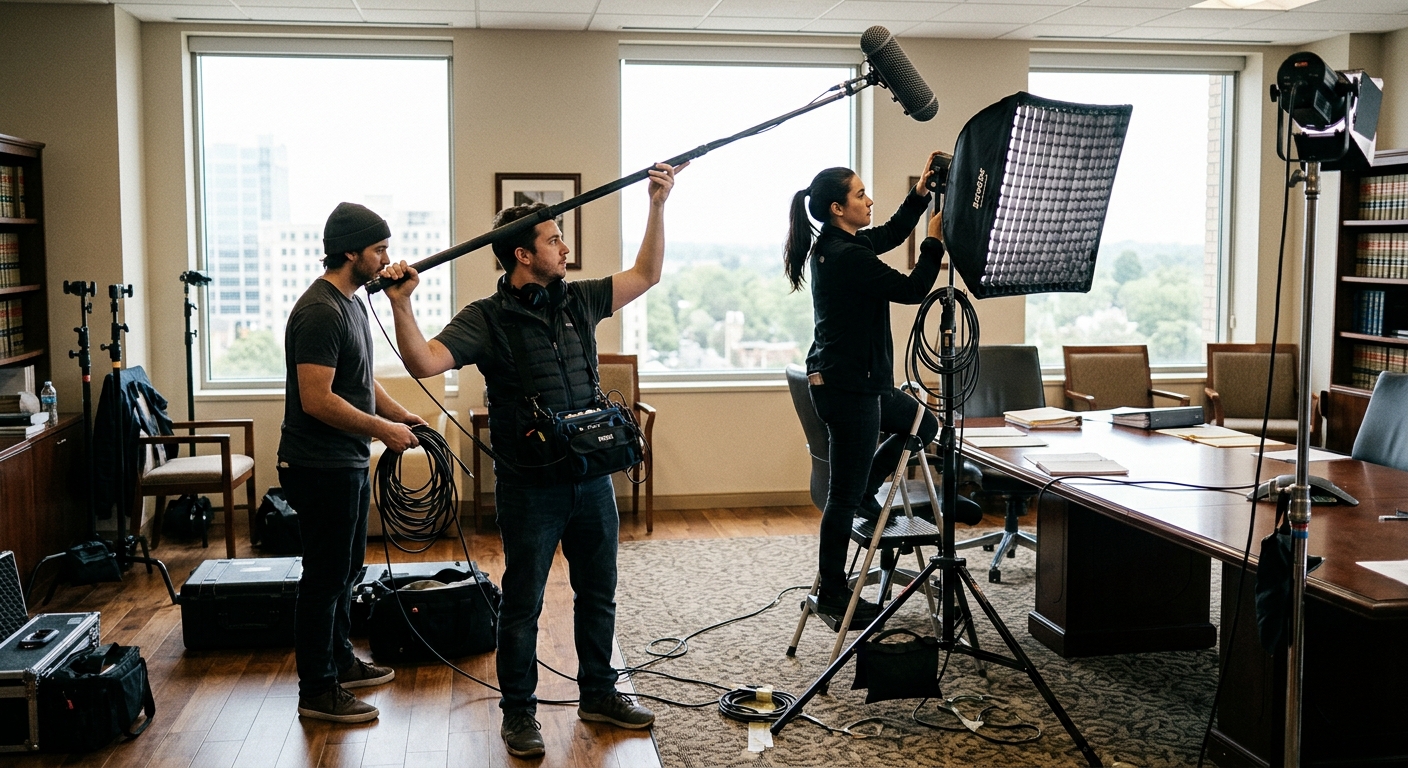
Short-form cuts belong on LinkedIn and Instagram, not because clients are scrolling Reels looking for an attorney, but because that consistent presence builds the recognition that makes someone comfortable clicking through when they eventually do search. One well-planned half-day shoot with an experienced corporate interview setup can realistically produce eight to twelve long-form pieces and another twenty or so short cuts — which is the only way most firms afford a real content cadence instead of one video a year.
What This Actually Costs and How to Budget It
Firms ask us for a number before they ask anything else, and the honest answer is that a single well-produced attorney intro or process explainer typically runs a few thousand dollars, while a full content-day shoot generating a year’s worth of educational clips, testimonials, and short-form cuts costs meaningfully more but drives the cost-per-piece down sharply. The math that matters isn’t the shoot-day invoice. It’s cost per signed case.
Measuring What Matters
View counts feel good in a monthly report and mean almost nothing. Track instead: how many consultation requests cite the video, how conversion rates differ on pages with embedded video versus without, and — the number that should actually drive budget decisions — cost per signed case attributable to video traffic. Firms that shift measurement to that last metric stop arguing about whether video “works” and start arguing about which practice area to shoot next. If you can tie one settled case back to a three-minute clip that cost less than a single week of pay-per-click spend, the ROI conversation ends itself.
Video marketing for law firms isn’t a single project with a finish line. It’s closer to intake infrastructure — something that keeps answering the same anxious 11pm search, month after month, long after the shoot day itself is forgotten.
Frequently Asked Questions
How much does video marketing for law firms typically cost?
A single well-produced attorney intro or process-explainer video usually runs a few thousand dollars. A full content-day shoot that generates a year’s worth of educational clips, testimonials, and short-form cuts costs more upfront but brings the cost per finished piece down significantly.
What’s the single best video for a law firm to start with?
Not the cinematic firm-overview reel most attorneys picture first. Start with short, direct educational clips that answer the specific questions prospective clients are already searching for — those convert better and get pulled into search results faster than brand-focused content.
Do law firm testimonial videos need special legal review?
Yes. Most state bars require written client consent before filming, along with a disclaimer that prior results don’t guarantee a similar outcome. Some jurisdictions also require ad review before the video goes live, so build that timeline into your production schedule.
Where should a law firm publish its videos for the best return?
Embed video directly on the specific practice area and attorney bio pages people actually land on, not just the homepage. Upload full versions to YouTube for search visibility, and cut short-form clips for LinkedIn and Instagram to build recognition ahead of the search moment.
How should a law firm measure whether video marketing is working?
Skip view counts. Track consultation requests that cite the video, conversion rates on pages with embedded video versus without, and cost per signed case attributable to video traffic — that last number is what should actually drive next year’s production budget.
