
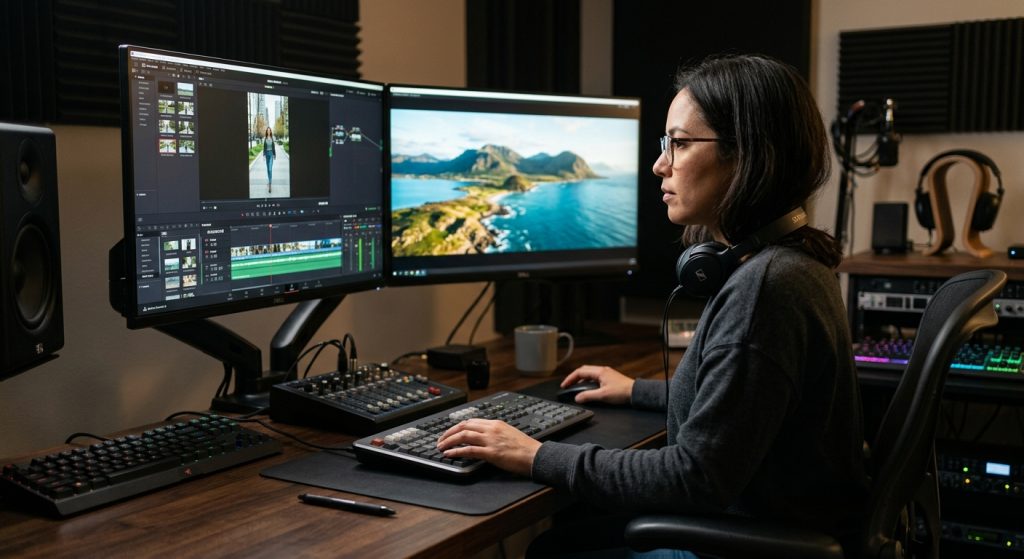
A client called me last month with a finished 90-second brand video her last agency delivered — beautifully shot, color graded, the whole thing — and she couldn’t run it anywhere. It was cut horizontal at 24fps for a TV spot that never aired, and now she needed something for Instagram Stories, a trade show loop, and a homepage hero. None of those jobs want the same file. That’s the conversation that comes up more than almost any other on a discovery call: which of the popular video formats and when to use them actually matters for your specific goal, not just what looked good in the edit bay.
Format isn’t a technical afterthought you hand off to post-production. It’s a decision that should get made in the same meeting where you talk about budget and message, because it changes how you shoot, how long you shoot for, and even what gear shows up on set.
The Popular Video Formats and When to Use Them
Here’s the short version, before we get into the reasoning behind each one.
Horizontal 16:9 is still the default for anything that lives on a website, in a boardroom, on a connected TV, or in a paid pre-roll slot. If you’re building a hero video for a landing page or a sales deck, this is your format.
Vertical 9:16 owns Reels, TikTok, Stories, and increasingly YouTube Shorts. If the video’s primary home is a phone held upright, shoot vertical natively — don’t just crop a horizontal master and call it done. The framing, blocking, and even lens choice change when you’re composing for a 9:16 canvas.
Square 1:1 has faded from its 2016 peak but still earns its keep in feed posts and some email placements where you don’t know if the viewer is on desktop or mobile.
Long-form (3 minutes and up) is for documentary-style brand films, full interviews, webinars, and YouTube content where someone has already decided to spend time with you. Our piece on the differences between short-form and long-form video gets into how the pacing and structure actually differ, not just the runtime.
Short-form (under 60 seconds, often under 15) is for anything competing for attention in a feed. The hook has to land in the first two seconds or the format doesn’t matter at all.
Live and near-live formats — livestreamed events, behind-the-scenes drops — trade production polish for immediacy. They work when authenticity matters more than a clean edit.
Aspect Ratio Is a Creative Decision, Not a Delivery Spec
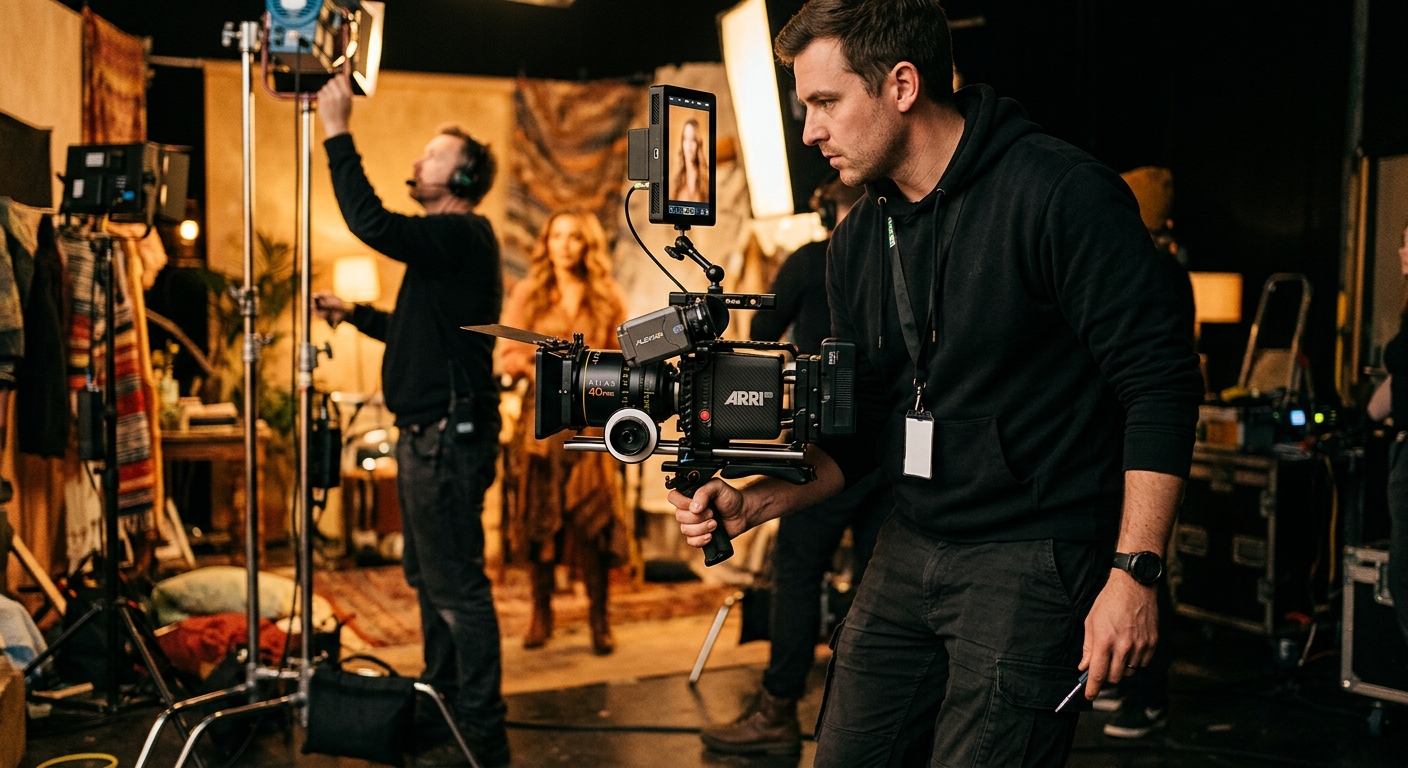
I’ll push back on any client who treats aspect ratio as something we “figure out in export.” A 9:16 frame forces tighter, more vertical compositions — you lose the wide two-shot that makes a horizontal interview feel cinematic, and you gain intimacy that a phone screen rewards. A 16:9 frame gives you room for environmental context: the factory floor behind your CEO, the skyline behind your product.
When a project needs to live in multiple formats — and most of ours do — we plan the shoot around the most demanding one, usually vertical, and build in enough headroom to reframe for horizontal without losing the subject. That’s a pre-production conversation, not a Premiere problem. It also determines whether we shoot on a gimbal or a tripod, and how tight we frame our talent.
Matching Format to Where the Viewer Actually Is
The format question really collapses into one thing: where will a person encounter this video, and how much of their attention have they already given you?
Someone scrolling Instagram has given you zero commitment and maybe two seconds of patience. That’s short-form, vertical, captioned, front-loaded territory. Someone who clicked into a YouTube case study or sat down for a webinar has already opted in — that’s where a longer, more narrative format pays off, and it’s why platform-native thinking matters as much as the file itself; we broke this down further in our guide to adapting video content for different platforms.
A homepage hero video sits somewhere in between. Visitors haven’t committed, but they’re already evaluating you as a vendor, so 30 to 60 seconds of horizontal, sound-off-friendly content with burned-in captions tends to outperform anything longer.
Resolution and Frame Rate: The Technical Layer That Actually Changes Your Options
Format decisions don’t stop at aspect ratio and length. Resolution and frame rate determine what you can do with the footage later — crop into a wide shot for a vertical cutdown, slow down a product reveal, deliver a broadcast-safe master if a client wants to run a spot on cable. We shoot almost everything at a higher resolution and frame rate than the final delivery requires specifically so we have that flexibility in the edit, a decision we walk through in more detail in our post on choosing video resolution and frame rates.
The mistake I see most often from businesses shooting content in-house is locking resolution and frame rate to whatever their camera defaults to, then discovering in post that they can’t reframe a shot for a different platform without visible quality loss. Decide your delivery formats before you hit record, not after.
Where This Trips Up Sacramento Businesses Specifically
We work with a lot of state agencies, ag-tech companies, and healthcare groups through our Sacramento video production work, and the format mistake we see most is a single deliverable stretched too thin. A department shoots one horizontal interview for an internal town hall, then tries to repurpose the exact same cut for a public-facing social campaign six months later. It never quite works — the pacing is wrong for social, the framing is wrong for vertical, and the message was written for a captive internal audience instead of someone deciding in half a second whether to keep scrolling.
Budget for a multi-format shoot from the start and you save yourself a second production later. It’s almost always cheaper to capture coverage for three formats in one day than to reshoot for a second format three months down the line.
How We Actually Decide Formats on a Shoot
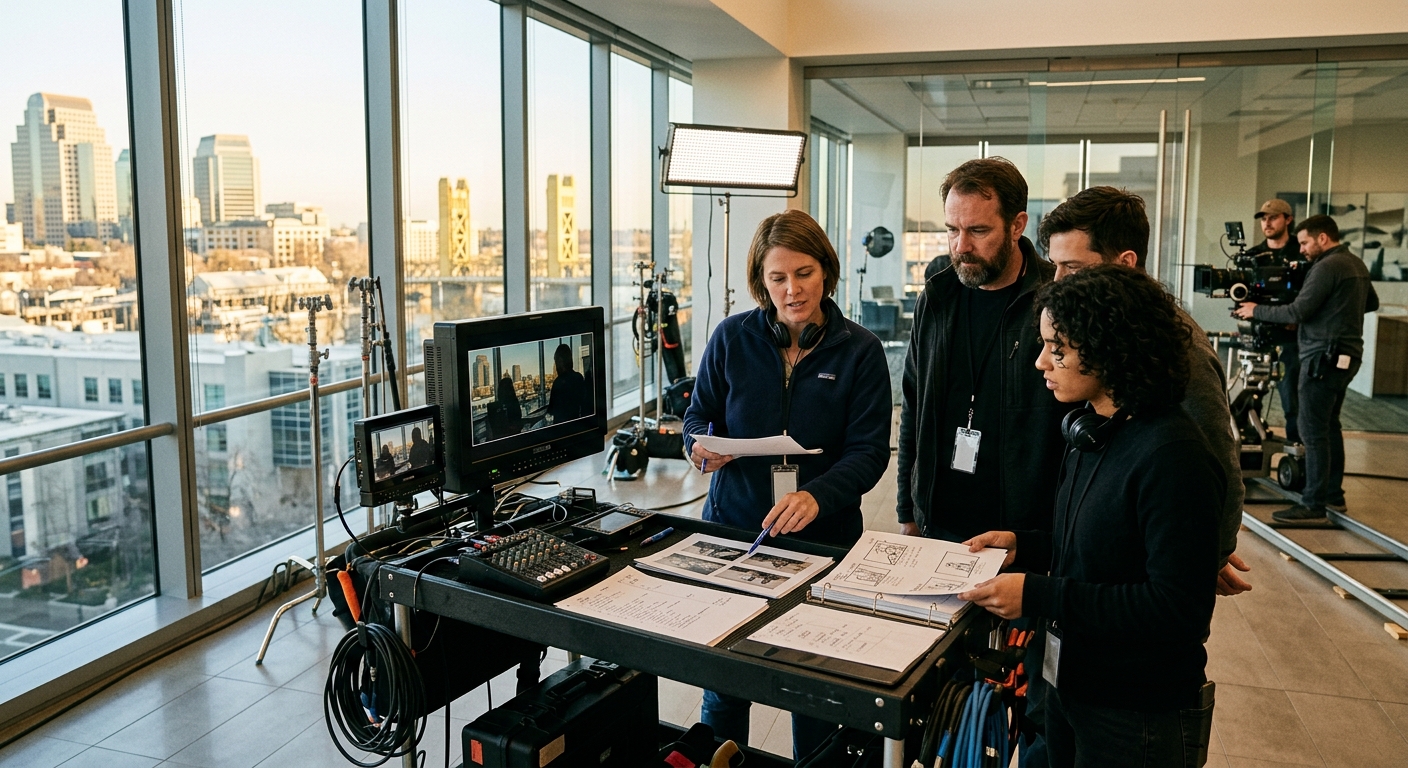
Before we ever build a shot list, we ask three questions: where does this live first, where does it live second, and what’s the shelf life. A conference keynote recap might need a 90-second vertical highlight reel for social within 24 hours and a 10-minute horizontal archive cut a week later — same footage, two very different edits, planned for on day one.
That planning conversation is part of every project that comes through our services, whether it’s a single social spot or a full brand campaign with a dozen deliverables. We’d rather spend twenty extra minutes in pre-production talking through formats than deliver something a client can only use once.
If there’s one thing worth taking from all of this: pick your format based on where the video will actually be watched and how much attention that viewer is willing to give you before you ever pick up a camera. Everything else — lens choice, pacing, even how you light the scene — follows from that one decision.
Frequently Asked Questions
Do I need a different video for every social platform?
Not always a completely different edit, but you usually need a different aspect ratio and length. A single horizontal master rarely performs well when it’s just cropped into a square or vertical frame — the framing and pacing were built for a different viewing context.
What’s the best format for a company homepage video?
Horizontal 16:9, sound-off friendly with captions, kept to 30-60 seconds. Visitors are evaluating you as a vendor, not settling in for entertainment, so get to the point fast.
Should I shoot vertical or horizontal if I only have budget for one format?
Shoot for wherever the video’s primary audience will actually watch it, and plan your framing with enough headroom that an editor can reasonably crop for the secondary format later. Vertical-first is usually safer if social is the main channel, since cropping vertical footage into horizontal loses less than the reverse.
Does frame rate matter if I’m not doing slow motion?
Yes. Higher frame rates give you room to slow footage down in the edit even if that wasn’t the original plan, and they also affect how motion reads on different displays. It’s cheap insurance to shoot a bit higher than your delivery spec.
How long should a long-form brand video actually be?
Long enough to tell a complete story and no longer. Documentary-style brand films typically run three to eight minutes; anything beyond that needs a genuinely compelling narrative to hold attention, not just more footage.
