
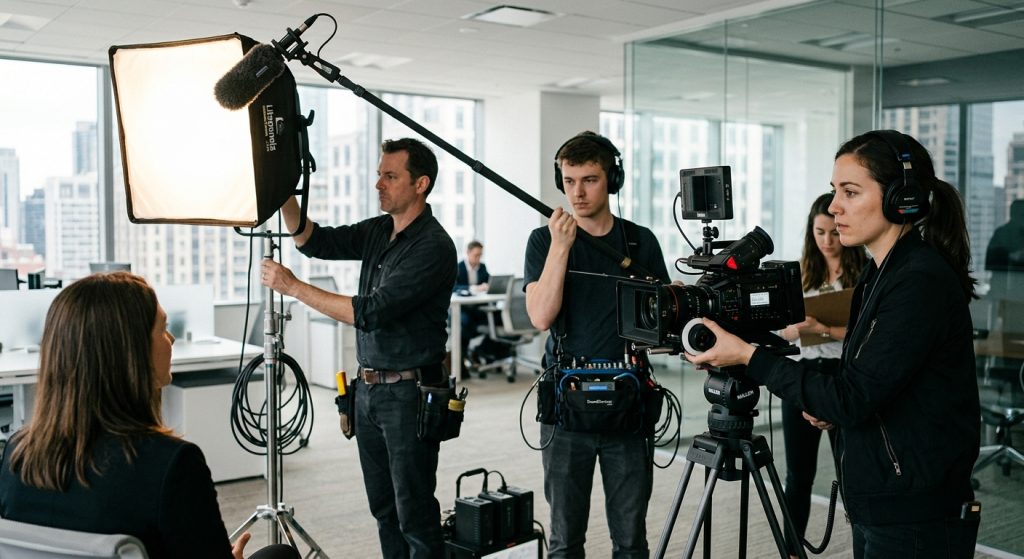
A client once called me after getting a $14,000 quote for a two-minute product video and asked, flat out, “Why is video production so expensive?” Fair question. Video looks like a camera and someone pointing it at things. It isn’t. It’s a small business’s worth of specialists, equipment, and hours stacked on top of each other, and most of that stack is invisible until you’re the one signing the invoice.
Why Is Video Production So Expensive?
Video production is expensive because a finished video is the output of specialized labor, rented equipment, and post-production hours that usually outnumber the hours spent filming. Crew alone can run $150 to $1,800 per person per day, and a two-minute polished video can take 20 to 100 combined hours across shooting, editing, color, and sound. None of that is padding — it’s the actual cost of getting something broadcast-quality instead of shaky-phone quality.
The confusion usually comes from comparing a professional quote to what a smartphone and a free editing app can produce. Both are “video.” They are not the same product, the same shelf life, or the same job to make.
The Crew You’re Not Seeing on the Invoice
A quote for “one video” is really a quote for a team, even when only one or two people show up on set. Depending on scope, that team can include a director, a director of photography, a camera operator, a gaffer, a sound mixer, a producer coordinating logistics, and later an editor, a colorist, and a motion graphics artist. Directors of photography commonly bill $900 to $2,400 a day, audio specialists run $600 to $1,200, and a full crew day for anything beyond a solo shoot can land between $5,000 and $15,000. If you want to see how those roles actually divide up on a real set, our breakdown of film production roles walks through who does what and why you can’t skip most of them.
Experienced crew also costs more because they’re faster and make fewer mistakes — a $2,400/day DP who nails lighting in one setup is often cheaper in total than a $900/day shooter who needs three takes and a reshoot.
Equipment Isn’t a Prop, It’s a Line Item
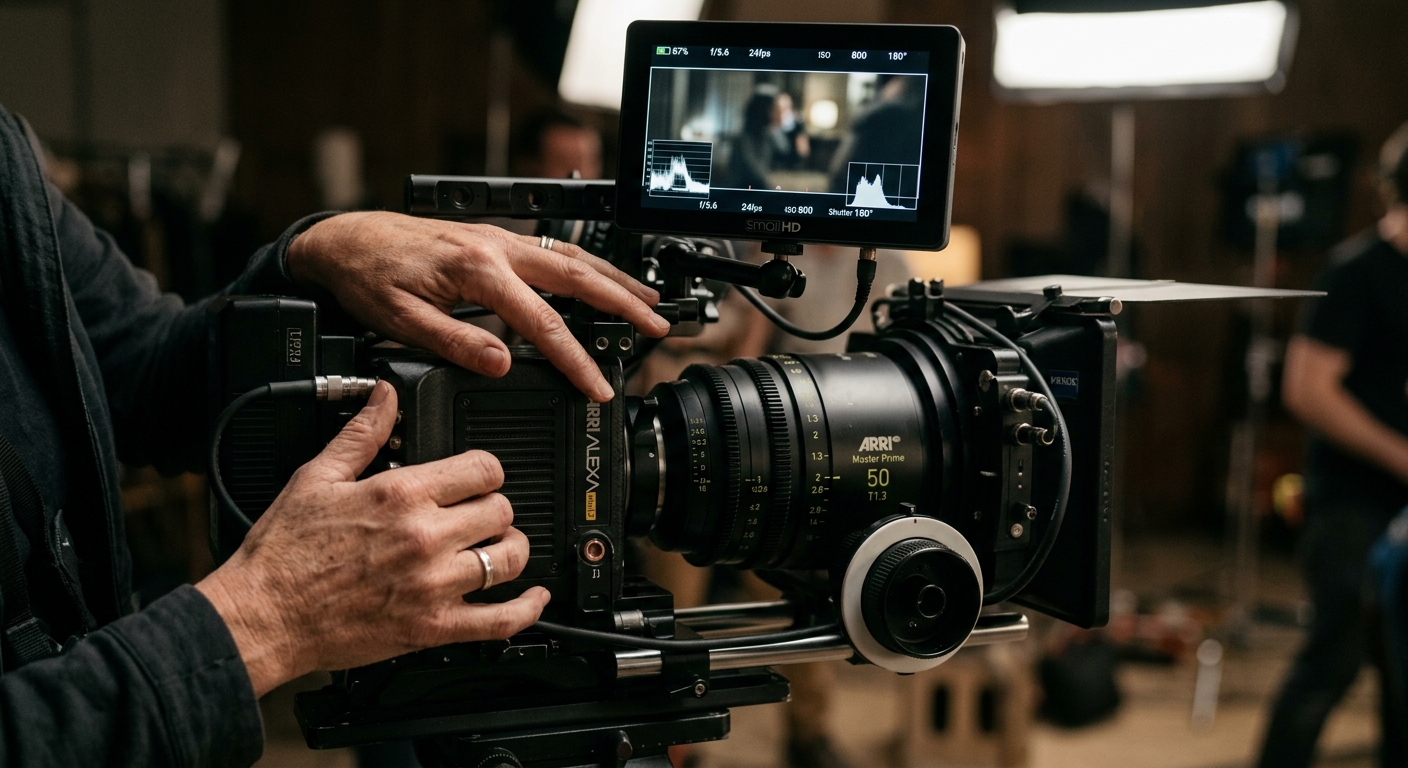
Cameras, lenses, lighting, and audio gear are rented or amortized into every job, and that math shows up in your price whether or not you ever see the gear list. A standard professional camera package runs $500 to $1,500 a day. Add a drone, specialty rigs, or a full lighting kit for an interview or product shoot, and that adds another $500 to $5,000 a day. This is why a two-camera interview setup with proper lighting costs meaningfully more than someone filming you on a tripod with the room lights on — the difference is in dynamic range, depth of field, and audio clarity, and all three cost money to achieve.
Post-Production Eats More Time Than the Shoot Itself
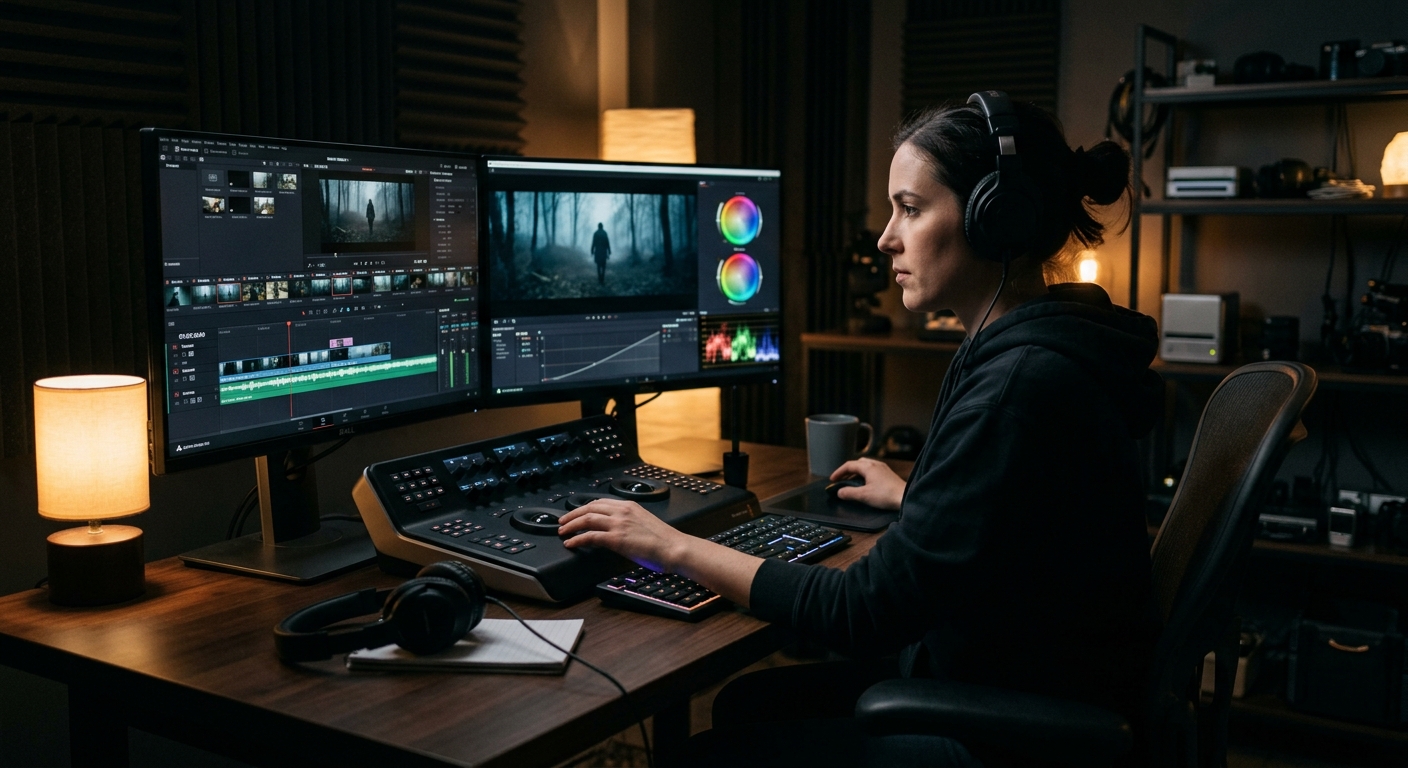
Editing, not filming, is usually where most of the budget and most of the calendar time goes. Industry estimates put post-production at 25 to 40 percent of total project cost, and it’s common for two shoot days to require four to six days of editing, color correction, sound design, and revisions afterward. A 90-second video can quietly consume 20 to 100 hours of combined editorial work once you count assembly, graphics, and sound mixing. If you’ve ever wondered why a “quick edit” request comes back with a bigger number than expected, this is why — cutting footage into a story, syncing sound, correcting color, and building titles is a craft with its own hourly rate, separate from the camera work. We go deeper on what actually happens in that phase in our guide to the video post-production process.
Location, Shoot Days, and the Math That Compounds
Every additional location or shoot day multiplies your crew and equipment costs, not just adds to them. One location with controlled lighting is one day of crew rates and one gear rental. Three locations across a city means travel time, potential permits, and often an extra day just for logistics — while the crew and gear costs from the previous section repeat for each day added. This is also where geography plays a real role: crews in major markets like the Bay Area typically charge 20 to 40 percent above the national median because of cost of living and demand. If you’re comparing bids for a San Jose video production project against a quote from a smaller market, that gap is usually real, not padding.
Usage Rights, Licensing, and the Stuff Nobody Warns You About
A finished video often costs more than the shoot because of what you’re licensed to do with it afterward, not just what it took to film it. Royalty-free music tracks run $20 to $500 depending on the license, and using a professional voiceover artist typically requires a buyout fee if you plan to run the video as a paid ad rather than just posting it organically. Location permits, production insurance, and stock footage licenses are line items too, and they’re the ones most first-time buyers forget to ask about until the invoice arrives.
Scope Matters More Than Length
A short video isn’t automatically a cheap video — production complexity drives cost far more than runtime does. A 60-second video with custom animation, actors, and multiple locations can cost more than a five-minute talking-head interview shot in a single afternoon. This surprises a lot of first-time buyers who assume price scales directly with the finished video’s length. It doesn’t. It scales with shoot days, crew size, and how much has to be built or arranged rather than simply captured. Planning that scope honestly up front — before you’re mid-shoot discovering you need three more setups — is exactly what a real production budget is for.
It’s also worth knowing that buyers aren’t imagining the volatility here: in Wyzowl’s 2026 State of Video Marketing report, 38% of marketers said video production costs are increasing year over year, while only 30% said they’re getting cheaper. Costs aren’t stabilizing on their own — they’re being managed project by project, through scope decisions, not by waiting for the market to get friendlier.
How to Get a Video That Doesn’t Blow the Budget
The fastest way to control video cost is to lock scope before you get quotes, not after. Decide how many locations, how many people on camera, how long the final cut needs to be, and what you’ll use it for (organic post versus paid ad, since that changes licensing) before you call a production company. A clear brief lets a crew quote accurately instead of padding for unknowns, and it’s the single biggest lever you control. When you’re ready to scope a project properly, our corporate video production team builds the budget around your actual goals rather than a generic day rate, and if you want exact price ranges by video type, our companion guide on how much corporate video costs breaks those down project by project.
FAQ
Why do two video companies quote such different prices for the same project?
Different companies quote different prices for the same brief because they’re pricing different crew sizes, gear tiers, and post-production hours, even when the brief looks identical on paper. A quote built around a solo shooter with a DSLR will always undercut one built around a DP, gaffer, and sound mixer — ask each company to itemize crew, equipment, and edit hours so you’re comparing the same scope, not just a bottom-line number.
Is a $500 video ever a bad deal, or a $50,000 video ever worth it?
Neither price tells you if the deal is good — what matters is whether the crew, equipment, and post-production hours match what the final video needs to do. A $500 in-house video can be exactly right for an internal training clip nobody will judge on cinematography, while a $50,000 broadcast commercial needs the crew and gear that price buys. Match the budget to the job, not to a general sense of what “video” should cost.
How much of a video budget actually goes to editing?
Editing and the rest of post-production typically consume 25 to 40 percent of a video’s total budget, often more time than the shoot itself. A two-day shoot commonly requires four to six days of editing, color correction, sound design, and revisions afterward, which is why post-production hours — not just camera time — are usually the biggest line item buyers underestimate.
Does a shorter video always cost less than a longer one?
No — a short video isn’t automatically cheaper, because cost tracks production complexity, not runtime. A 60-second video with custom animation, paid actors, or multiple locations can cost more than a five-minute single-location interview, since crew size, shoot days, and how much content has to be built rather than simply filmed drive the price far more than final length does.
What’s the single biggest way to lower a video production quote without hurting quality?
The biggest lever is locking scope before requesting quotes — fixing the number of locations, people on camera, shoot days, and final length up front. Vague briefs force production companies to pad estimates for unknowns; a tight, specific brief lets them quote accurately and often trims 10 to 20 percent off the price simply by removing contingency padding for scope creep.
Frequently Asked Questions
Why do two video companies quote such different prices for the same project?
Different companies quote different prices for the same brief because they’re pricing different crew sizes, gear tiers, and post-production hours, even when the brief looks identical on paper. A quote built around a solo shooter with a DSLR will always undercut one built around a DP, gaffer, and sound mixer — ask each company to itemize crew, equipment, and edit hours so you’re comparing the same scope, not just a bottom-line number.
Is a $500 video ever a bad deal, or a $50,000 video ever worth it?
Neither price tells you if the deal is good — what matters is whether the crew, equipment, and post-production hours match what the final video needs to do. A $500 in-house video can be exactly right for an internal training clip nobody will judge on cinematography, while a $50,000 broadcast commercial needs the crew and gear that price buys. Match the budget to the job, not to a general sense of what “video” should cost.
How much of a video budget actually goes to editing?
Editing and the rest of post-production typically consume 25 to 40 percent of a video’s total budget, often more time than the shoot itself. A two-day shoot commonly requires four to six days of editing, color correction, sound design, and revisions afterward, which is why post-production hours — not just camera time — are usually the biggest line item buyers underestimate.
Does a shorter video always cost less than a longer one?
No — a short video isn’t automatically cheaper, because cost tracks production complexity, not runtime. A 60-second video with custom animation, paid actors, or multiple locations can cost more than a five-minute single-location interview, since crew size, shoot days, and how much content has to be built rather than simply filmed drive the price far more than final length does.
What’s the single biggest way to lower a video production quote without hurting quality?
The biggest lever is locking scope before requesting quotes — fixing the number of locations, people on camera, shoot days, and final length up front. Vague briefs force production companies to pad estimates for unknowns; a tight, specific brief lets them quote accurately and often trims 10 to 20 percent off the price simply by removing contingency padding for scope creep.
