
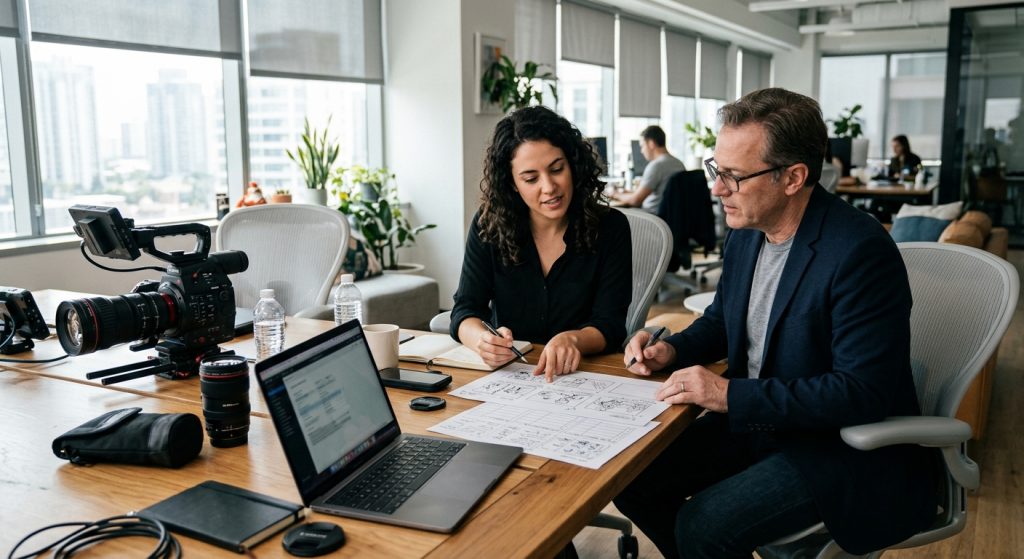
Most video projects don’t fail on the shoot day. They fail three weeks earlier, in an email thread where nobody wrote down what the video was supposed to do. After years of producing for businesses, I can usually tell within one phone call whether a project will go smoothly, and it has little to do with budget.
Working with a video production company is a short, structured partnership: you supply the goal, the audience, the budget, and fast decisions, and the crew supplies the creative, the gear, and the labor. This guide covers how that handoff works, what it costs, and where clients accidentally slow things down.
What does working with a video production company actually look like?
A typical project runs through three phases over roughly 3-8 weeks: pre-production (planning, scripting, casting, locations), production (the shoot, usually 1-2 days for a corporate piece), and post-production (editing, color, sound, graphics). If you want the full picture of what a crew does at each stage, our breakdown of what a video production company does goes deeper.
The part most clients underestimate is pre-production. A 90-second brand video can easily need two weeks of planning for one day of filming, and every hour spent there saves several hours of editing later. The video itself matters too: Wyzowl’s 2026 State of Video Marketing survey found that 91% of businesses now use video as a marketing tool, so the bar for “good enough” keeps rising. Your competitors are publishing, and viewers compare you to all of them.
Who is on your side of the table?
You need one decision-maker and one point of contact. They can be the same person, but there must be exactly one voice that says “approved.” When five stakeholders each send separate notes, the editor has to referee, and your timeline quietly doubles.
How do you brief a video production company?
Give them a written brief covering the video’s purpose, the audience, the single action you want viewers to take, where it will run, your budget range, and your delivery date. One page is plenty. Our guide to creating an effective video brief has a template you can copy.
Two details separate useful briefs from vague ones. First, name the distribution channel. A vertical 30-second ad for Instagram is framed, paced, and captioned differently from a 3-minute landing-page video, even if the footage comes from the same shoot. Second, state your deliverables up front: the hero cut, plus how many cutdowns (15-second and 30-second versions), aspect ratios (16:9, 9:16, 1:1), and captions you need. Asking for “a few social versions” after the edit is locked is the number one source of surprise invoices.
Be honest about your tone references, too. Send two or three videos you like and one you hate. A producer learns more from the one you hate.
What should you expect to pay?
A professional corporate video typically costs $5,000-$15,000 for a 1-2 minute piece with a small crew, and $15,000-$50,000 or more for multi-location work, actors, or heavy graphics. A simple single-camera interview shoot can come in closer to $2,500-$5,000. Those ranges move with crew size, shoot days, talent, music licensing, and revision rounds.
Production companies usually quote in three buckets: pre-production, production, and post. Ask to see them separated. A quote that lumps everything into one number hides what you are paying for and makes it impossible to trim intelligently. Most companies take a deposit of 30-50% to book crew and gear, with the balance due at delivery or in milestones. If you are building a number from scratch, how to create a production budget walks through each line item.
Cost, speed, and quality pull against each other, and you get to pick two. Rushing a project adds overtime and rush editing fees, often 20-30% on top. Giving your producer an extra two weeks is one of the cheapest upgrades available.
Who does what on the shoot day?
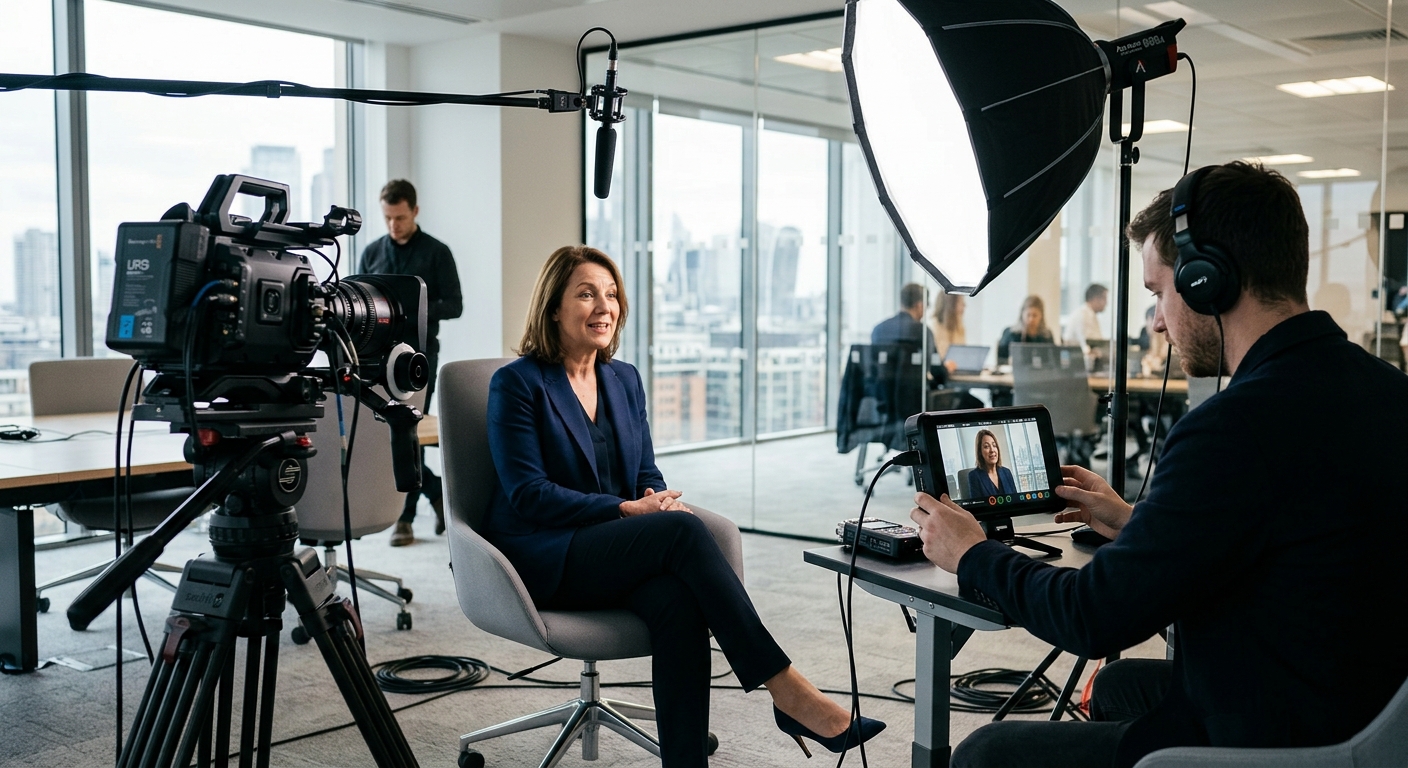
On a typical corporate shoot, the director runs the creative, the director of photography handles the camera and lighting, a sound recordist captures audio, and a producer manages the schedule and logistics. Your job is smaller than it feels: be available, have your talent ready, and let the crew work.
Three habits help. Send your on-camera people a call time and a wardrobe note a week ahead; solid colors beat busy patterns and thin stripes. Keep your own staff off set unless they have a reason to be there, since a crowd behind the monitor changes how interviewees behave. And approve the first setup before the crew builds the other five. A producer who shows you a frame on a monitor at 9 a.m. is giving you the cheapest revision of the whole project.
Audio is where amateur-feeling videos give themselves away. Treat the sound recordist as essential and not as a line item to trim. Viewers forgive a soft shot far sooner than they forgive a muffled voice.
How should you handle feedback and revisions?
Consolidate all notes into one document with timecodes, send it once per round, and expect two rounds of revisions to be standard. Most quotes include two, and a third round usually bills hourly. For tips on giving notes editors can actually act on, see how to work with video editors.
The first cut is a rough cut. It will have placeholder music and uncorrected color, and that is intentional. Respond to structure and story first (is the right message in the right order?), then to polish. Clients who nitpick a color grade on round one often discover on round two that the section they were fixing got cut entirely.
Be specific. “Make it pop” costs you a round. “The second interview answer runs long; trim to the sentence ending at 0:42” costs you ten minutes. And if you want to see how a well-run pipeline avoids bottlenecks, our post on how to streamline the video production process lays out the approval checkpoints we use.
How do you pick the right production partner in Las Vegas?
Choose the company whose recent work matches your format and audience, whose quote is itemized, and who names the specific producer and director you will work with. Portfolios matter more than pitch decks. Ask for three recent projects like yours, not a general reel.
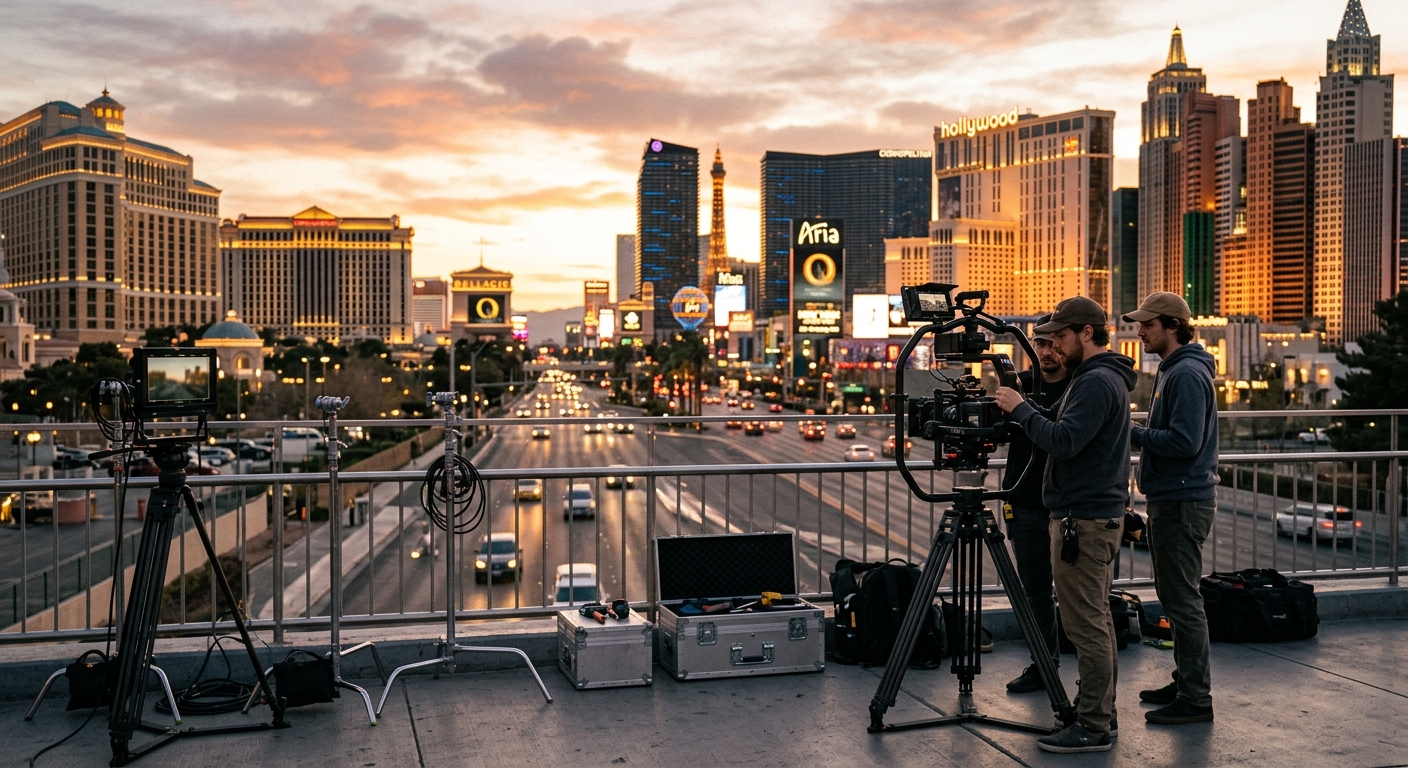
Local knowledge helps more than people expect. Vegas shoots involve casino and Strip filming permits, extreme summer heat that affects talent and gear, and venues with strict load-in windows. A team that has handled those before will flag them in the first meeting. Our Las Vegas video production page shows the kind of work we do in the market, and the full range of video production services is listed there too.
A few questions that expose weak partners quickly:
- Who exactly will be on my shoot, and who edits the footage?
- What is included in the quote, and what triggers extra charges?
- How many revision rounds are included?
- Who owns the raw footage and final files?
- What happens if the shoot day gets rained out or a key person cancels?
For a longer checklist, see our tips for hiring a reliable video production company. The right answers are specific. Vague answers about “flexibility” usually mean the process lives in someone’s head.
Where do most clients go wrong?
The most common mistakes are an unclear goal, too many approvers, a late script change, and a budget that was never disclosed. Each one is fixable in the first week. A late script change is the costly one: rewriting dialogue after the shoot means reshooting or awkward voiceover patches.
Share your budget range, even loosely. A producer who knows you have $10,000 will design a smart $10,000 video. One who guesses will either pitch something you cannot afford or quietly under-scope. Treat the production company like a contractor you trust with your house: tell them the real constraints, then let them solve the problem.
Frequently Asked Questions
How long does it take to make a corporate video with a production company?
Most corporate videos take 3-8 weeks from kickoff to final delivery. Pre-production usually takes 1-3 weeks, the shoot takes 1-2 days, and editing with two revision rounds takes 2-4 weeks. Rush schedules are possible but often add 20-30% to the quote.
How much does it cost to hire a video production company?
A 1-2 minute corporate video from a professional video production company typically costs $5,000-$15,000, and complex multi-location or actor-driven projects run $15,000-$50,000 or more. Simple single-camera interview shoots can cost $2,500-$5,000, depending on crew size, shoot days, and revisions.
What should I prepare before contacting a video production company?
Prepare a one-page brief stating the video’s goal, target audience, desired viewer action, distribution channel, budget range, and delivery date. Add two or three reference videos you like. With those details, a video production company can give an accurate, itemized quote instead of a rough guess.
How many revisions are included when working with a video production company?
Two rounds of revisions is the industry standard and is included in most quotes. Additional rounds are usually billed hourly. To stay within two rounds, consolidate all stakeholder feedback into one timecoded document per round and focus the first round on structure and story.
Do I own the footage after a video production company finishes my project?
Ownership depends on the contract, so confirm it in writing before signing. Most companies hand over the final edited video and license it for your use, while raw footage may cost extra or stay with the company. Ask who owns raw files, project files, and music licenses.
